
Gut Renovation Cost in NYC: 2026 Guide
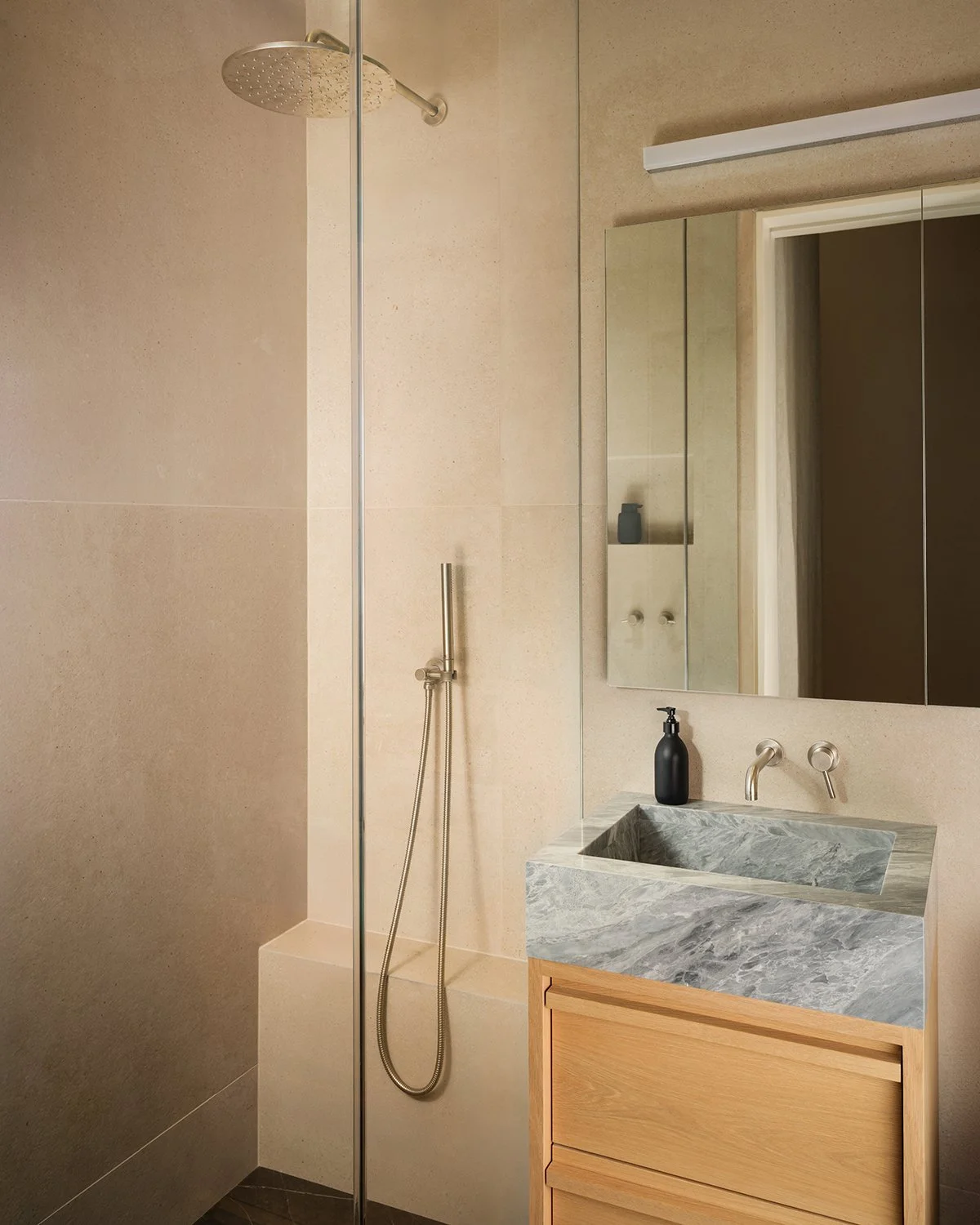
Bathroom in West Village Gut Renovation
A gut renovation is an extensive home renovation that tends to involve more involved interventions than cosmetic upgrades alone. While the scope of each project is unique, as a whole, these projects involve significant layout modifications and occasional base-building upgrades in addition to more typical remodeling work.Table of Contents
Table of Contents:
What Is a Full Gut Renovation?
At its core, a gut renovation is an opportunity to reconsider the fundamental organization of a home, and revisit them via first principles. It differs from a non-gut renovation (or, a cosmetic renovation), which is one that focuses on upgrading aesthetics and finishes while leaving the room locations, functions, and sizes largely intact. While in theory, during a gut-renovation, a home would be brought down to the studs, in reality, homeowners pick and choose which portions of their home to fully reconfigure. Even in a gut renovation, tackling every project and goal can often become cost-prohibitive, so most clients pick and choose which projects are worth tackling given their goals and budget. Working with a seasoned and trusted professional: an architect, design team, design-build studio, or general contractor on establishing goals and budgets can help steer homeowners to establish a scope of work where their budgets and goals are aligned.
Typical “big picture” goals in a NYC Co-op or Condo gut-renovation often include opening up, and expanding a kitchen (if allowed by the building board and the building alteration agreement). Similarly, if board approvals can be attained, many choose to expand bathrooms, especially their primary bath. Both kitchen and bathroom expansions are higher cost projects, so many home-owners choose to limit these in favor of modifying bedrooms, living rooms and corridors to better suit their specific family’s needs. In pre-war buildings where circulation was previously organized to separate the living from maid’s quarters. Removing redundant circulation paths can often add much-needed square footage to cramped NYC apartments.
Adding or upgrading central heating and cooling (HVAC) is also often on the list of must-have’s for modern living.
Owners of single-home homes in NYC — whether townhouses or brownstones — can configure their homes to their needs and preferences more freely than coop/condo board approvals aren’t required. They often undertake moving kitchens from the ground floor to the parlour level, and commonly open up the rear facade by swapping masonry for floor to ceiling windows and doors that open out to the garden.
Traditional brownstone layouts require updates to make living in them more suitable for modern families. Most renovation projects also choose to add a powder room on the parlour level for easier entertaining along with removing a partition that one finds separating the stair from the living area. This is the most common structural change that one finds in a home remodeling process, and tends to open up the living space in a way that is more conducive to modern living.
If the home hasn’t had a recent renovation, some layout changes may be required on the upper levels as well. Traditionally, bathrooms were often located at the perimeter of the building to take advantage of natural ventilation. Mechanical ventilation allows for bathrooms to move into the core of the building, a space that is often lacking natural light, but instead offers privacy. And instead, light and air at the buliding perimeter is given over to spaces where one spends more time: bedrooms, offices, guest rooms, etc.
Central heating and cooling (HVAC) upgrades are common requirements for homeowners, and provisioning for them from the start is critical in any renovation budget.
Gut Electrical upgrades are often part of typical renovation costs. Finding cloth wiring, or inadequate panels, and insufficient points are fairly common in older properties and needs to be brought up to both code and modern expectations during any renovation. For more information on what to expect, see our complete guide to gut renovations.
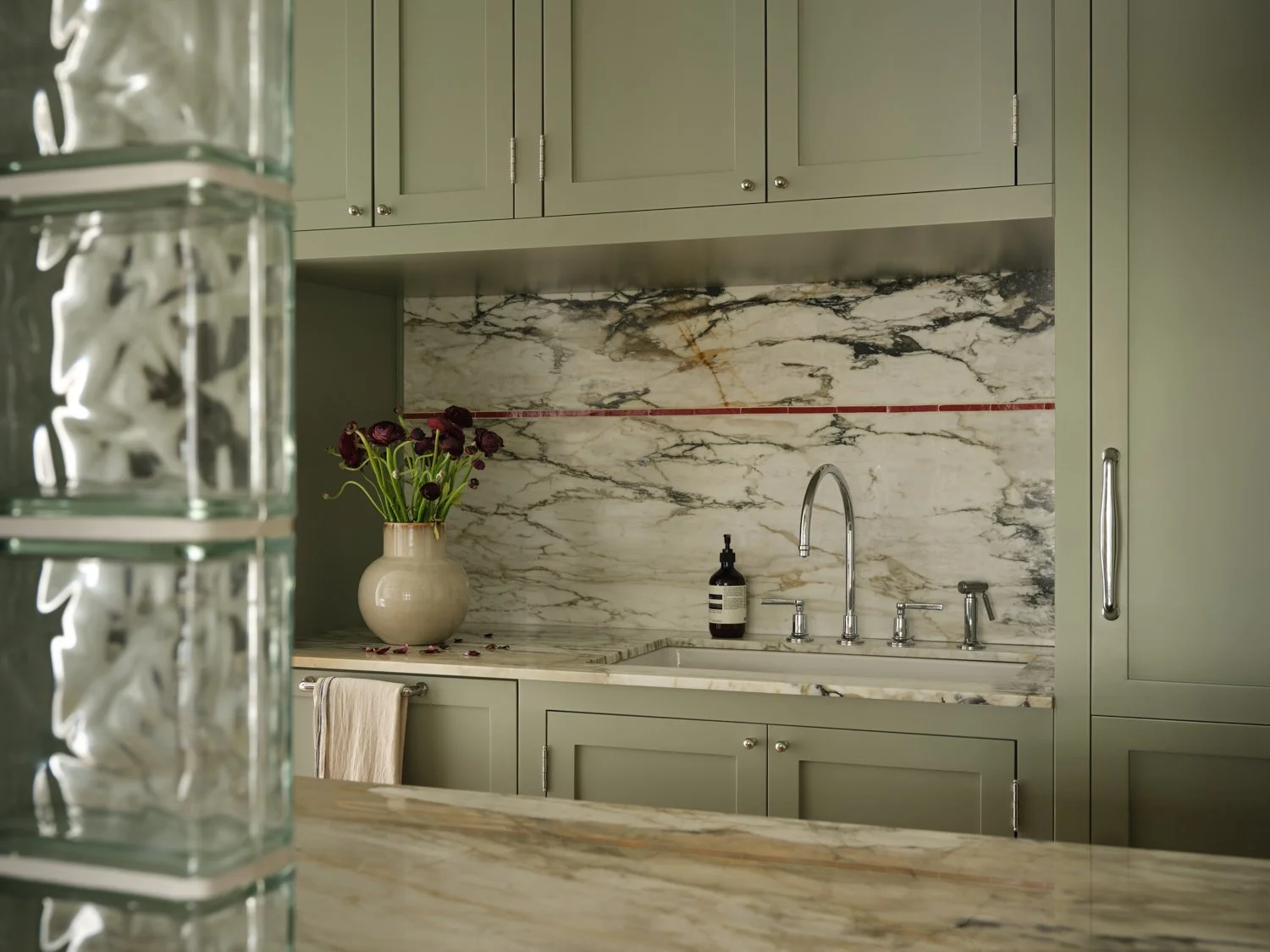
Kitchen Renovation in Park Slope
Typical Renovation Costs in NYC, in 2026
Broad-stroke, square footage pricing for remodeling and renovating can be imprecise.
Typical costs for renovating a foyer or living room can be as low as $200 per square foot, while a full kitchen renovation can cost around $1500 per square foot while abath can easily climb to $2000 per square foot, and up. Because each home and building type is unique, arriving at a reliable blended average can be tricky. Additionally, because the project scope varies from project to project, arriving at a universal cost per square foot number is nearly impossible.
Mid-range projects: $400–$600 per sq. ft.
Higher-end projects: $600–$800+ per sq. ft.
Flooring, whether hardwood or engineered should plan to start at $40 per sq.ft
Kitchen pricing can vary widely depending on the size of the room (amount of millwork), whether it is fully-custom and the quality of materials selected. Post-war, fully-custom kitchens with higher end marble for countertops and backsplash start at $130,000. Pre-war ones tend to be larger in size, with taller ceiling, and increase in cost proportionally to the scale of the room. A standalone, custom kitchen island or high-end built-in cabinetry starts at $25,000. Additional budget should be allocated for specialty finishes. And a lower budget may be achieved by utilizing semi-custom cabinetry instead.
Replacing Doors and Door hardware: start at $2000 per existing opening, and up for new opening.
HVAC: ducted central air con system starts at 75K
Windows: lower-end, wood interior, aluminum on the exterior start at $6-8K per window, and easily double or triple for more specialty products.
Gut electrical, or a full rewiring can be budgeted at around $50 per square foot.
Electrical upgrades: vary depending on the scope of the upgrade needed. If the building has additional electrical already, and it needs to be brought into the apartment from the meter room, a rough budget of $10K per floor is a reasonable starting point for budgeting. The exact number will depend on the exact path of the new conduit, building requirements, and needed repairs.
Skim-coating budgeting can be achieved by 2.5 x floor area x $10.
Painting can be calculated by 2.5 x floor area x $5.Trims and mouldings: including baseboard, door trim, crown moulding, picture-rail come into play in classic, pre-war properties and should be accounted for starting at $25-35 linear foot, each.
Contingencies: it is recommended to hold 10% of any given project budget for contingencies. Will design-build companies will do better than traditional designer on existing conditions due-diligence, some factors are inherently not knowable until full demolition is complete. It is wise to hold back a contingency to remedy any found deleterious pre-existing conditions such as prior inferior workmanship, deterioration, code violations, poor insulation, hazardous materials, hidden piping, damaged structure, and/or any other concealed damaged conditions
Key Factors Influencing Renovation Costs
Your home’s footprint: both the size and the organization of a property will dictate costs. Homes with a larger portion of their footprint reserved for “wet room”, i.e. kitchens and bathrooms will be more expensive to renovate than ones without.
Size of Kitchen: Custom millwork and stone are both costly, and impact costs.
Number of Bathrooms, and their size. Waterproofing, fixtures, custom vanities, stone and tile all make bathroom renovations and additions costly.
Age and condition of Property. The age of the building will greatly influence how much base-building is required to bring the home to modern codes and standards. Electrical upgrades are common in NYC, and can entail everything from additional outlets throughout a home as the current points aren’t compliant to upgrading an electrical panel to requsting additional service from the utility company and upgrading the building as a whole. The costs vary
Adding building systems like HVAC: adding heating and cooling to a project that doesn’t have it involves multiple trades and expensive equipment.
Base-building updates and upgrades: reworking plumbing or electrical systems, or installing new HVAC increases costs.
Location: Manhattan and Brooklyn projects typically cost more due to labor, logistics, and building regulations.
Material Quality: High-end finishes and custom cabinetry increase investment; mid-range materials help manage costs.
Detailing: historic, or otherwise
Budgeting for a Gut Renovation, in NYC, in 2026
A helpful way to consider your goals are need vs. want to have. Setting priorities for your team helps them design a project scope with all of your needs in mind: needs, wants, and budgets.
Because projects are interconnected between various trades, it is cumbersome to price a renovation by room, or individual project. For this reason, projects are typically priced by trade. Typical trades typically known as a construction “division” include, but aren’t limited to: demolition, carting, plumbing, electrical, woods & plastics, etc. and will be priced for the entire job. A competent project management team will be able to create a budget with
Budget Summary:
Architectural and Interior Design: while these fees vary, typically these costs can run between 10-20% of the overall project budget. Engineering: Mechanical, Electrical, Plumbing, Sprinkler, Civil, will vary greatly based on project scope and should be priced per project. Depending on project complexity, filing, expediting, and agency fees (DOB, LPC) most typically run between 12-20K for residential projects in NYC, depending on scope and complexity.
Construction labor and rough materials will run about 70% of the overall construction budget, while FFE (finishes, fixtures, equipment) will comprise the other 30%. This excludes appliances which vary greatly in type, cost, and quality. Typical costs are anywhere between 20-60K with the latter being for higher-end, fully paneled packages from brands like Subzero and Miele.
Typical NYC Timeline for a Full Gut Renovation
A gut renovation usually takes 12-24 months, depending on unit size, scope, and approvals. The timeline can be broken down as follows:
Design: 5-8 months, depending on project complexity.
Building and Board Approvals: If the renovation is in a multi-family building (like a co-op). This process can overlap with the later stages of the design process in the line item above.
Permitting: In NYC most permits for home renovation projects are granted within 1-2 months, though can increase substantially for more complex projects. Relevant parties typically include Landmarks, and DOB (Department of Buildings) and Loft Board (for loft renovations).
Construction: 8-18 months, depending on project complexity.
Punch List, Inspection, and project close-out: 2–4 weeks
Common questions:
How should I set a budget for a gut renovation if I don’t know local pricing?
Estimate costs per square foot with the calculations. If your scope is firm, you can try to become more precise by considering trade-specific or project specific costs. Adding a 10–20% contingency is wise for initial thoughtful planning. Factor in professional fees, design fees, permitting, asbestos testing, building-specific approval process costs (can usually be found in your alteration agreement) and fees to relevant New York City permitting agencies (DOB, LPC, etc).
Can I live in my home during a full gut renovation?
Living on a construction site isn’t ideal nor practical. A lack of toilet and washing facilities makes the Dust and noise over many months While temporary housing incurs additional costs, a realistic budget should provision for this expense.
For more images of our recent projects, please navigate to our Portfolio Page
You can schedule a custom consultation about your renovation project by getting in touch:
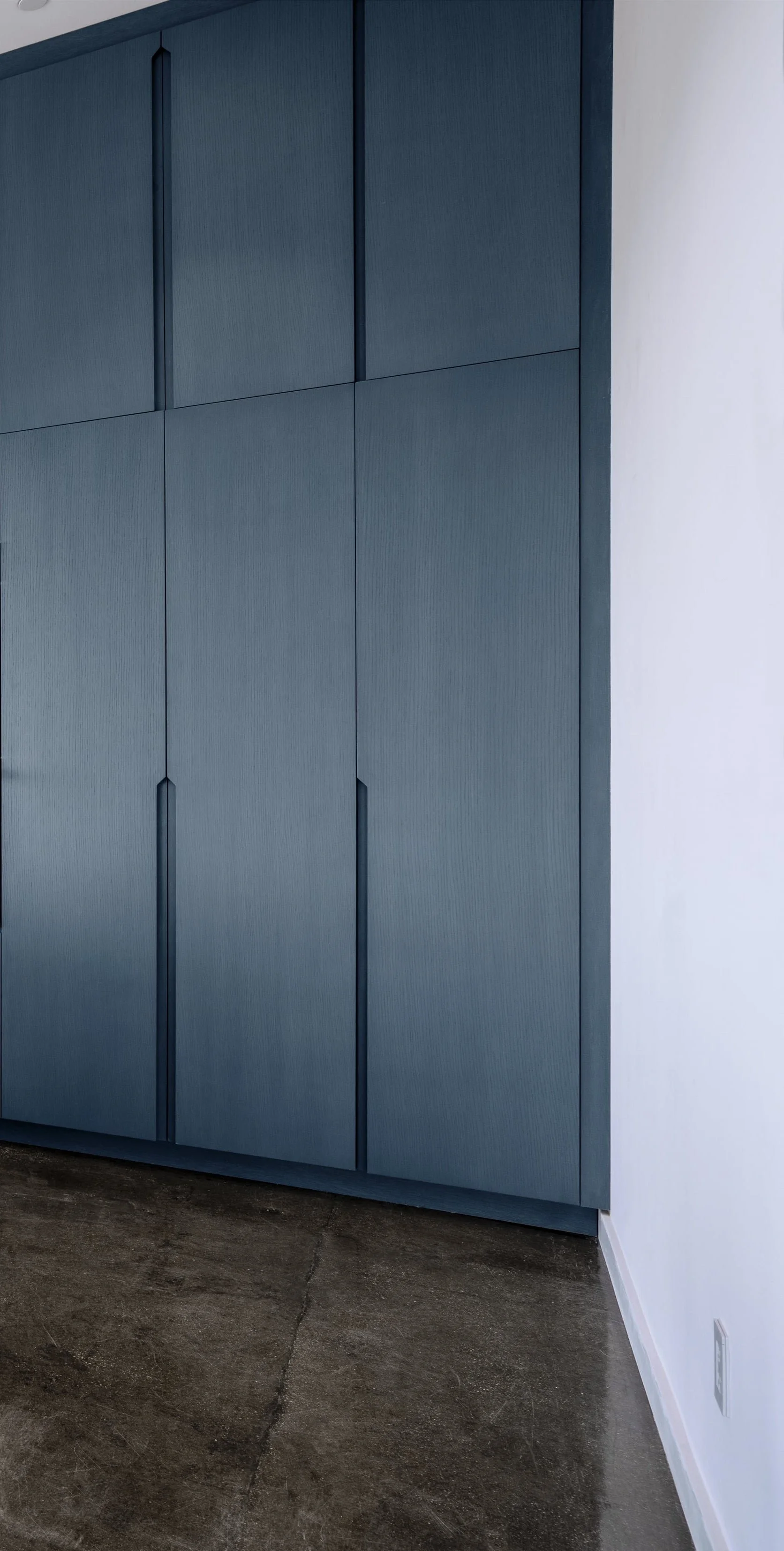
Kitchen Cabinetry Detail in Brooklyn Gut Renovation