Castiron Building Loft Renovation NYC — Alcove Studio, New York, NY
Cosmetic Renovation
Greenwich Village, NYC
Alcove Studio, Loft Building
450 sq. ft
Scope:
Location:
Typology:
Size:
Castiron Building Loft Renovation, New York, NY
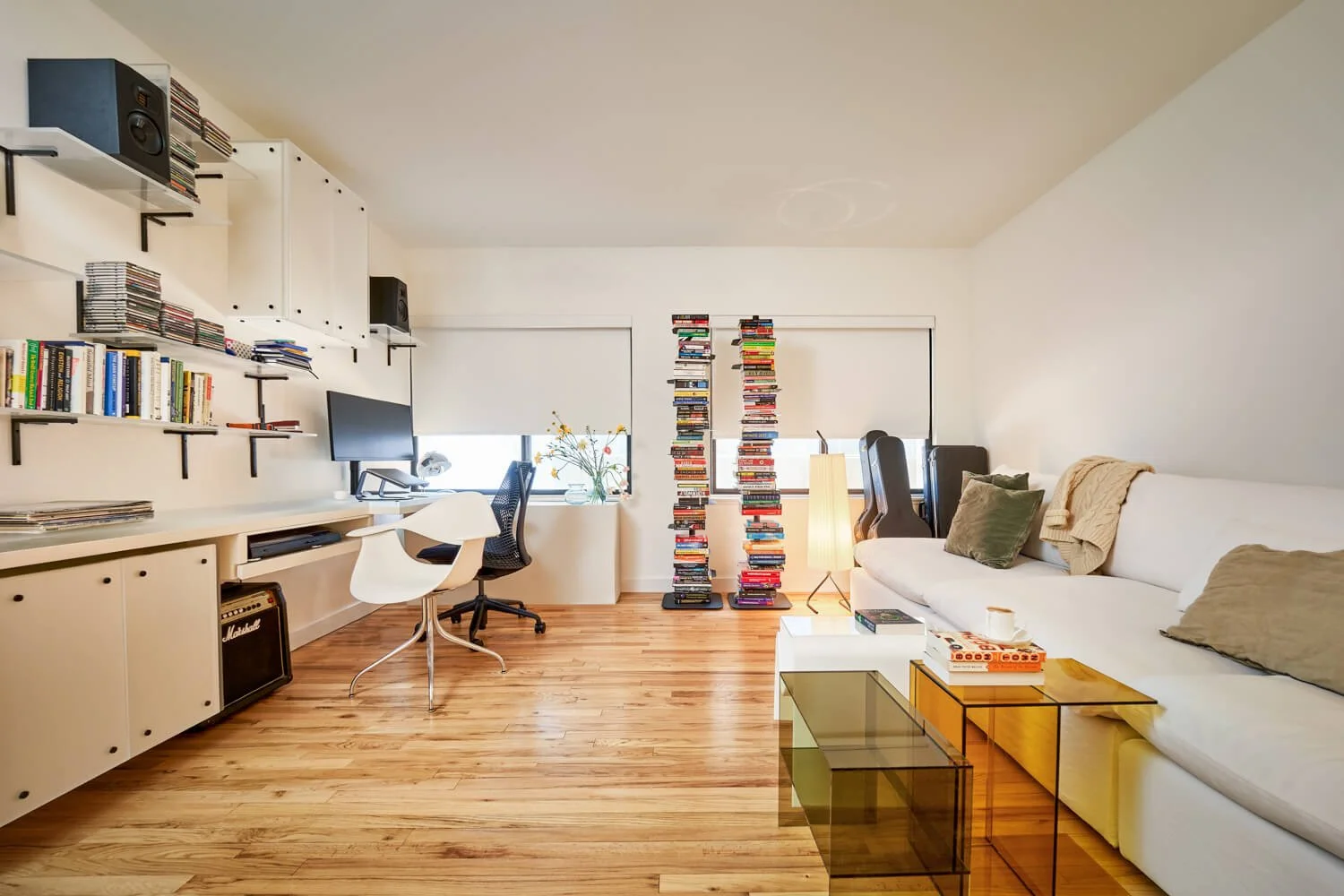
At 67 East 11th Street, one of New York City's most storied examples of cast iron architecture rises above Greenwich Village — the Castiron Building, a landmark of the SoHo cast iron district whose soaring cast iron façades, high ceilings, and large windows have made it one of the most coveted addresses for loft living in Manhattan. Mammoth was brought in to transform a 450-square-foot alcove studio into a fully resolved, deeply personal home. The result is a masterclass in what thoughtful interior design can achieve within a historic loft — without moving a single wall.
A Custom Detail That Does Everything
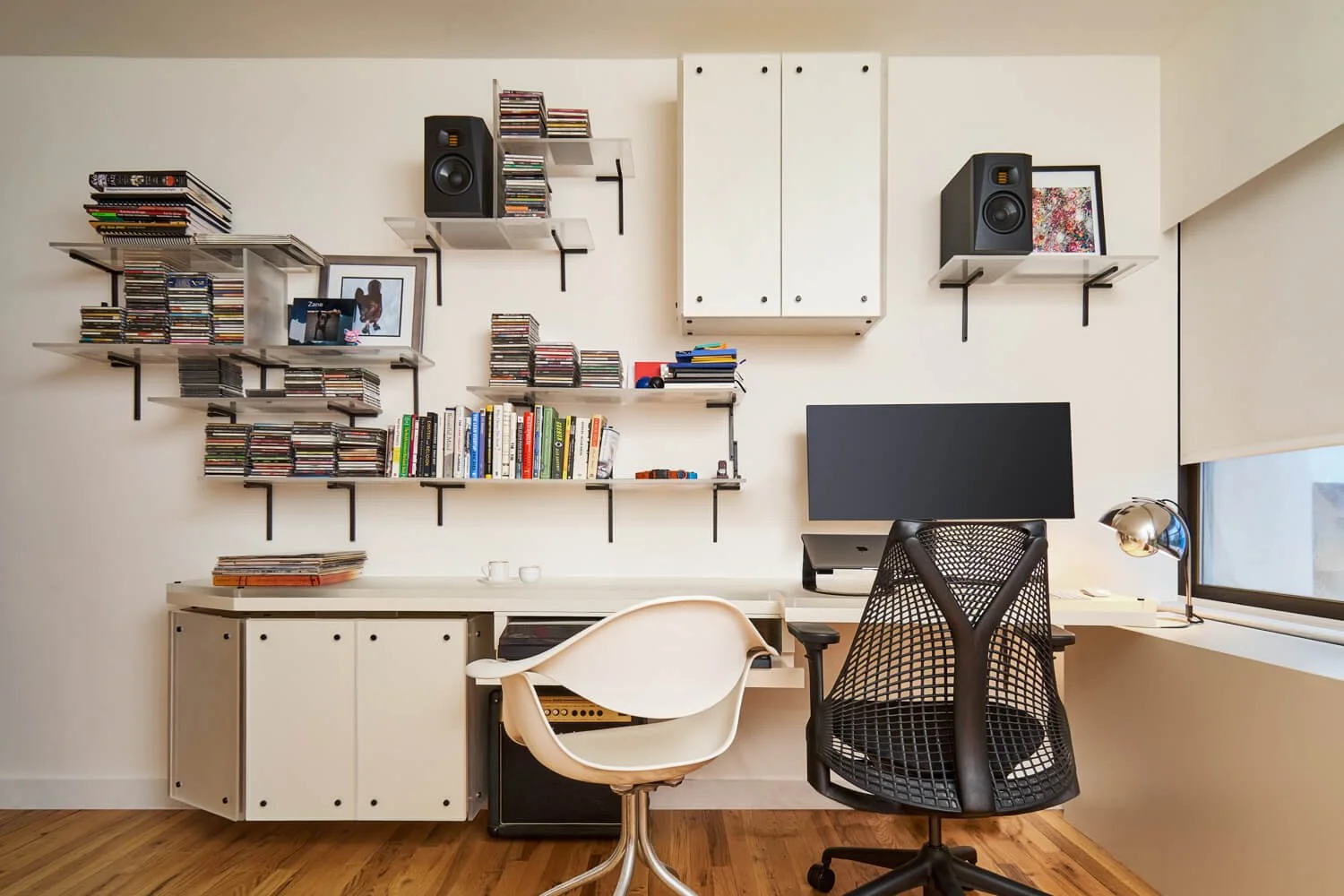
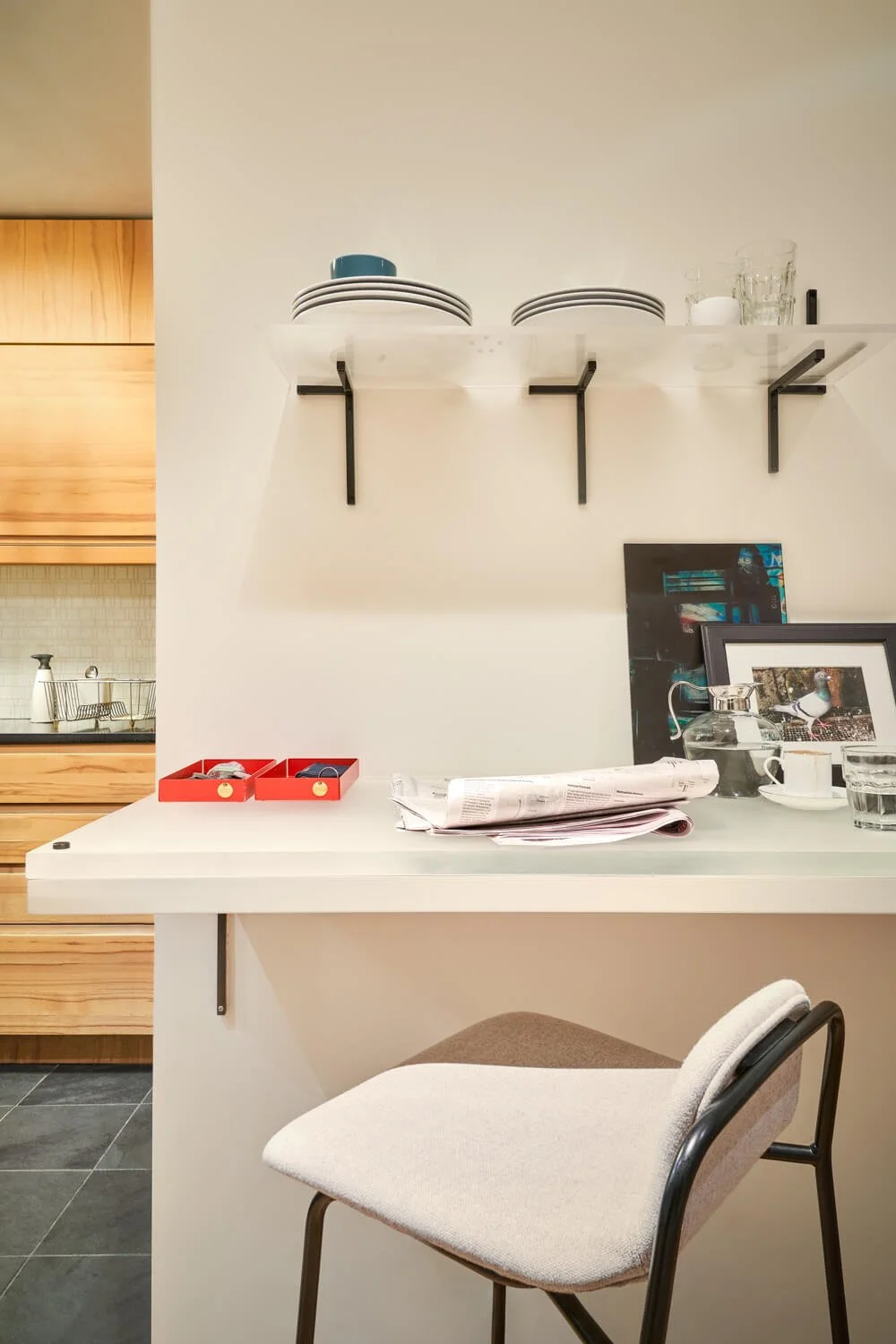
Every great interior has a unifying idea. Here, it was a bracket — a three-way brass bracket, custom-designed by Mammoth and fabricated by a metalwork shop in Queens, finished in matte black. This single element became the architectural thread running through the entire apartment, appearing at the desk, along the entry corridor, and inside the new closet. Floating acrylic shelves rest on top, keeping the open floor plan light and airy — a priority in any New York City loft where every square foot of visual space matters. Where more enclosure was called for, white-painted oak panels back the shelves, providing privacy at the workstation and structure in the closet zone. The bracket system gave the apartment a design language that feels considered from end to end — a level of architectural design coherence rarely achieved in residential spaces of this scale.
Work, Music, and Storage — All in One Unit
The main millwork unit anchors the living zone, functioning simultaneously as a home office workstation and a dedicated music station. The client's keyboard sits below; above, custom shelving stores sheet music, vinyl, books, and other collections — organized and accessible without consuming precious floor space. In a New York City loft governed by loft law and the spatial realities of co-op living, the ability to stack functions within a single bespoke piece of millwork is not just elegant — it's essential. This is the kind of interior design that understands how people actually live in New York, NY: working, creating, and existing within the same 450 square feet, often all at once.
The Entry Corridor, Reimagined
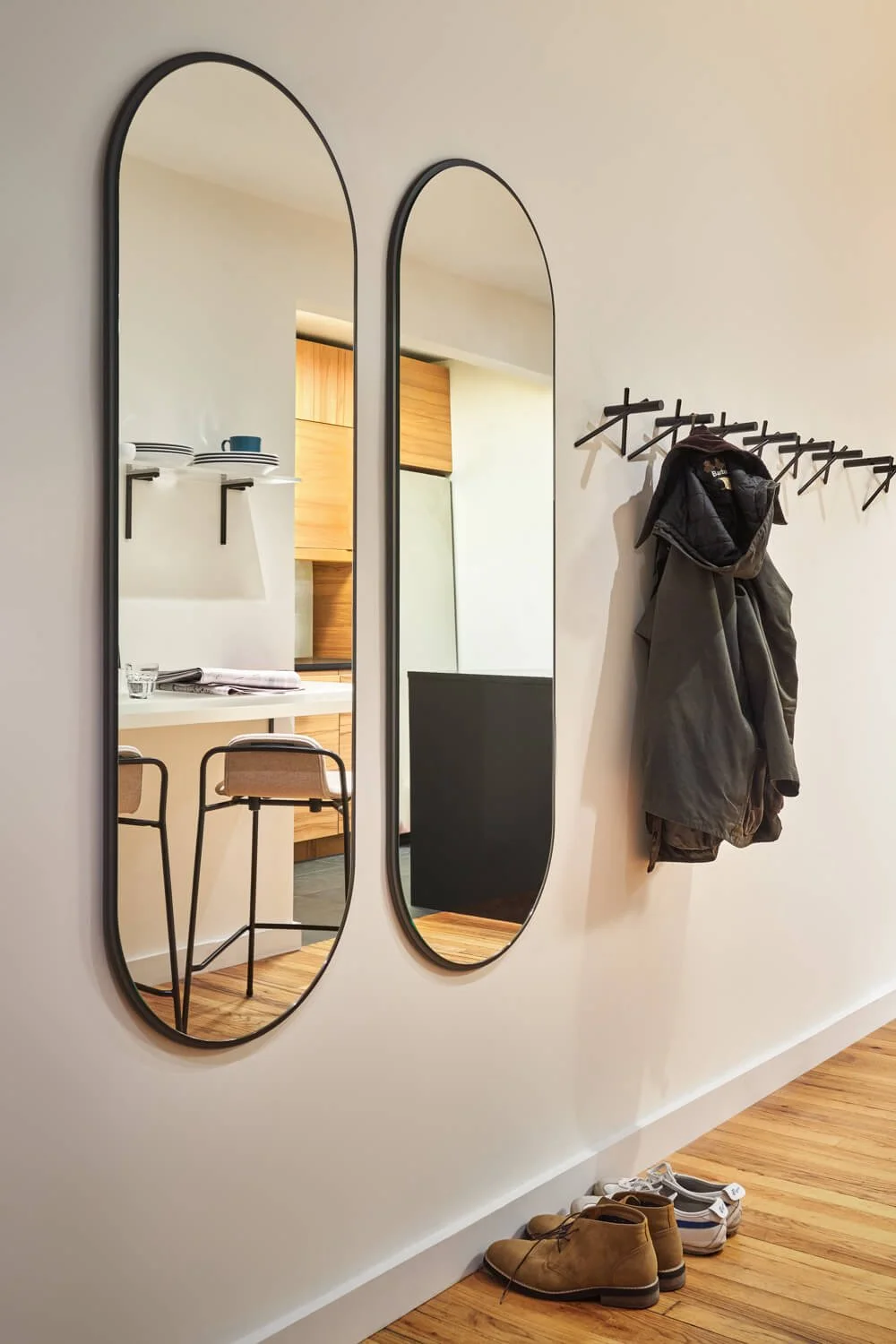
The long entry corridor — a feature common to the residential spaces found throughout the Castiron Building and similar cast iron historic district buildings across the SoHo cast iron district, Flatiron, and Tribeca neighborhoods — was transformed into a dining area anchored by a second custom millwork unit. The same brass bracket system supports shelving and display storage here, maintaining the apartment's unified design language. Sourced black-painted wood hooks line the corridor wall, echoing the matte black hardware throughout and adding functional storage without visual noise. What might have been wasted circulation space became one of the most characterful rooms in the home.
Closet Where There Was Chaos
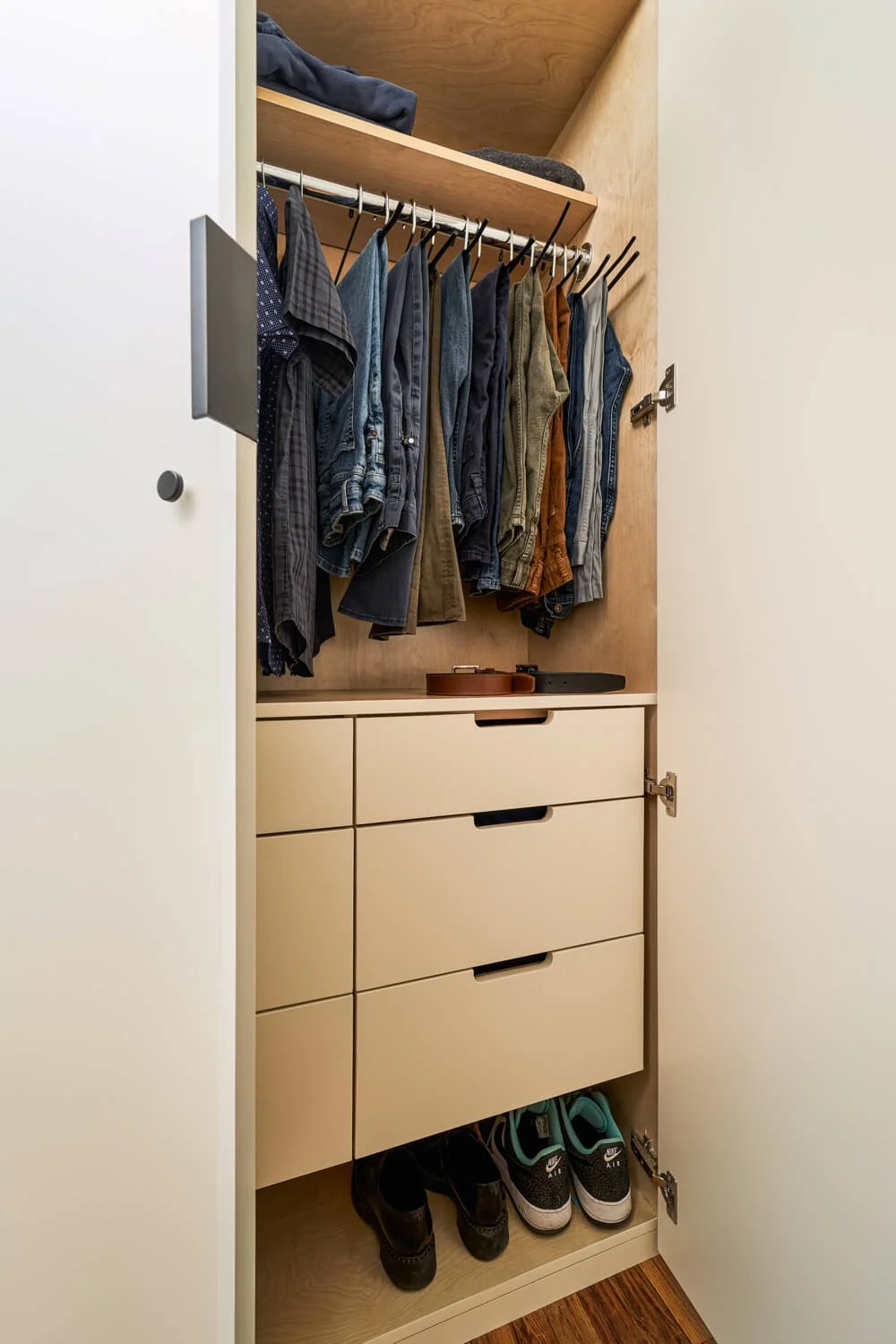
A former workspace was converted into a proper closet — giving the client, for the first time, an organized place for clothing and belongings. In the context of New York City lofts, where zoning and building systems often dictate what is and isn't possible structurally, a cosmetic intervention like this — repositioning function through millwork rather than construction — is often the most effective path. No permits, no zoning filings, no co-op board approval process for structural work. Just a well-designed built-in that solves a real problem.
Furniture, Lighting, and the Full Picture
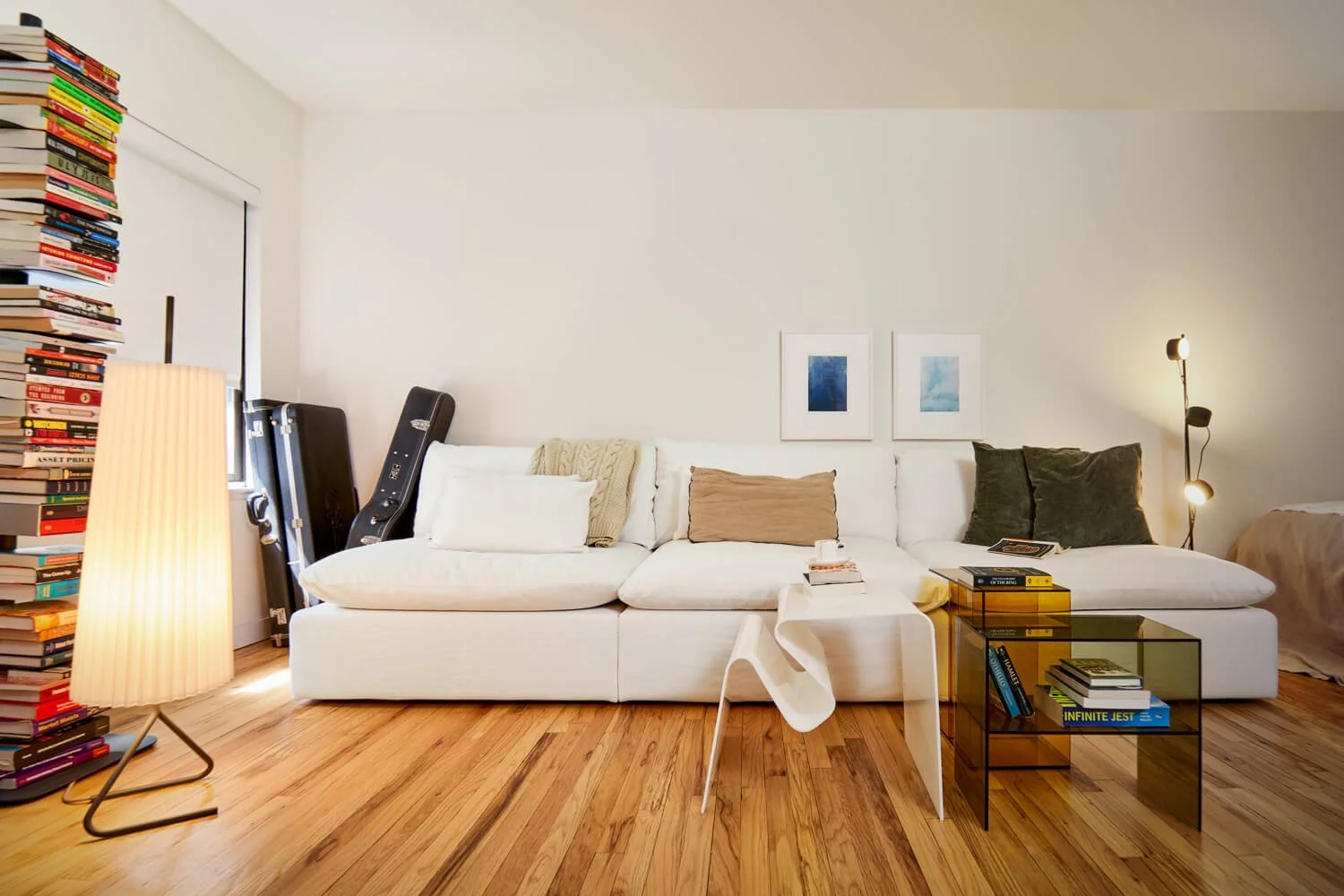
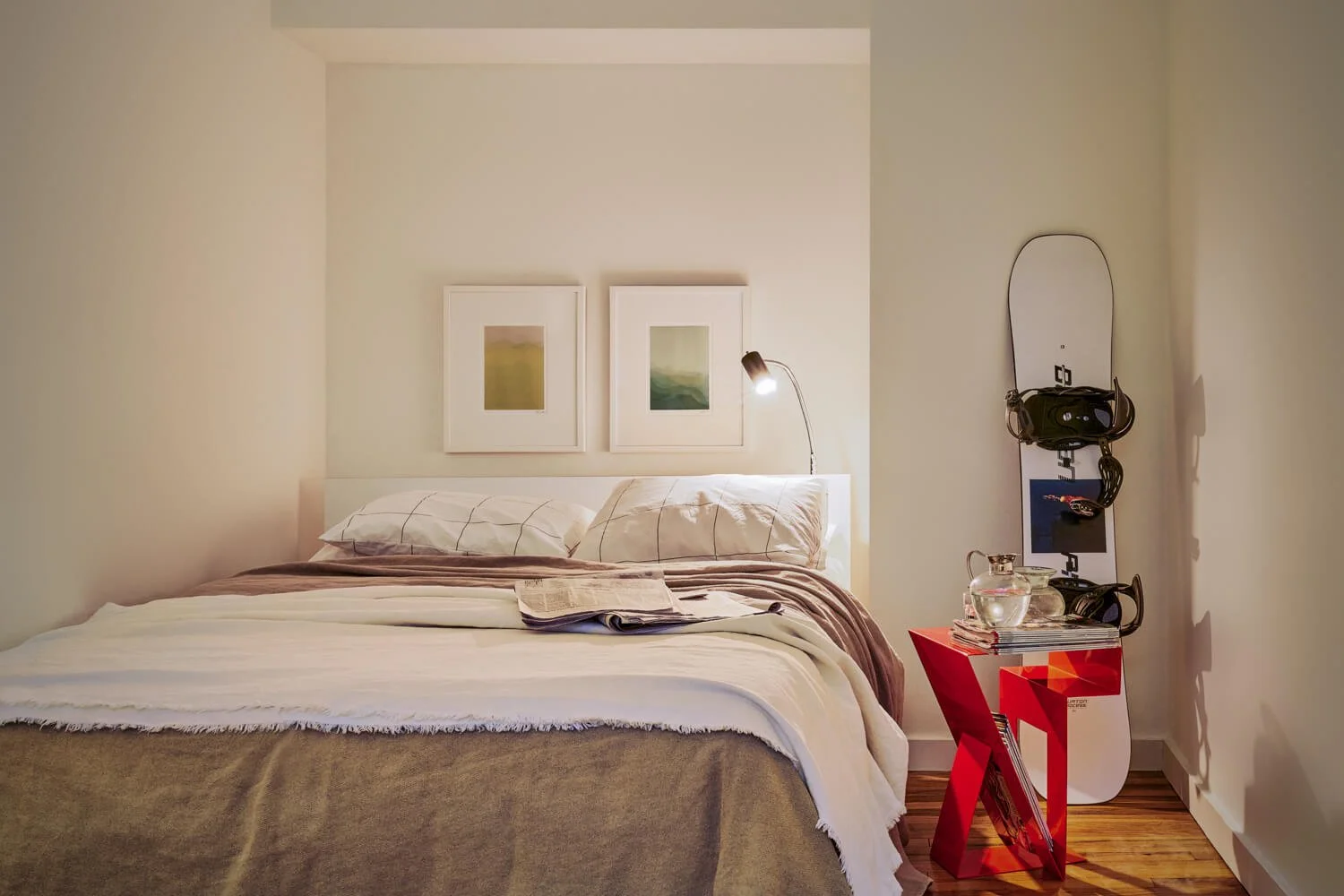
Mammoth sourced all furniture and lighting for the project, ensuring that every piece — from seating to task lighting — reinforced the same restrained, precise aesthetic as the millwork. The apartment was painted throughout, unifying the walls, ceilings, and trim into a single calm backdrop against which the brass bracket, the acrylic shelves, and the client's collections could read clearly. In a historic loft with cast iron architecture all around — large windows flooding the space with natural light, high ceilings giving the rooms their characteristic sense of volume — the interior design needed to complement rather than compete with the building itself.
Serving New York's Cast Iron Neighborhoods
The Castiron Building sits within one of Manhattan's most architecturally significant corridors — the cast iron historic district that stretches from SoHo's cast iron district north through NoHo and into the Flatiron neighborhood, with Tribeca's cast iron buildings just to the south. Mammoth works across all of these neighborhoods, bringing the same design-build approach to co-op renovations, historic loft gut renovations, and everything in between. Whether navigating the Landmarks Preservation Commission, coordinating with co-op boards, managing loft law compliance, or handling the certificate of occupancy process for a full gut renovation, Mammoth understands the specific constraints — zoning, building systems, adaptive reuse considerations, brick walls, cast-iron façades — that define renovation work in New York City's cast iron historic districts.
This project required none of that complexity. But the knowledge informs every decision regardless of scope. Understanding what a building is — its structural logic, its architectural design heritage, its position within the cast iron district — shapes how Mammoth approaches even the most cosmetic intervention. The bracket was fabricated in Queens. The hooks were sourced carefully. The paint color was chosen to work with the natural light that pours through those large windows every morning. Nothing in this apartment was accidental.
What's Possible in 450 Square Feet
The alcove studio at the Castiron Building is proof that loft living in New York, NY doesn't require a large footprint to feel complete. With the right interior design approach — one that treats a co-op studio in a cast iron historic district building not as a limitation but as a set of specific conditions to design within — even the smallest residential spaces in New York City lofts can feel resolved, generous, and entirely personal. A custom bracket made in Queens. Acrylic shelves that float. A closet where there wasn't one. A music station where a keyboard finally has a home.
That's what Mammoth does — in the Castiron Building, in SoHo, in Tribeca, in Flatiron, and across New York City's most storied cast iron neighborhoods.