
Advantages of Design-Build: What It Is and How It's Reshaping the Industry
Table of Contents:
Advantages of Design-Build: What It Is and How It Is Reshaping the Industry
What is Design-Build Construction?
Design-Build Can Discover Issues Before They Become Setbacks
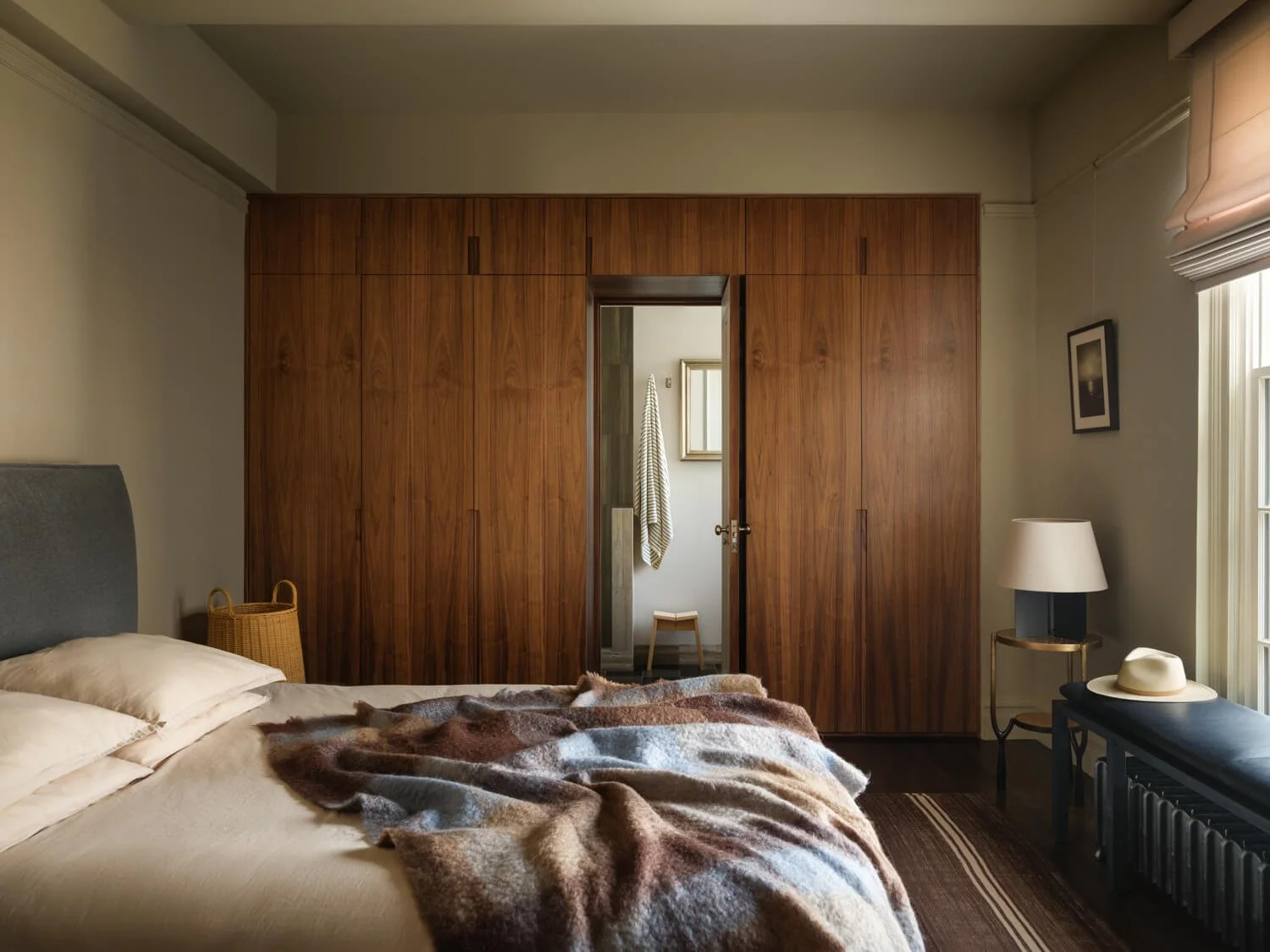
Pre-War Bedroom Renovation with Walnut Millwork
Design and Build by Mammoth
Photography by Joe Kramm
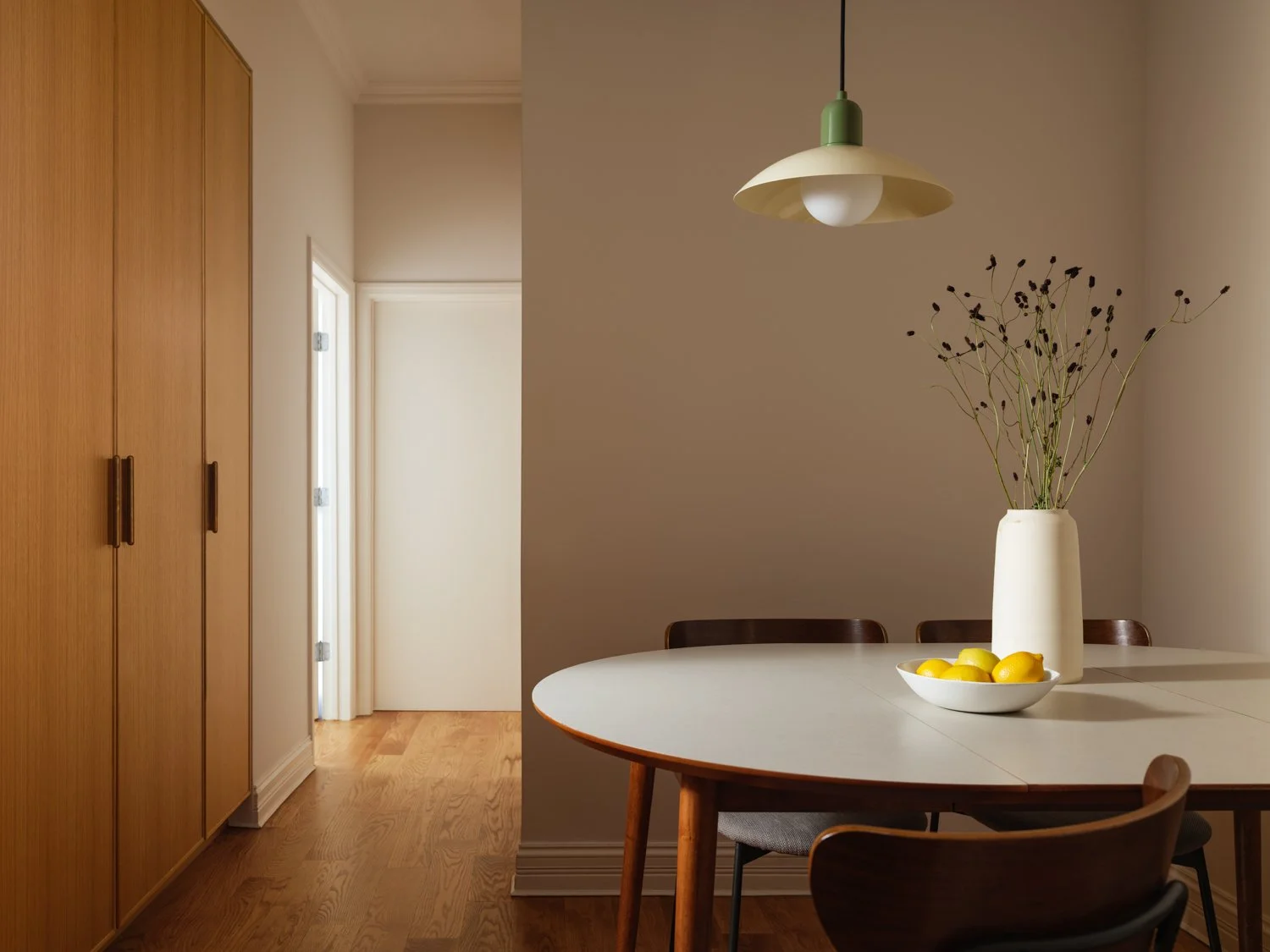
East Village Gut Renovation and Custom Oak Millwork
Design and Build by Mammoth
Photography by Joe Kramm
Advantages of Design-Build
Most clients begin a construction project with one central goal: they want everything to run smoothly. They expect their project to stay on schedule, be completed as planned, with no surprises, change orders, extra costs, or delays. In New York City, that expectation is tested from day one when using traditional construction methods.
We encounter diverse pain points in NYC construction—DOB permits can take time, friction between contractors and architects over plan interpretation is common, and renovations go over budget almost immediately. Costs spiral because of unexpected issues found once contractors are on site and walls open up.
A project can look flawless on paper and still shift or stall the moment it meets reality. This is, unfortunately, common with a design-bid-build method.
In a traditional design-bid-build project, multiple teams operate independently: design, construction, and independent subcontractors. This fragmentation can devolve into a game of telephone between the various trades. While this creates friction during design, the real problems emerge during construction—conditions revealed during demolition force teams to scramble for solutions, leading to suboptimal outcomes or delays caused by poor coordination. The design-build method solves this by integrating design and construction into a single, unified design-build process.
What Is Design-Build Construction?
Design-build is a construction delivery method that brings design and the construction process under one team and one single contract, from the earliest phases through entire project completion. Clients work with a single entity; this works because the general contractor is involved during design, and the architect stays engaged through construction.
It's a recognized and widely adopted project delivery method—and in New York, its reach now extends to the public sector. This matters because it reflects how institutions are placing their trust in the design-build method, and how it's reshaping the way the construction industry approaches complex builds.
Discovering Issues Before They Become Setbacks
After Schematic Design is complete, we schedule probes and other exploratory work to better understand the existing conditions of a space, plan for rectifying any issues, and design to existing conditions where possible.
Our 88 PPSW project illustrates this well: during the design phase, we discovered the staircase wasn't structurally sound. Because design and construction were working together from the start, we brought a structural engineer on board early—and offset some of the added costs by scaling back in other areas of the project.
On a project on Central Park West, we found gas risers running inside the masonry walls along the kitchen. If we'd hit those during demolition, it would've meant real delays and change orders. We caught it early instead — accessed the kitchen plumbing through an adjacent room and left the risers alone.
Both cases reflect what integrated coordination looks like in practice—challenges caught early, handled quietly, and without derailing the project. This reassures clients: because a smooth experience doesn't happen by accident, it is not a matter of luck; instead it's built into the method.
Single-Source Accountability
This is key. In traditional methods like design-bid-build, architects, contractors, and consultants often work in silos. When problems arise during a construction project, it's not always clear where the issue originated—and as a result, the client can easily get caught in the middle.
Design-build removes that uncertainty by placing responsibility under one coordinated team working toward the same outcome. Issues get resolved faster and with less back-and-forth. Clients also have a single point of contact throughout the project, which makes communication more direct and easier to manage.
Cost Awareness That Prevents Risk
Something distinct happens when design intent and the natural logic of construction come together early. Insights are shared, feedback flows continuously, and clients gain confidence that the project is being intentionally guided—while adjustments and revisions are cut down along the way.
When planning the budget for a renovation, it's vital to assess both the location and the specific needs of the space, creating a framework that outlines the client's expectations and requirements. It's equally essential to work within the available budget while preparing for potential challenges whenever possible.
In design-build, cost awareness is built directly into the design process, which allows better budget control and identifies potential cost savings early on. At Mammoth, as a dedicated design-builder, we review the budget with clients at the completion of each design phase and throughout subsequent construction phases. Any delta in pricing is evaluated by the design-build team alongside the client to assess whether price increases are worthwhile, should be rethought, or redesigned.
Some adjustments that design-build can help avoid—along with their extra costs—range from material changes (switching from natural stone to engineered stone, or replacing custom millwork with modular systems) to changes in flooring options and finishes.
The constant communication loop between teams means the budget can be reviewed and adjusted throughout each design phase. For clients, this is a distinct experience—they can see in real time how design decisions impact cost and evaluate changes as the project moves forward. If the budget needs to be redistributed to prioritize what matters most, that can happen without losing sight of the overall scope.
At the 85th Street Jackson Heights project in New York City, our clients had a major concern: asbestos. With young children in the home, they wanted it abated before moving forward with the renovation. We needed to bring in a company early in the process to assess the situation.
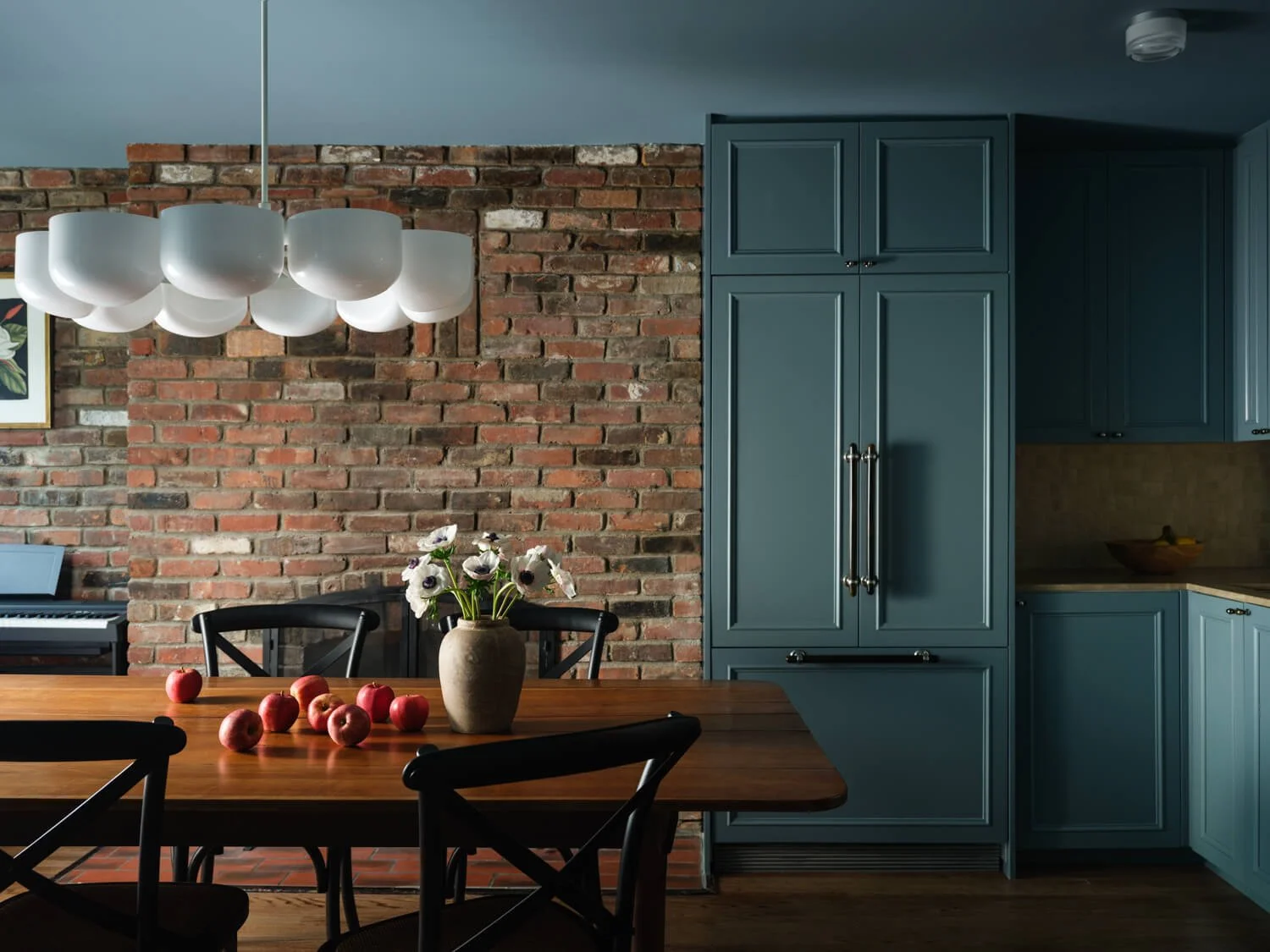
Brooklyn Heights Open Living Renovation
Design and Build by Mammoth
Photography by Joe Kramm
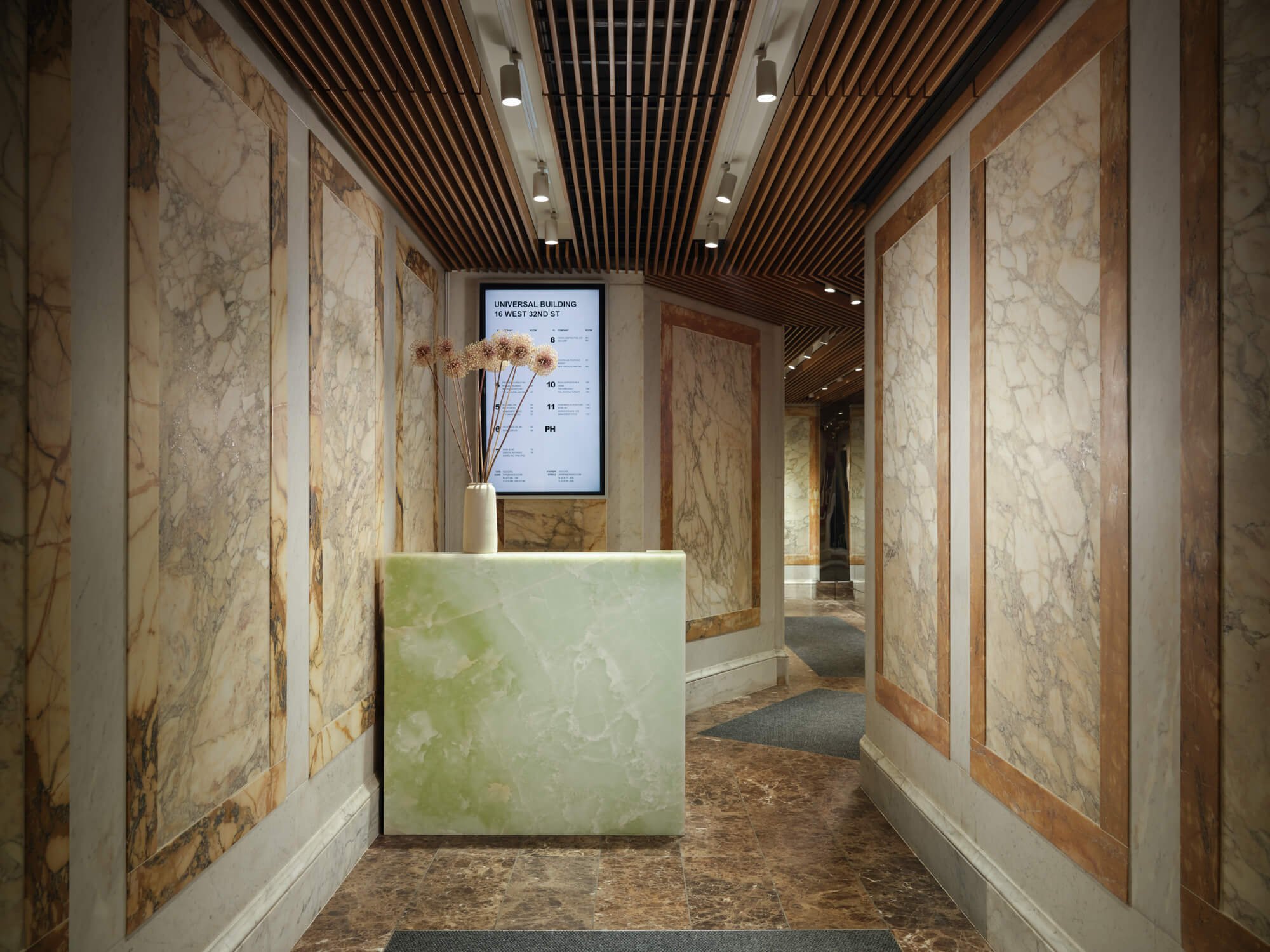
Nomad Lobby Renovation and Custom Onyx Reception Desk
Design and Build by Mammoth
Photography by Joe Kramm
Once we understood the scope and cost of the work, we carefully reallocated funds within the overall budget to accommodate the abatement without increasing the client's total investment. By planning ahead and accounting for the issue from the start, we created a safer environment for the family while keeping the project financially on track.
Value engineering happens during design—not after the bid—so cost decisions are made with full construction knowledge.
With fewer decisions made under pressure or reactive choices on site during construction, the number of issues, change orders, and modifications during execution is naturally reduced.
Stepping into a construction project can feel like either a leap of faith into the unknown or embarking on an adventure fully prepared, with a map in hand. The second option is what we aim for with the design-build method.
Predictability Builds Quality
The predictability of the design-build approach throughout the construction management process translates into higher quality. Staying closely involved throughout gives us greater control—and shifts responsibility where it belongs. In this design-build model, the team owns both the design and the execution. If a discrepancy arises between plans and construction, it's on us to resolve it, not the client. That's a fundamentally different relationship, and for the project owner, it means real peace of mind.
Experience in renovation projects and design-build construction has allowed us to anticipate unforeseen issues and examine details that may not be obvious right away but could delay construction—while finding solutions that keep us ahead of potential challenges. Over time, these solutions become more intuitive, allowing us to work with materials that support our clients' vision.
The East Village project is a strong example of how predictability leads to quality. Removing partitions and rethinking the floor plan to create a more open and functional space resulted in a complete transformation—one that was only possible because every decision was coordinated from the start.
Whether it's a historic building, a modern loft, or a residential apartment, every detail is handled with care and precision from concept to completion—blending thoughtful design and craftsmanship.
Communication and Real-Time Collaboration
Instead of working in separate phases, designers, builders, and other key stakeholders stay connected through early collaboration, creating a continuous feedback loop from the beginning.
This real-time collaboration makes a measurable difference—especially in New York City, where formal requests for information between separate teams can stall a project for weeks. Questions, ideas, and potential issues can be addressed as they arise, helping avoid misunderstandings and preventing small details from becoming larger problems.
We also maintain a dedicated project manager serving as the single point of contact throughout the entire process.
As a result, with a design-build approach, decisions are made more quickly, coordination improves, and the project stays aligned with its goals as it moves forward.
Projects Where Design-Build Works Best
Design-build is best suited for projects with a complex scope where timelines matter and collaboration between design and construction is linear and proactive from day one. Gut renovations are a natural fit—projects that require walls to come down, spaces to be completely rethought, and where unexpected conditions are almost inevitable. Commercial tenant fit-outs are another area where this method excels, since they typically run on tight deadlines where every week of delay has a real impact on the business budget.
Our 13 E. 16th Street project in Union Square illustrates this well. It was a 4,000 sq. ft. gut renovation of a commercial co-op where design and construction had to work in perfect sync from the very first moment to deliver the result the client envisioned. By integrating custom millwork, raw industrial architectural elements, and tailored spatial planning under one cohesive design-build process, we transformed a vast loft space into a highly functional, sophisticated environment.
Conclusion
For New York property owners navigating tight timelines, strict code requirements, and complex permitting, identifying potential issues or existing damage early in the process is essential—it's the most direct way to avoid setbacks. Having cost awareness from the start prevents risk, unexpected budget increases, and the delays that come from last-minute material changes. Design-build delivers a level of predictability characteristic of this model, one that naturally raises and maintains quality standards. All of this is made possible through fluid communication between teams, constant feedback, and unified work under a single source of accountability.
The construction industry is evolving, and the design-build method is positioning itself as the more intelligent approach to ensuring success throughout the entire lifecycle of a project—from design phase to construction and beyond. It streamlines decision-making, improves coordination, and is cost-effective. Every design-build project has shown us precisely that, as we often share in our updates on LinkedIn.
If you're looking to approach your next project with a holistic procurement strategy, a design-build firm may be the ideal choice.
Every renovation project comes with surprises—that's simply the reality of architecture, design, and construction. But these shouldn't be seen as burdens. More often than not, they're opportunities.
