
Design Process for Interior Renovations in NYC
Table of Contents:
Setting a Realistic Budget
Select Your Design and Construction Team
Schematic Design Phase
Design Development Phase
Regulatory and construction document phases
New York renovating an apartment can come with its own set of challenges. Timelines are tighter, approval processes tend to run longer, and the rules — from co-op boards to DOB permits — can realistically slow a project down if you're not prepared.
With a design-build approach, the right team can walk you through the entire process from start to finish — so that NYC apartment renovations feel organized, clear, and fully achievable. It doesn't have to be stressful.
Here’s what you can expect before the planning begins:
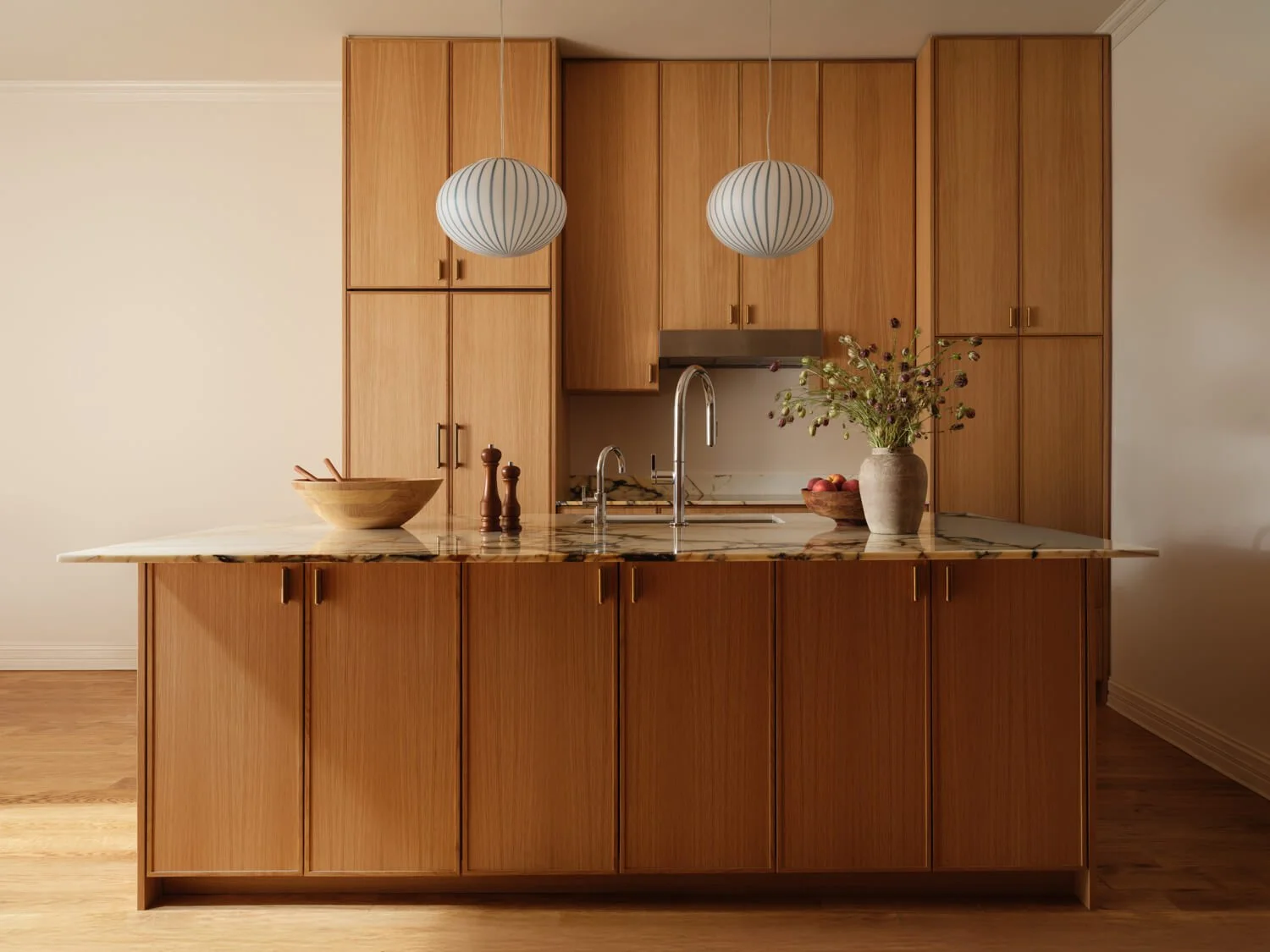
Cosmetic Renovation in Park Slope . Design & Build by Mammoth
Photography, Joe Kramm
Define Your Vision and Renovation Goals
The early stages of a design process are an invitation to imagine. It is the moment clients begin to see the latent potential of their spaces — through mood boards, material studies, and the slow clarification of what a home might become. Before engaging a designer, it is worth taking the time to define the project's scope with some precision: is this a full gut renovation, or a more selective cosmetic intervention? Whether you are reimagining a prewar apartment or restoring a historic townhome, that distinction will determine the entire trajectory of the project.
Begin by identifying what is essential versus what is aspirational in advance of your initial consultation — a dedicated studio for creative or recreational pursuits, for instance, may matter deeply to one client and not at all to another. A useful exercise is to envision a complete day lived within the space: how should it feel at different hours? How should it reflect the building's own character, particularly in an older or architecturally significant property? And what is the realistic budget within which all of this must be achieved?
What are the goals for your gut renovation? Are you optimizing for function, resale value, or the more personal satisfaction of living beautifully? There is no incorrect answer — but having one will keep every decision that follows oriented and purposeful. The more clearly a client arrives at that first conversation, the more effectively a designer can act on their behalf.
Visual references gathered in advance are equally valuable. Platforms such as Pinterest or Houzz provide a useful starting point, though visiting physical showrooms offers something no screen can replicate: a genuine sense of material weight, finish quality, and spatial scale. These images are the basis for your moodboard, and future design-direction.
In parallel, begin to gather information on the regulatory constraints of your project: understand the building rules, what permits are required, and the process for condo board approval.
The clearer the vision, the more fluid the design phase will be.
Understand NYC-Specific Constraints
Most co-ops and condominiums in New York City operate under alteration agreements — formal documents that define precisely what modifications are and are not permitted within a given unit. Some buildings prohibit relocating a bathroom above a dry space such as a bedroom, a condition commonly referred to as "wet-over-dry." Others require licensed contractors, specific insurance thresholds, or a refundable deposit before any work may commence. Becoming acquainted with these requirements before the design phase begins can prevent the kind of delays and costly redesigns that no well-run project should encounter.
Not every renovation triggers a permit, but understanding which scopes of work do — and what local building codes govern them — is essential groundwork. Anything that touches structure, plumbing, or electrical upgrades will almost certainly need to be filed with the NYC Department of Buildings. Discovering this mid-design is a disruption that careful preparation can readily avoid.
Buildings situated within a historic district — and a significant number of New York's most distinguished residential properties are — will require approval from the Landmarks Preservation Commission before any exterior alteration, and in certain cases, interior work as well.
Individual buildings may also carry their own operational rules: permitted working hours, noise restrictions, freight elevator schedules. These details have a more substantial effect on project timelines than most clients anticipate — and understanding them early is as important as any other aspect of the planning process.
Set a Realistic Budget
In New York City, an early conversation about budget is not merely advisable — it is foundational. Costs here exceed those of nearly every other market in the country, and understanding how the money can be redistributed across a project's priorities makes the entire process more coherent and less reactive.
A mid-range gut renovation in NYC typically runs between $400 and $600 per square foot. Higher-end projects — those involving custom millwork, specialty finishes, or significant layout changes — can reach $600 to $800 or beyond. But square-footage pricing alone doesn't tell the whole story, because not every room costs the same. A living room renovation can start as low as $200 per square foot, while a kitchen renovation can run around $1,500, and a bathroom can climb to $2,000 or more. The blended average depends entirely on your scope.
It helps to think about costs in two categories: hard costs and soft costs.
Hard costs encompass the physical work — labor, materials, and construction — and typically represent around 70% of the total construction budget. Soft costs cover everything else: design fees, architectural drawings, permits, filing, and agency fees. In NYC, design and architecture fees alone can run between 10 and 20% of the overall project budget, and permitting and filing fees for a residential project typically range from $12,000 to $20,000, depending on complexity.
For a full breakdown, see our Gut Renovation Cost in NYC: 2026 Guide.
Assemble your design and construction team
Knowing who to call is not always obvious. Should you retain an architect, an interior designer, or engage a general contractor directly? For many clients, this is one of the first genuinely disorienting moments of the process. The roles are distinct in ways that matter, and understanding those distinctions early will help you assemble the right team from the outset — without redundancies or gaps that cost time and money later.
An architect manages technical drawings, structural modifications, and required permits. A general contractor oversees the physical execution of construction. An interior designer addresses the spatial experience — the logic, atmosphere, and material character of a room. A design-build firm brings all of these disciplines together under one roof, which simplifies the process considerably and creates an internal coherence that fragmented engagements rarely achieve.
The design-build model does more than streamline coordination — it offers clients the assurance that their project is being looked after at every stage. Design and construction teams remain in continuous communication from start to finish, with ongoing reassessment of any adjustments that arise along the way. The ability to anticipate complications and evaluate them across disciplines results in fewer delays, less rework, and a more composed experience overall.
It is also the most practical model for those who prefer a single point of contact. Unlike traditional construction models, responsibility is never fragmented — the client always knows who is accountable, and that clarity has tangible consequences for both the process and the outcome.
For further reading: Design-Build vs. Design-Bid-Build.
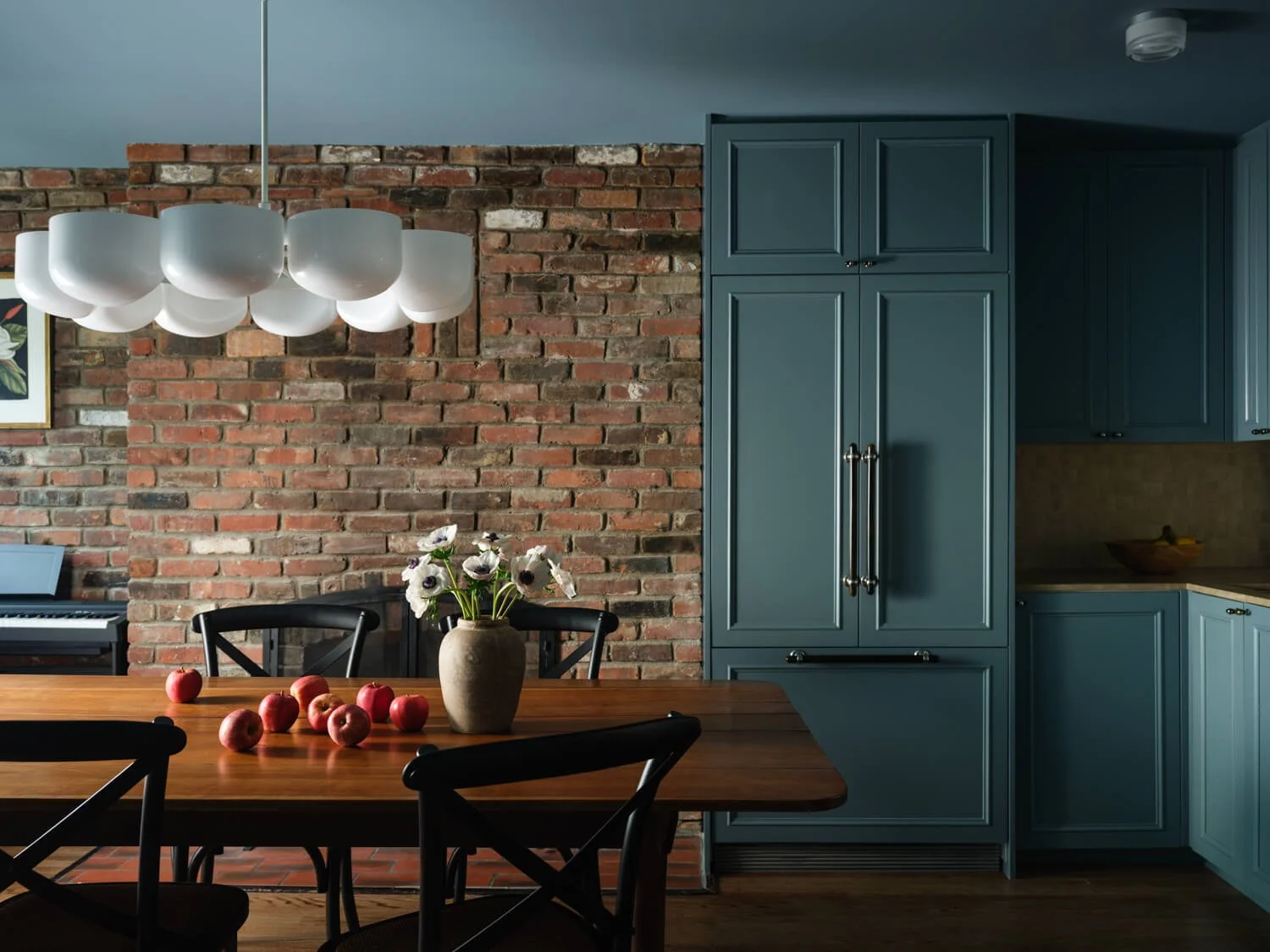
Cosmetic Renovation in Brooklyn Heights. Design & Build by Mammoth
Photography, Joe Kramm
Phases of Design
Schematic Design Phase
The schematic design phase is the moment a designer begins translating everything discussed into actual drawings. Early concept sketches give spatial form to ideas that have, until now, existed only in conversation — and details begin to take shape in ways that are far more concrete than a mood board alone can achieve.
This is where the significant decisions begin, even if nothing is yet finalized. Questions of space planning — moving walls, connecting rooms, reconceiving an apartment's entire organizational logic — are worked through here. For a New York City project, this phase is also the appropriate moment to confront existing conditions: building restrictions, structural realities, or constraints that may require the original plan to be reconsidered. A design-build firm approaches each of these not as obstacles, but as problems with considered solutions.
Clients frequently describe the schematic design phase as one of the most compelling moments in the entire process — and with good reason. It is when an idea becomes something one can actually see. In the design-build method, the direct alignment between designers, builders, and client makes these conversations more grounded, and a clear path forward takes shape with considerably less friction.
Design Development Phase
What was established conceptually in the previous phase now begins to acquire material form. This is the stage at which materials, millwork, furnishings, and fixtures enter the conversation — and the space starts to look, at last, like something one can genuinely picture inhabiting.
Material selection is more nuanced than it may first appear, particularly when accounting for long lead times that can extend considerably. The question is never purely aesthetic: it is also about durability, how a surface ages, and how it relates to everything surrounding it. These are conversations that warrant careful attention, and they are best had early.
In NYC apartments and lofts, where natural light and floor area vary dramatically from one building to the next, these decisions carry a weight they might not elsewhere.
And then there are the details — plumbing fixtures, lighting, door handles, cabinet pulls. They are easy to defer, and they are precisely what separates a space that merely functions from one that feels genuinely considered.
Regulatory and Construction Document Phases
Understanding this stage of the process in advance eliminates the majority of causes for delay. It demands time and diligence — but that investment is reliably returned.
The board package for a co-op or condominium is a formal presentation of the project to the building. It includes architectural drawings, contractor credentials, proof of insurance, and in many cases a letter of intent describing the scope of work. Buildings review these submissions on their own schedule — and if anything is missing or falls short of their standards, the package is returned and the process begins again.
Permit filing and other necessary DOB filings proceed alongside this review. Depending on the project's scope, the architect will either self-certify the plans or submit them for standard plan examination. Self-certification moves faster, but it is not universally available — and standard examination can take anywhere from several weeks to several months.
Timelines
A full gut renovation in New York City can take anywhere from 12 to 24 months from initiation to completion, depending on apartment size, the complexity of the scope, and how efficiently the approval process unfolds.
The design phase alone typically spans 5 to 8 months. Permitting and building approvals run concurrently with the later stages of design — and while most residential permits in NYC are issued within 1 to 2 months, more complex projects can take considerably longer. Construction itself generally runs between 8 to 18 months, depending on what is involved.
The approval process — whether through the DOB, a co-op or condo board, or the Landmark Preservation Commission — is where the most significant and least predictable delays tend to occur. Each body operates on its own timeline, and none is fully within a client's control. The most effective strategy is to have every document prepared and submitted correctly the first time.
A design-build team offers a particular advantage here. Because design and construction are managed by the same group, the approval and permitting process can run parallel to the final stages of design rather than waiting for them to conclude — a compression that can save weeks, and sometimes months, of elapsed time.
Construction and Project Management
Every construction project requires a structured schedule, and organizing it around clear milestones makes an appreciable difference — demolition first, followed by the rough trades: plumbing, electrical, HVAC — then inspections, finishes, and the punch list.
Knowing what is coming, and when, keeps all parties aligned and makes it possible to identify delays before they compound into something far more disruptive.
A designer's involvement during construction varies by agreement. They may conduct periodic site visits to verify that work is proceeding as specified — or they may be engaged continuously from the outset through completion. The model determines the extent of that presence.
In a design-build model, that presence is constant. The team is there managing procurement, reviewing materials against specifications, fielding questions in real time, and ensuring that nothing is built in a way that diverges from the original design intent.
New York City adds its own operational layer to construction management. Most buildings impose strict rules governing how and when work may occur — freight elevators run on limited schedules, construction is typically confined to weekday hours, and coordinating large deliveries on a city street requires advance planning. These are constraints a design-build team navigates as a matter of course.
Change orders arise in nearly every renovation, and they tend to be more disruptive when design and construction are managed by separate parties. When demolition reveals something unanticipated — deteriorated plumbing, a structural condition absent from any drawing, the need for asbestos testing — two independent teams must reach alignment before anything can proceed. When one team holds both sides of the process, those moments are resolved more quickly, with less back-and-forth and more limited impact on the budget.
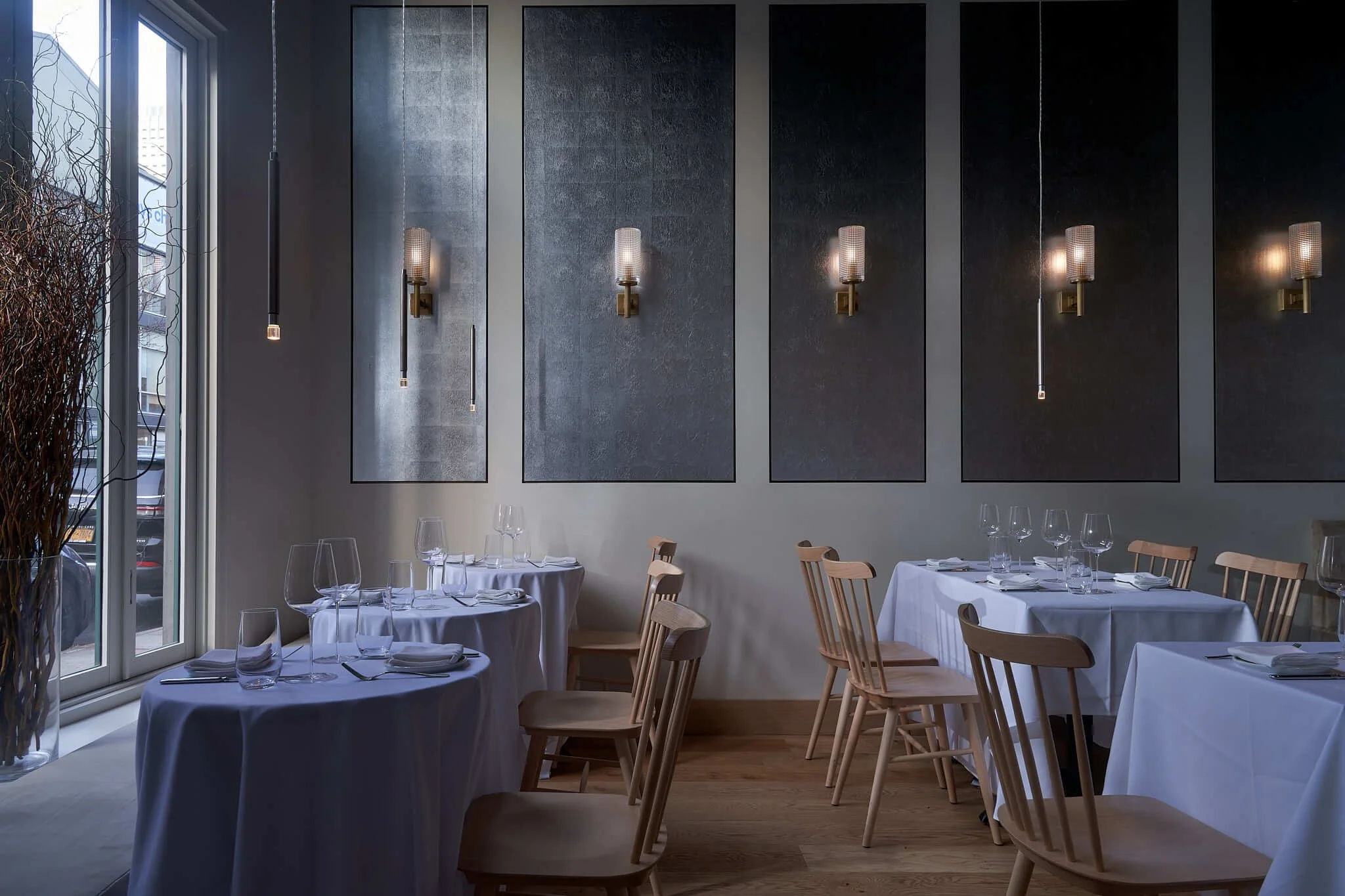
Restaurant Renovation in Williamsburg. Design & Build by Mammoth
Photography, Joe Kramm
Final Walkthrough, Punch List, and Close-Out
This is the moment of completion — when clients and the project team walk through a finished space together and encounter, for the first time in three dimensions, what once existed only in drawings.
If anything does not meet the agreed standard — a finish that differs from what was specified, a detail that warrants attention — it is documented on the punch list: a written record of outstanding items to be resolved before the project is formally closed.
In New York City, projects involving permits or structural and mechanical modifications may also require a sign-off from the Department of Buildings, or a Certificate of Occupancy, before the space can be officially closed out. The architect or expediter manages the filing — but it is worth understanding that this is a standard part of the process.
Once everything is complete, the as-built drawings should be retained. They are the definitive record of how the space was actually constructed — walls, plumbing lines, electrical systems — including any modifications made during the course of construction. They will be needed for future renovations, building applications, or any occasion that requires knowledge of what lies behind the walls.
No renovation, however well managed, is without a punch list. What distinguishes a well-run project is not its absence, but the speed and thoroughness with which it is resolved.
FAQ People also ask
How long does an interior renovation take in NYC?
Depending on scope, interior renovations take 10-24 months total. Roughly half the time will be devoted to design and regulatory phases, and the remainder for construction. For construction timelines, 5-12 months are typical.
Do I need a permit to renovate my NYC apartment?
Depending on the scope of the renovation, various permits may be required. Electrical and plumbing permits are pulled by the trades themselves, and are required for any project that involves that scope. General Architectural permits are required for may renovations, depending on scope. And a Landmarks Application may also be needed if the project is in a Landmarked District.
What is the average cost of a gut renovation in NYC?
Costs of renovation vary, but a general rule of thumb is that gut renovations start at $450-650 per square foot in NYC.
Do I need an architect or interior designer for my NYC renovation?
Depending on scope, an architect and/or interior designer may be required for a NYC renovation.
How do I get co-op board approval for a renovation?
Your architect and/or interior designer typically submits a set of drawings along with a document describing the scope of work to your building for approval. These are most typically submitted along with a signed alteration agreement and fees garnered by the management company directly.
