
NYC Brownstones: Architectural History, Character, and the Art of Renovation
TABLE OF CONTENTS
Architectural Styles Within the Brownstone Tradition
How to read a brownstone's style from the street
The Design Opportunity: Why Brownstones Inspire the Best Work
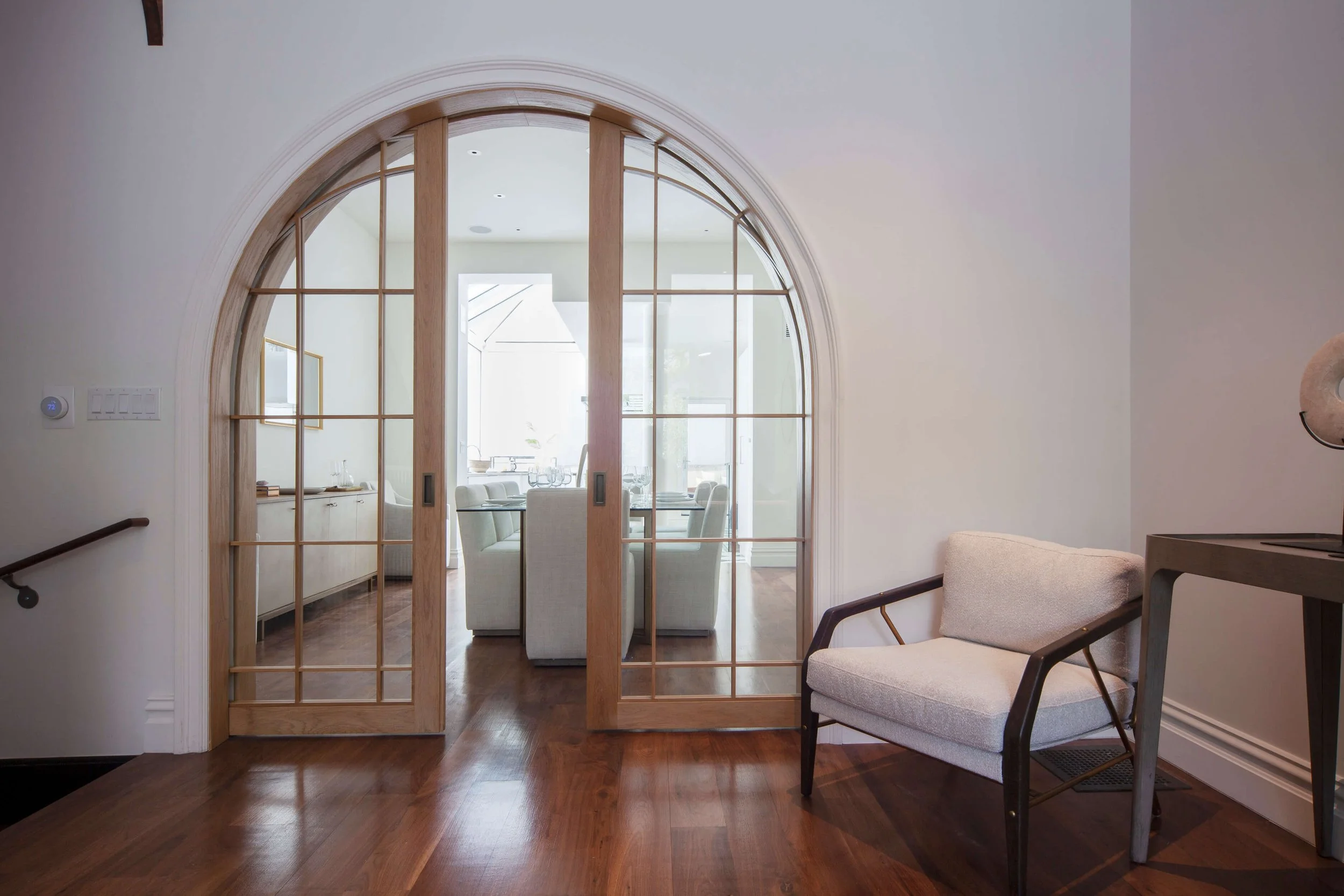
Upper East Side Renovation
Design & Build by Mammoth
Photography by Joe Kramm
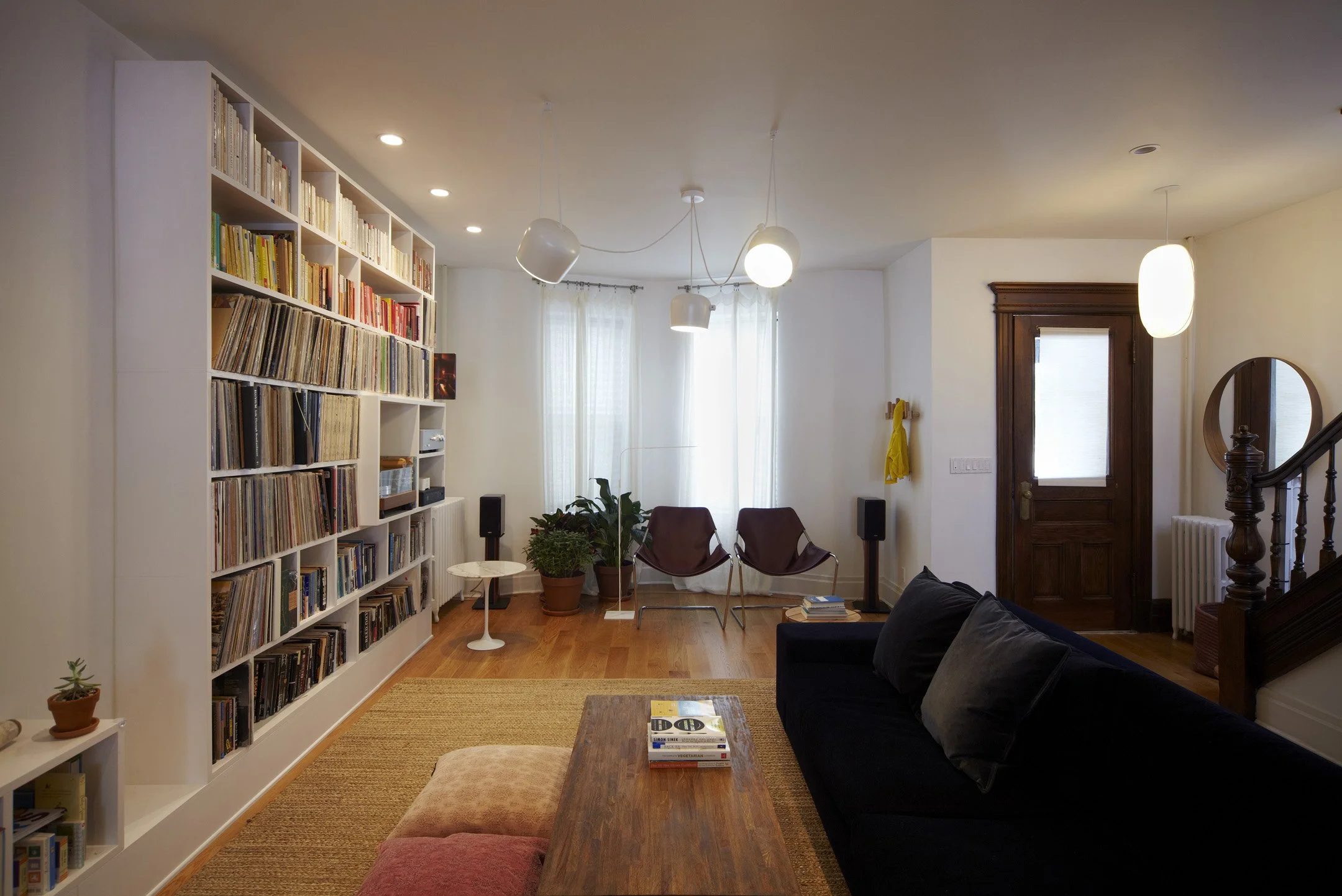
Windsor Terrace Renoation
Design & Build by Mammoth
Photography by Joe Kramm
The brownstone is one of New York City’s most recognizable building types. From Brooklyn Heights and Park Slope to Harlem, these homes have shaped the look of entire neighborhoods for nearly two centuries — and they remain as sought-after as ever. Their appeal comes from details that are genuinely difficult to recreate today: the stoops and cornices, the original ironwork, the high ceilings that define the parlor floor. More than that, brownstones carry a sense of history that new construction simply cannot manufacture. Their character wasn’t carefully planned by a modern developer — it accumulated over decades as the buildings became inseparable from the city’s own story. What makes them truly irreplaceable is that many of their defining features are tied to a specific moment in New York’s past. Once they’re gone, they cannot be brought back.
What Is a Brownstone? Defining the Architecture
Much of the color people associate with New York comes from the brownstone. The term refers to a rowhouse faced with a reddish-brown sandstone — brown sandstone quarried primarily in the Connecticut River Valley and in parts of New Jersey, particularly around Portland, Connecticut, and Belleville, New Jersey. This material gave an entire era of New York residential architecture its defining warmth and texture.
The stone became widely used not only because it was abundant and relatively affordable, but because it was an exceptionally workable freestone. Craftsmen could carve it into the cornices, lintels, and ornamental details that gave 19th-century homes their character and distinction. Its weakness is durability. Brownstone doesn’t age especially gracefully under years of moisture, freezing temperatures, and shifting weather. Walk through almost any historic brownstone neighborhood and the evidence is visible — some facades show worn edges and surface erosion, while others have been carefully restored to something close to their original condition.
The terms brownstone and rowhouse are often used interchangeably, but they are not quite the same thing. A rowhouse — sometimes called a townhouse — is simply a home that shares walls with its neighbors and forms part of a continuous row. A brownstone is a rowhouse faced with that particular sandstone. Many buildings people casually refer to as brownstones are actually clad in brick, limestone, granite, or other materials, even when they belong to the same architectural tradition and occupy the same blocks. The distinction matters most when restoration work is involved, because the material defines what can and cannot be done to a brownstone facade.
The Historical Arc: How Brownstones Came to Define New York
The story of the New York City brownstone begins in the 1840s, fueled by the wealth and technological advances of the Industrial Revolution, and reaches its peak in the decades following the Civil War. New neighborhoods were emerging rapidly, creating enormous demand for permanent, respectable housing that could give these new streets an architectural identity. Brownstone answered that demand — abundant, workable, and carrying a visual weight that aligned with the era's ambitions.
The neighborhoods most closely associated with brownstones today tell the story of 19th-century New York’s growth with remarkable clarity. In Brooklyn Heights and the Upper East Side, rows of these homes housed the merchant class that sought to escape the density of Lower Manhattan. Harlem was developed in anticipation of a northward expansion that arrived more slowly than its builders had hoped, its blocks of brownstones eventually becoming one of the most significant concentrations of this architecture in the city. The Upper West Side filled in rapidly after the elevated railways made it accessible. Park Slope, Bedford-Stuyvesant, and much of the rest of Brooklyn followed, entire blocks of row houses rising alongside the city’s expanding population.
The buildings themselves were a precise reflection of the society that produced them. The grandest brownstones — generous proportions, elaborate interiors, wide lots — were built for wealthy merchants and established professionals. Narrower row houses on secondary streets served a growing middle class, many of which were constructed speculatively by builders moving quickly through a booming market.
By the close of the 19th century, architectural taste had shifted. Limestone, brick, terra cotta, and granite became the materials of choice for the city’s more ambitious construction, and brownstones began to feel associated with a Victorian past that the new century was eager to leave behind. Many fell into decline, were subdivided, and were neglected as neighborhoods changed.
Their revival came in the 1960s, driven by preservation efforts and a renewed appreciation for what had survived. Brooklyn Heights became New York City’s first designated historic district in 1965, followed by Park Slope, Cobble Hill, Fort Greene, Harlem, and many others across the boroughs. Today, New York City brownstones occupy a singular position in the city’s real estate market — their architectural integrity, neighborhood context, and historical weight making them among the most desirable and the most demanding properties to renovate well.
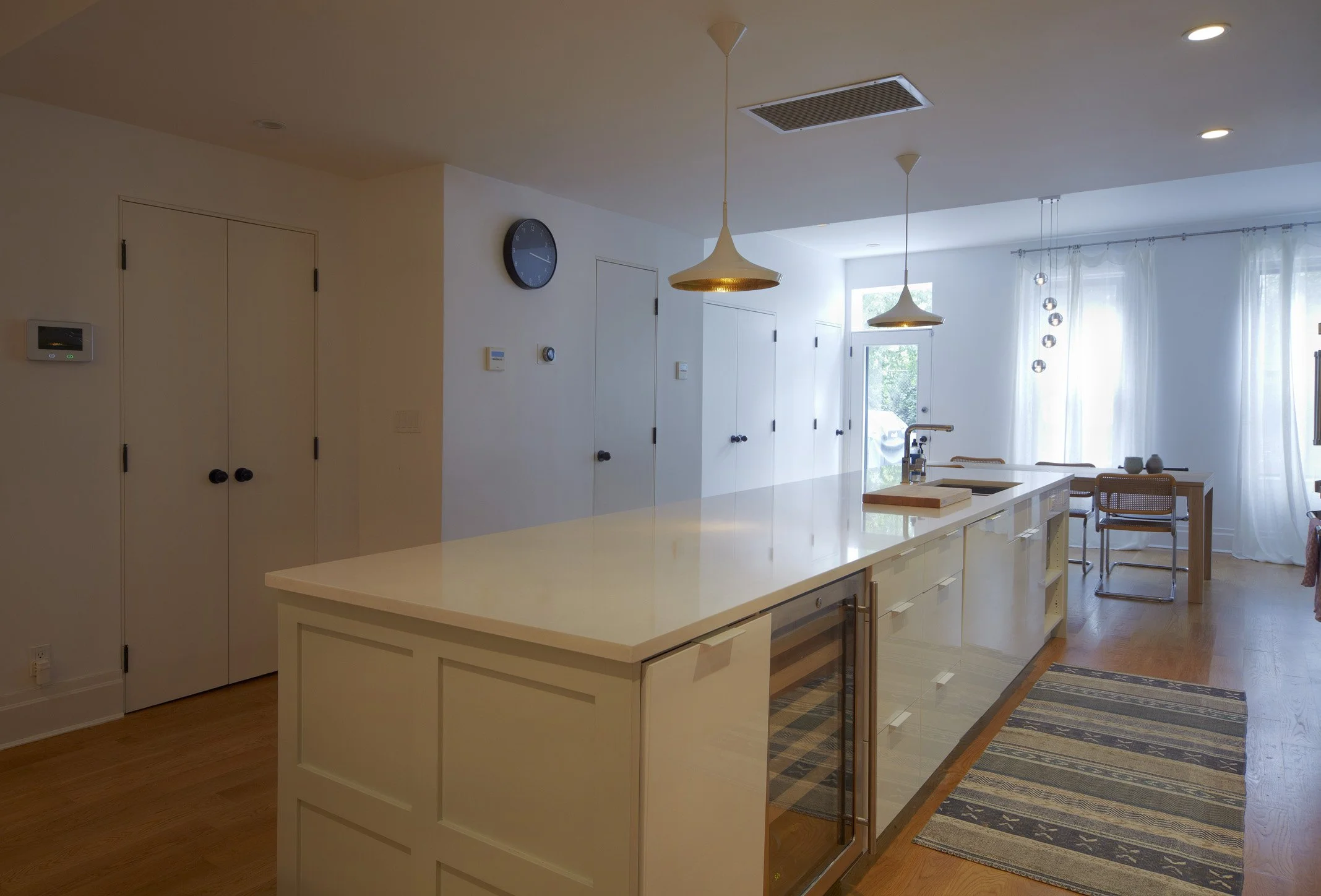
Brooklyn Brownstone Renovation
Design & Build by Mammoth
Photography by Joe Kramm
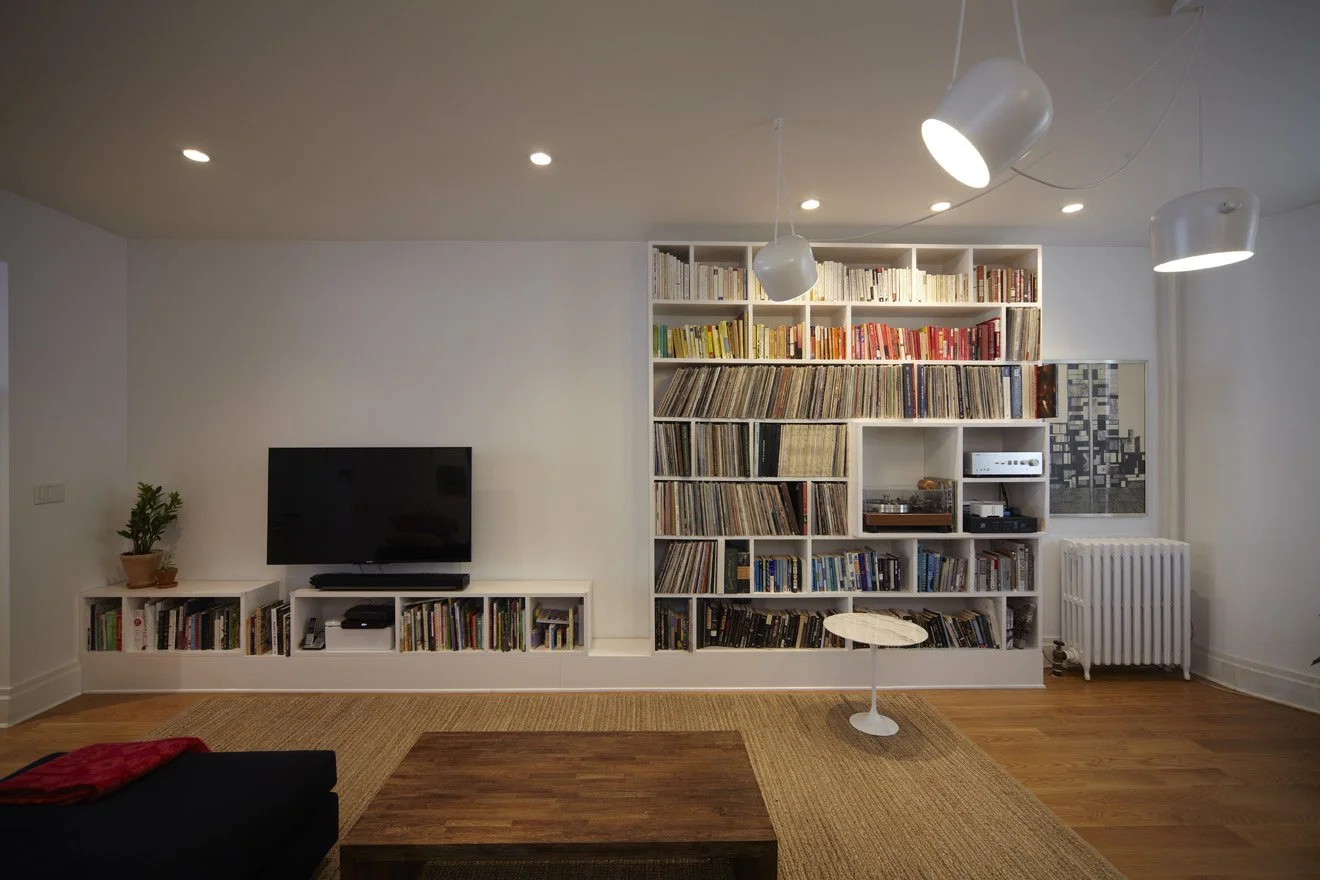
Brooklyn Brownstone Renovation
Design & Build by Mammoth
Photography by Joe Kramm
Architectural Styles Within the Brownstone Tradition
The brownstone era wasn’t defined by a single architectural style. It spans several decades of building, and those shifts are still readable in the facades today — sometimes from one house to the next on the same block.
What makes this relevant beyond historical classification is that architectural style directly shapes what can be done to a building. In landmarked areas, the style of a brownstone influences what the Landmarks Preservation Commission will and won’t approve for the brownstone facade. It defines what restoration looks like, what new work should respond to, and quietly sets the standard for what good work means in these buildings.
Italianate
The most prevalent architectural style across New York’s brownstone neighborhoods, the Italianate emerged during the city’s most intense period of residential construction, between the 1850s and 1870s. Loosely inspired by the rural villas and urban palaces of northern Italy and reinterpreted through the pattern books of American architects, it is defined by the richness of its ornamental detail. Round-arched windows with elaborate carved hoods, bracketed cornices, deeply recessed entrances framed by columns or pilasters, and stoops with straight or curved brownstone stairways are among its most recognizable features.
Greek Revival
The Greek Revival arrived in New York before the Italianate and reached its residential peak between the 1830s and the early 1850s. Unlike its successor, it is defined by restraint and proportion — its understated elegance standing in clear contrast to the more elaborate facades that often surround it. Flat or only slightly pronounced lintels above doors and windows, simple pilasters framing entrances, a strong horizontal emphasis, and a near absence of applied ornament are its defining characteristics. Brooklyn Heights preserves some of the finest examples of this style in the city.
Renaissance Revival and Romanesque Revival
The Renaissance Revival, prominent from the 1860s through the 1870s, drew on the palaces of Renaissance Italy for its defining language — rusticated bases, paired or triad arched windows, classical symmetry. It is a style of order and intention.
The Romanesque Revival that followed brought something altogether different. Closely tied to architect Henry Hobson Richardson, it traded elegance for mass — round arches, rough-faced stone, a sense of weight and permanence that sets these buildings apart immediately. His influence is still visible in the rowhouses and residential buildings of the period across New York, particularly on the Upper West Side and throughout several Brooklyn neighborhoods.
Queen Anne and Late Victorian
By the final decades of the 19th century, brownstone architecture had taken a more eclectic turn. Rather than following a single historical source, architects began borrowing freely across styles and combining them in ways the earlier periods hadn’t permitted. The Queen Anne style, which arrived from England in the 1870s and 1880s, introduced asymmetrical facades, decorative terra cotta panels, and a wider variety of surface textures. Its influence is visible across the brownstone rows built during the 1880s and 1890s in Bedford-Stuyvesant, Crown Heights, the Upper West Side, and in parts of the West Village, where the scale and character of the streetscape shift noticeably from the more uniform rows of the earlier decades.
Reading a Brownstone From the Street
Learning to identify a building’s style from the street is more accessible than it first seems, and it’s a genuinely useful skill when working with these buildings. The cornice is usually the most legible starting point — its profile and ornamental vocabulary often place a building within its period quite precisely. Windows help too: their shape, framing, and decorative treatment add further context. Stoops, entrance surrounds, and the treatment of the base round out the reading. With some practice, these elements become easy to identify at a glance. For anyone involved in renovation work, this kind of reading is the first step in deciding what to restore, what to preserve, and what standard the finished building should meet.
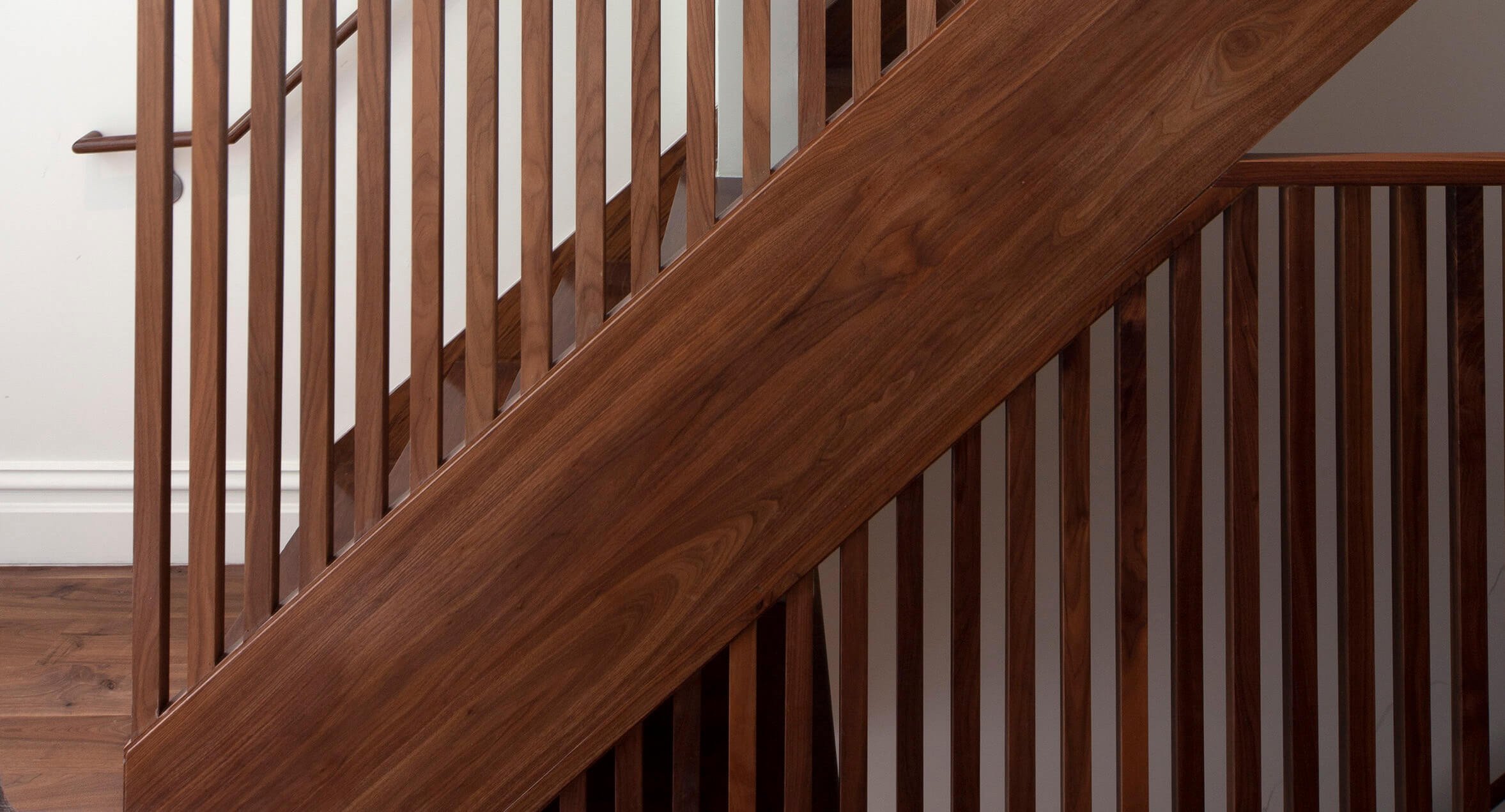
Brownstone Stair Repositioning and Re-Design
Design & Build by Mammoth
Photography by Joe Kramm
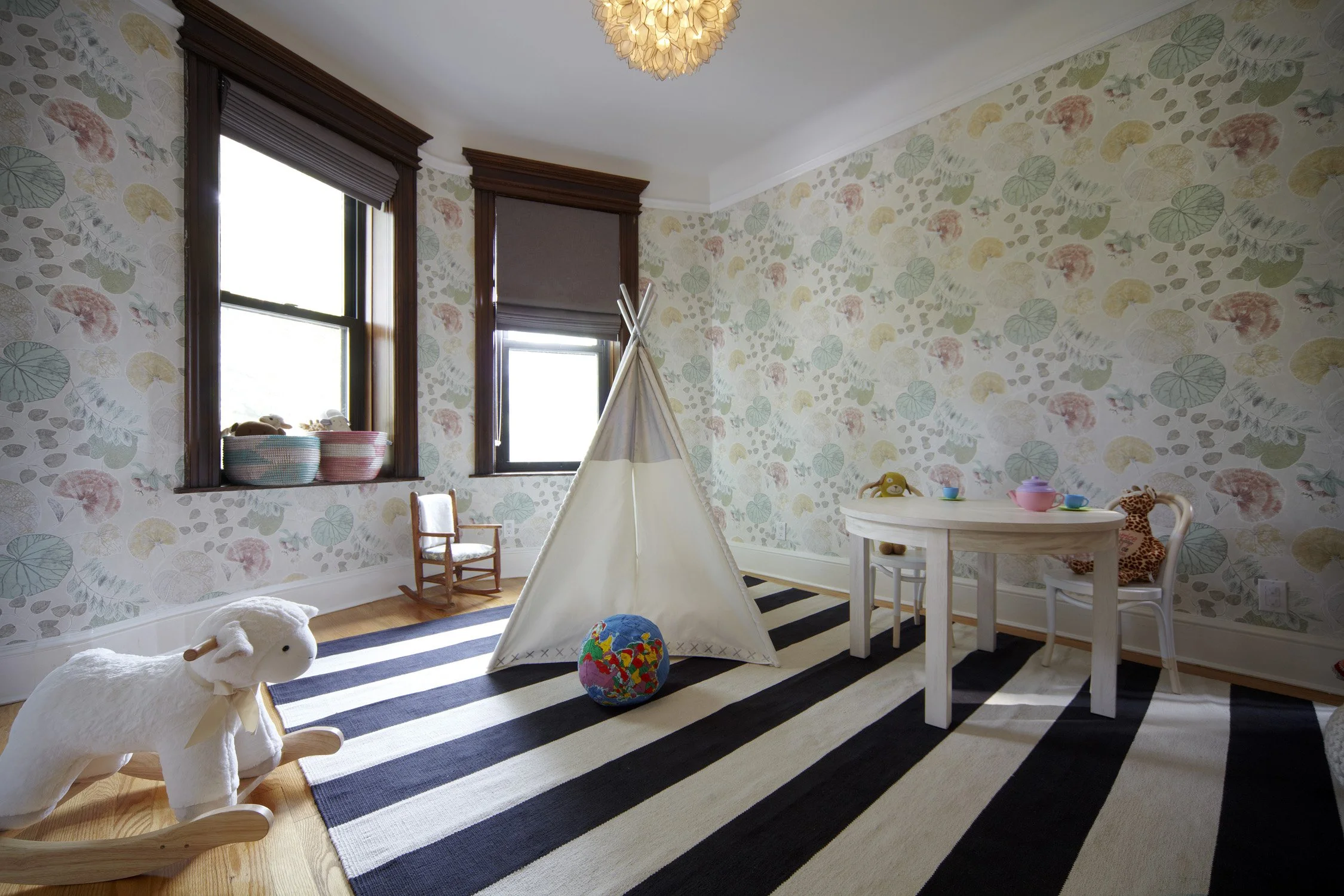
Brooklyn Brownstone Renovation
Design & Build by Mammoth
Photography by Joe Kramm
The Interior Logic of a Brownstone
The parlor floor is the heart of the brownstone. Sitting one level above the street and reached by the stoop, it was always the most formally important level of the house. A front parlor and a rear parlor were typically connected by sliding pocket doors — open for larger gatherings, closed when the occasion called for it. The high ceilings here are the tallest in the building, and the finest decorative work is concentrated on this floor: plaster cornices and medallions, marble fireplace surrounds, paneled window casings, and millwork that quietly communicated the household’s standing.
Above the parlor floor, the bedrooms occupy the upper levels, with ceiling heights that decrease incrementally as you move up — a spatial hierarchy that was entirely deliberate. The uppermost rooms were typically reserved for servants or children. Below the parlor floor, the garden level housed the kitchen and service spaces, with its own entrance and direct access to the rear yard, keeping the household’s daily working life largely separate from the formal rooms above.
What strikes most people about well-preserved brownstones today is that their details — the plaster medallions, the wide wooden floors, the carved banisters, the working fireplaces — were not considered special at the time. They were simply the standard of a well-built home, produced by craftspeople whose entire trade existed to serve this market. That level of craft is what makes these interiors so compelling and so worth preserving.
For renovation, the original layout matters practically. These houses were designed around a way of life that no longer exists — formal entertaining on the parlor floor, strict separation of service and domestic life, no open kitchen, no casual family space. Most owners today want something different. The work of a good renovation is to reorganize the plan for how people actually live now without sacrificing the spatial qualities that define the building: its proportions, its ceiling heights, and that particular sense of depth as you move through it.
The Design Opportunity: Why Brownstones Inspire the Best Work
For architects and designers, brownstones offer something that cannot be designed from scratch — architectural bones that have already proven themselves over a century and a half. Original details are not a limitation. They are a creative foundation and a standard that everything new introduced into the space must meet.
The high ceilings of the parlor floor, a marble fireplace surround that has been in place since the 1870s, the rhythm of the windows facing the street — these elements shape how a room is conceived, how furniture is scaled, how light moves through the space. Working thoughtfully within that framework, and occasionally against it with intention, is what makes brownstone renovation some of the most demanding and rewarding design work in the city.
The best renovations don’t ask the owner to choose between the building’s history and the way they want to live today. They find the place where those two things reinforce each other. Modern interior design at its most sophisticated understands that natural materials — stone, wood, plaster, bronze — carry a different presence within prewar architecture than they do in new construction. They feel more inevitable, more at home. A herringbone oak floor on a parlor floor that was built for exactly that kind of material isn’t a historical gesture — it’s simply the right answer.
Craftsmanship is the other constant. A well-executed brownstone renovation draws on many of the same trades that originally built the building: plasterers, millworkers, metalworkers, stone restorers. The difference today is that finding these people and coordinating their work within the particular constraints of a New York City renovation requires a team that knows where to look and how to work with them effectively.
What a finished renovation feels like at this level is difficult to put precisely into words, but it is immediately recognizable. The building feels whole. New work doesn’t announce itself as such. The spaces feel generous and considered. And the owner, moving through rooms designed specifically around how they live, experiences something that no amount of new construction can replicate — the sense that the building was always meant for them.
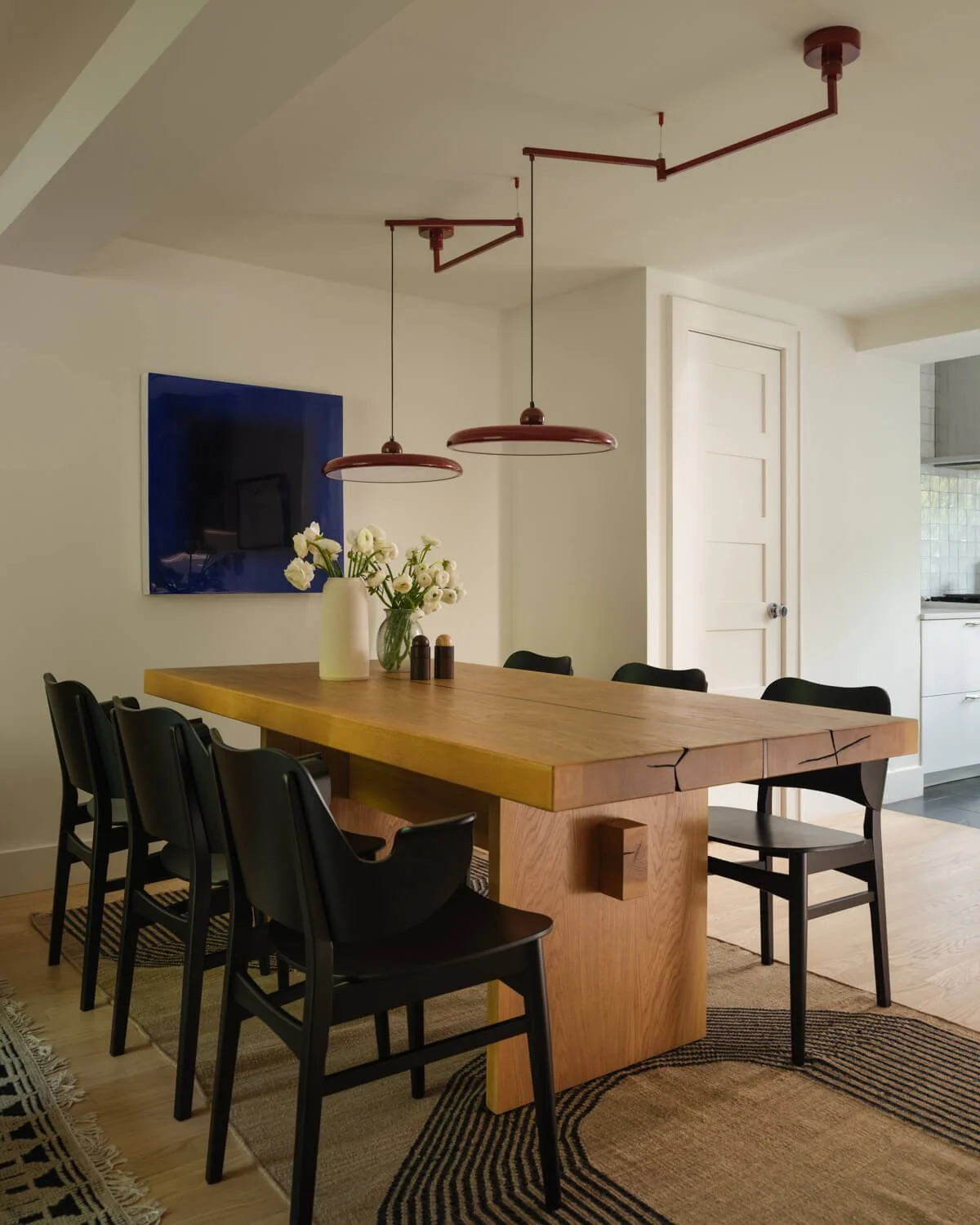
Partial Gut Renovation on Prospect Park South
Design & Build by Mammoth
Photography by Joe Kramm
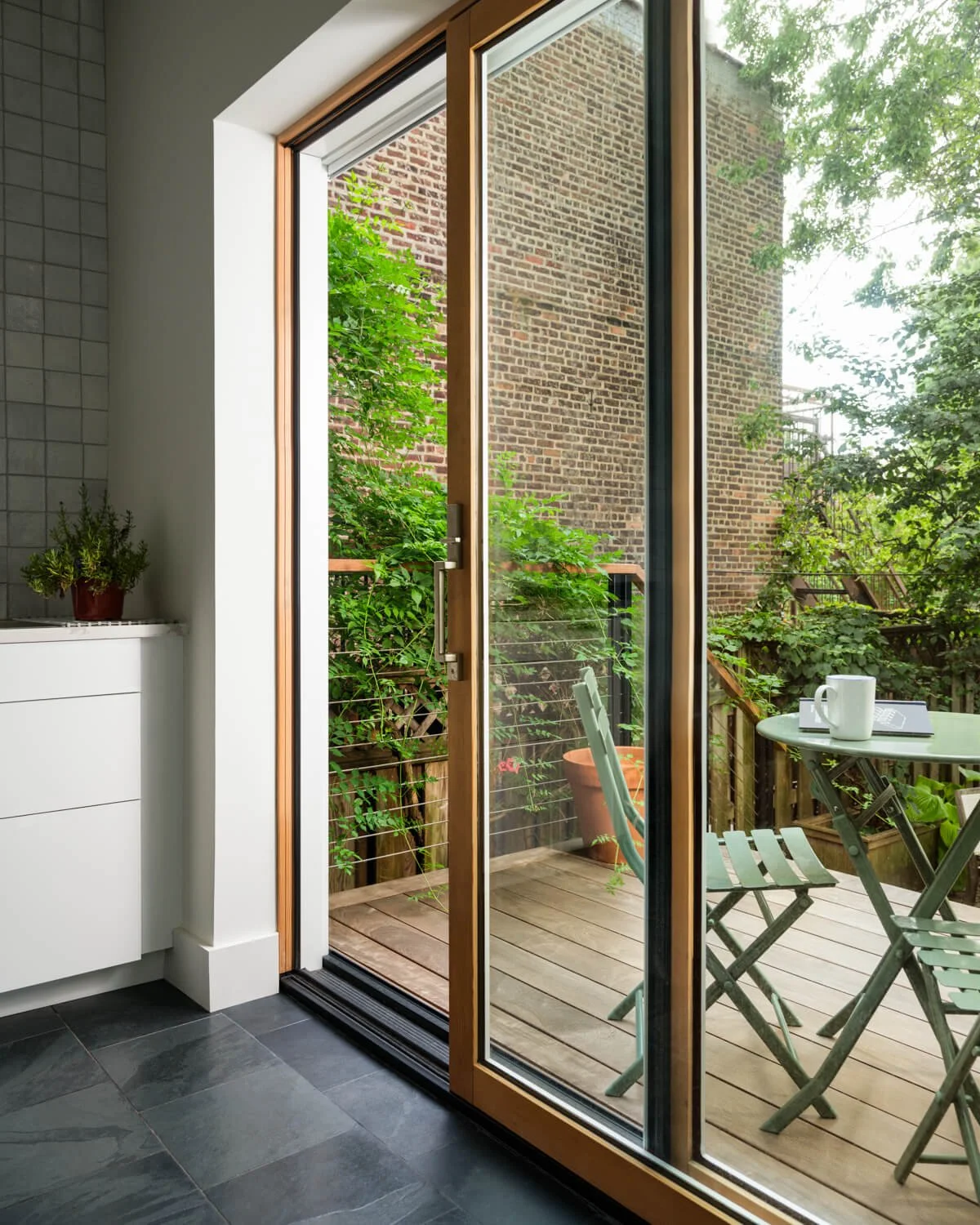
Partial Gut Renovation on Prospect Park South
Design & Build by Mammoth
Photography by Joe Kramm
Conclusion
The New York City brownstone has endured decades of change — shifting tastes, cycles of neglect and revival, the pressures of one of the world’s most demanding real estate markets — and it has remained. That endurance has given the city something genuinely irreplaceable: 19th-century residential architecture at a scale and concentration found nowhere else.
Renovating one of these buildings well is not a simple undertaking. It requires an understanding of the building’s history and structural logic, a genuine respect for what has survived, and the technical expertise to bring the demands of modern living into a space without compromising the qualities that make it worth the investment. The margin for error is narrow — not because the work is delicate, but because the standard is high.
At Mammoth, brownstone renovation is work we approach with that understanding. We know these buildings — their architectural language, their regulatory context, and the particular kind of creativity they demand. We work with craftspeople who can restore what deserves restoration and introduce new work that belongs alongside it. And we stay with our clients through every stage of the process, from the first conversation about what’s possible to the moment they walk into a finished space that finally feels theirs entirely.
FAQ
What is the difference between a brownstone and a rowhouse?
Think of rowhouses as the broader category—attached homes sharing side walls, built in everything from brick to limestone to wood. Brownstones are rowhouses faced in brown sandstone. Every brownstone is a rowhouse, but the reverse doesn't hold true.
Are all brownstones landmarked in NYC?
Far from it. Yes, many are within historic districts and are protected as landmarks. But plenty of others sit outside those boundaries with no restrictions at all.
Are all NYC rowhouses considered brownstones?
Walk through Brooklyn or Harlem and you'll spot rowhouses in brick, limestone, even painted wood. The brownstone label applies only when the façade is clad in the characteristic brown sandstone.
Where did the actual "brown stone" come from?
Connecticut and New Jersey quarries produced most of it. The material carved easily and didn't break the bank—two qualities that made it irresistible during the 19th-century building rush.
Why do brownstones have those famous tall stoops?
Function drove the form. Elevating the parlor floor brought in more light, better air, and some breathing room from street-level noise and grime. The space created underneath became a garden-level entrance for household staff and deliveries.
What is the "parlor floor"?
This is where homeowners entertained guests—one flight up, with the tallest ceilings, biggest windows, and richest decorative details in the house.
What is the most common architectural style for a brownstone?
Italianate and Romanesque Revival show up most frequently. Greek Revival, Neo-Grec, and Queen Anne examples are scattered throughout the city as well.
How do you balance modern living with historic brownstone details?
Keep what matters—original moldings, mantels, millwork. Update what needs updating—kitchens, bathrooms, mechanical systems—in ways that don't compete with the historic bones. The goal is modern comfort that respects the craftsmanship already there, not a renovation that fights against it.
