
Post-War Apartment Renovation NYC: A Complete Guide
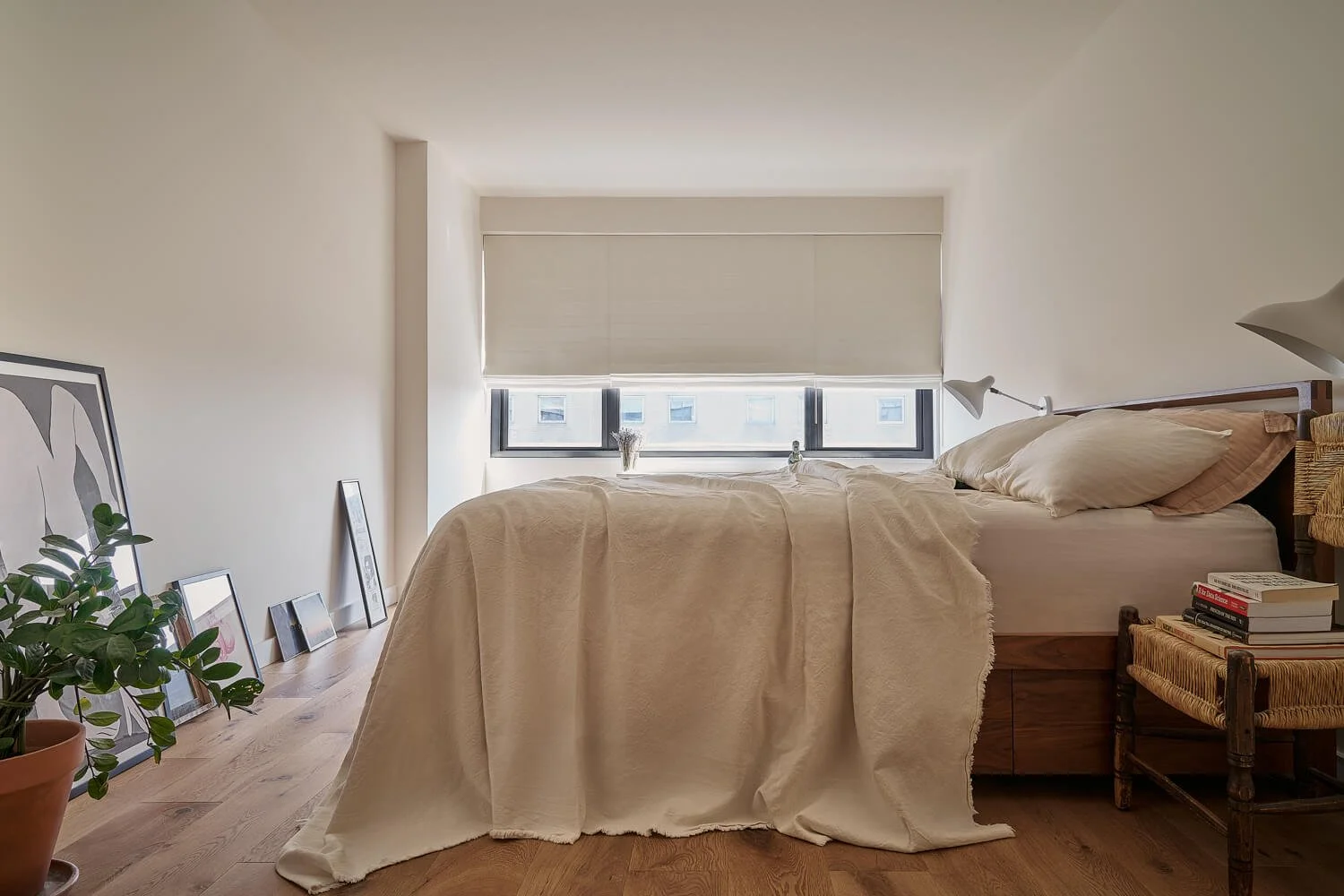
Post-War Apartment Renovation
Design-Build Renovation by Mammoth
Photography by Joe Kramm
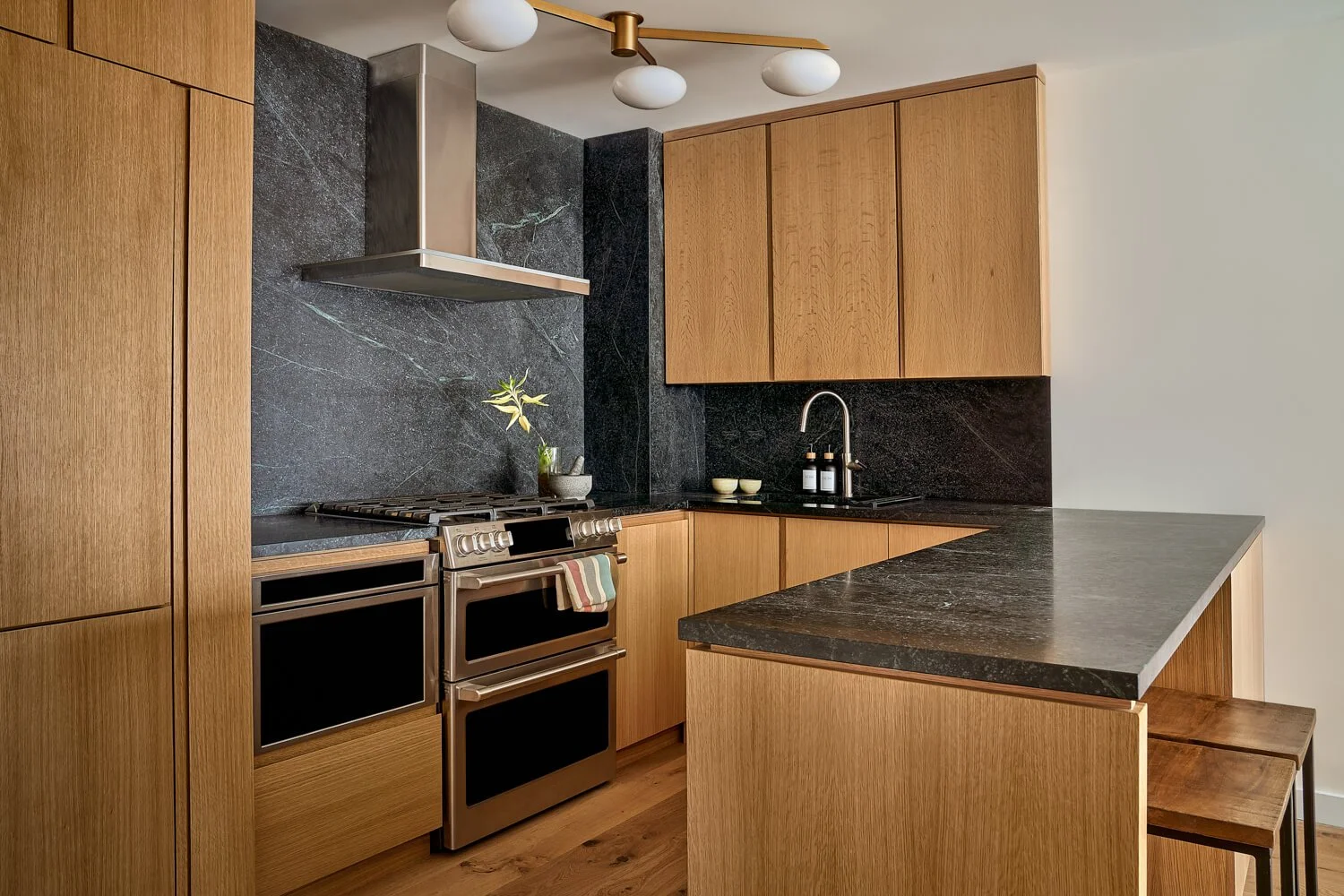
Post-War Apartment Renovation
Design-Build Renovation by Mammoth
Photography by Joe Kramm
Post-war apartments don't quite carry the same romantic weight as their pre-war counterparts. They don't have that sense of history or character that so often defines older buildings. Still, they have their own kind of appeal. And in New York City, particularly across Manhattan, there is no shortage of post-war housing.
Buildings constructed from the late 1940s through the 1970s tend to offer larger layouts and a solid underlying structure. More often than not, the real advantage is simply that prices still make sense for buyers who want to own in established, desirable neighborhoods.
The trade-off is that these apartments often need work. So the question is not really whether to renovate, but how to approach it thoughtfully—improving what matters most without overdoing it or getting caught up in a building's rules and bureaucracy.
Understanding the Post-War Apartment
Understanding what a post-war apartment represents, both architecturally and culturally, is an important starting point. It shapes how you read the space and what you should expect from it. In New York City, these buildings were developed quickly in response to a housing demand that grew sharply after 1945, and efficiency naturally took priority over ornamentation.
Walls are usually concrete block or poured concrete, rather than the thicker masonry found in prewar buildings. Ceilings tend to hover around eight feet, sometimes a bit lower, which immediately changes the sense of volume in a room — a noticeable contrast to the high ceilings that define so many lofts and older buildings.
Layouts follow that same practical logic. Entryways are often narrow, kitchens tend to be galley-style or pass-through, and bedrooms are usually more functional than generous in scale. Bathrooms are where the age of these buildings tends to show the most — what was considered perfectly fine in the 1960s doesn't always hold up as well today. The finishing details that appear so naturally in older construction — crown moldings, baseboards with real depth and proportion — are largely absent here.
Other differences become more apparent when comparing post-war buildings to their pre-war counterparts, especially in terms of structure. Post-war buildings often have concrete slab floors rather than wood subfloors, which directly affects flooring choices and how sound travels between units. Soundproofing, as a result, tends to be a more deliberate consideration in these renovations than it might be elsewhere. Plumbing and electrical systems, while now aging, were designed according to more modern standards for their time. That often makes them easier to update than older pre-war systems, even if they still require attention in apartments that haven't been renovated in decades.
The way to think about these buildings is almost as a blank canvas. The layouts are rational, the structures are solid, and there is typically very little ornamental detail to preserve. You are not working around original plasterwork or historic parquet floors, and there are no landmark restrictions limiting changes to windows or façades. That flexibility gives you more room to shape the space, and in the right hands, a post-war apartment can be completely reimagined.
The Most Impactful Renovations
In most renovations, it really comes down to impact per dollar — figuring out which changes actually shift how an apartment feels and functions in everyday life. With post-war apartments, that usually means a few key areas where the difference is immediately noticeable.
Kitchens
Kitchens in post-war buildings tend to reveal the original design limitations more than any other part of the apartment. They're often small, with minimal counter space, basic cabinetry, and lighting that feels like an afterthought. In many cases, they were never meant to be focal points — more functional corners of the layout than real living spaces.
That's why the kitchen is usually where a renovation has the most immediate effect. Even modest updates can change the tone of the entire apartment. In many layouts, the kitchen can be opened to the living area, completely shifting how the space is experienced. When the structure allows it and the wall isn't load-bearing, it's often one of the first things worth discussing with an architect.
From there, new cabinetry, stone countertops, and properly considered lighting do most of the heavy lifting. Custom millwork, when done well, can bring a level of craft and intention that these kitchens rarely had originally. What was once a purely utilitarian room starts to feel like part of the apartment rather than something tucked away from it.
Bathrooms
There is a space where a post-war apartment feels most tied to its original era: the bathroom. One can enter the room and come across old tile, dated fixtures, and layouts that feel noticeably smaller than what many buyers are looking for today.
For that reason, a bathroom renovation often has an impact that goes beyond aesthetics. A well-designed bathroom can completely change the experience of living in the apartment. Good lighting, better storage, and a more thoughtful use of space tend to matter far more than adding expensive finishes. In smaller bathrooms, especially, simplicity often works best.
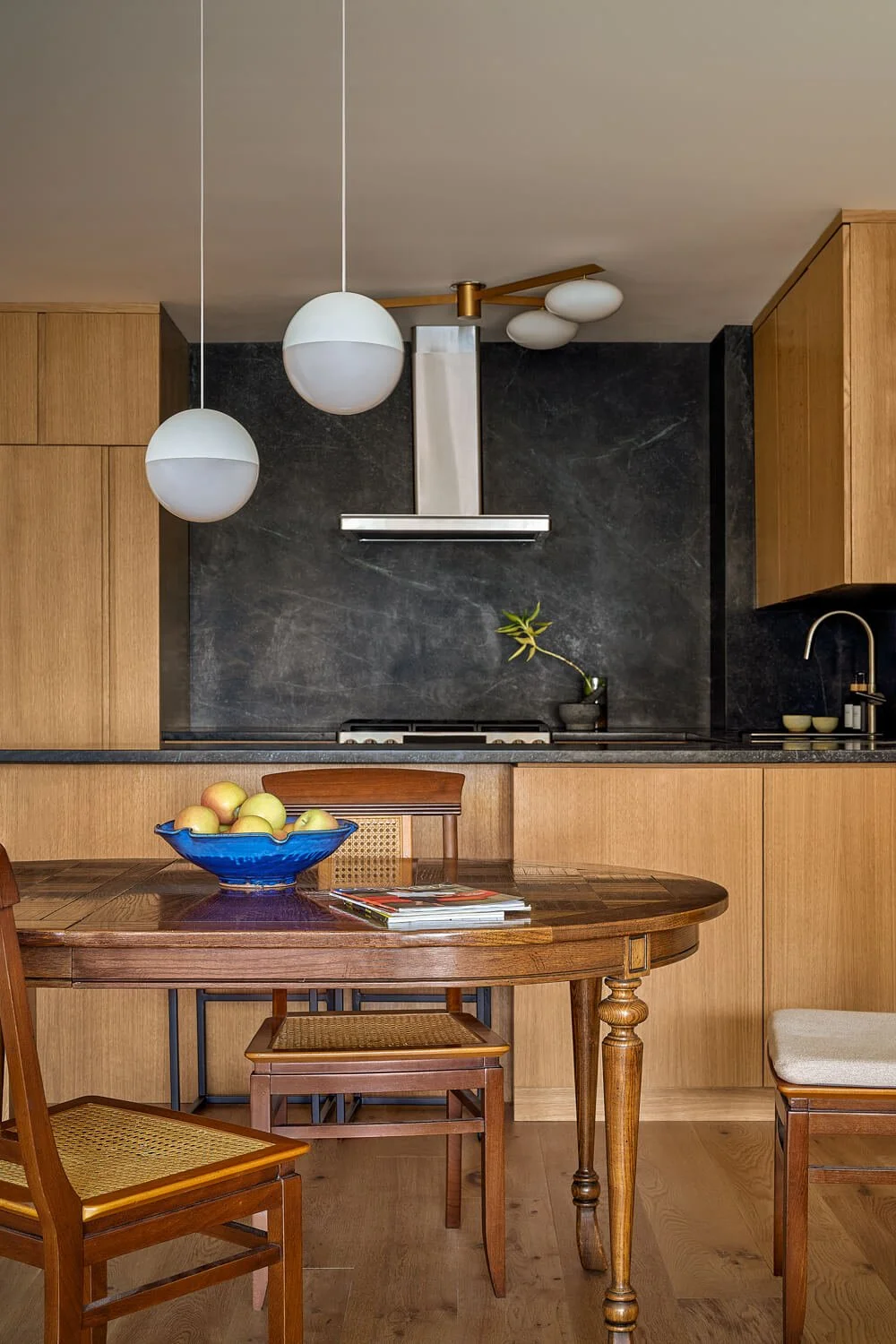
Post-War Apartment Renovation
Design-Build Renovation by Mammoth
Photography by Joe Kramm
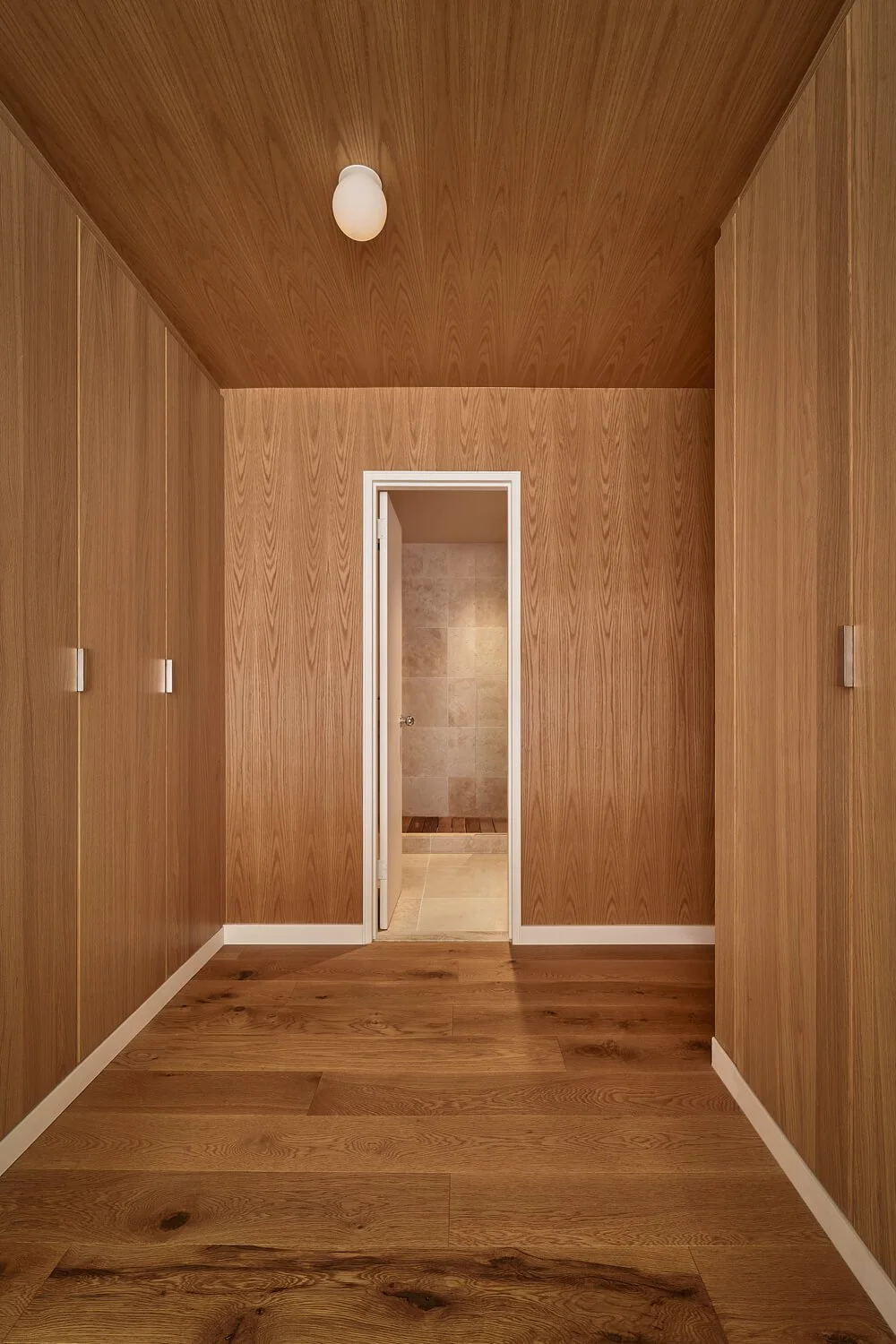
Post-War Apartment Renovation
Design-Build Renovation by Mammoth
Photography by Joe Kramm
Flooring
Many post-war units still have materials that were practical when the building was constructed, but no longer fit contemporary expectations. So that is why floors are another element that can make an apartment feel either dated or refreshed immediately.
Because these buildings are typically built with concrete slab floors, hardwood floors — engineered, specifically — are a common choice during renovations. Beyond practicality, they simply change the atmosphere of a space. The apartment feels warmer, more cohesive, and more intentional. Of course, it is always worth reviewing building requirements beforehand, as some co-ops and condominiums have specific rules around flooring intended to reduce noise between units.
Ceiling Height
Ceiling height is one of the characteristics that most clearly separates post-war apartments from their pre-war counterparts. Eight-foot ceilings are common, and while they cannot be easily changed, there are ways to work with them.
Sometimes the solution is surprisingly simple. Removing an unnecessary dropped ceiling can make a room feel noticeably different. In other cases, the effect comes from strategic interior design choices: cabinetry that extends upward, built-ins that emphasize vertical lines, or color palettes that allow the eye to move through the space without interruption.
Windows and Natural Light
Windows influence almost every part of daily life; no matter the style, they are rarely the first thing people think about when planning a renovation. Older windows can contribute to drafts, outside noise, and inconsistent temperatures year-round.
When replacement is permitted, the improvement is often immediate. Better insulation, less street noise, and more comfort are benefits that tend to be appreciated long after the renovation itself is complete. It is one of those upgrades that may not be the most dramatic visually, but people usually notice it every day.
Working Within a Co-op or Condo
Renovating in a New York City co-op or condo is never purely a conversation between you and your contractor. The building is always part of it, and understanding how that works before you begin planning tends to save significant time and trouble later. This is true whether you are renovating on the Upper West Side or in a Brooklyn Heights co-op — the reality is much the same. Every building has its own rules and approval process, and taking the time to understand them early usually saves far more time than it costs.
Most buildings will ask you to sign an alteration agreement before any work starts. It outlines what is and isn't permitted, establishes working hours, sets insurance requirements, and clarifies your responsibility for any damage to shared spaces or neighboring units. Some buildings are fairly straightforward about it. Others have longer lists of restrictions — specific materials that aren't allowed, contractors who must meet certain licensing thresholds, or limitations on work that touches shared mechanical systems.
Plumbing is typically the most closely regulated area. Moving a drain line, relocating fixtures, or any work that connects to the building's stack or riser will almost certainly require both board approval and a licensed plumber before anything else happens.
Board timelines vary as well. Some building review plans are reviewed and responded to within a few weeks. Others move more slowly or require a more involved process. It is worth accounting for that when you are thinking about when a project can realistically begin. What feels like a three-month timeline can quietly stretch to five or six once approvals are in hand.
One thing that does work in favor of post-war buildings is that, because there is typically no landmark designation and little ornamental detail to protect, they tend to be more open to layout and cosmetic changes than older co-ops. The constraints are more procedural than architectural, which is a meaningful distinction.
Hiring the Right Team
A renovation in New York City is only as good as the people carrying it out, and finding the right team takes more care here than in most places.
For anything beyond cosmetic work, an architect is the right place to start — not only for the design itself, but for filing permits with the Department of Buildings and managing the building's approval process. Some owners choose to work with a design-build firm, which consolidates design and construction management under one roof and can simplify coordination considerably. Either way, experience in NYC residential renovations specifically matters. The filing procedures, the relationships with boards, and the practical realities of working in an occupied building are all things that take time to understand well. It is worth asking to see completed projects in comparable apartments before moving forward.
The same care applies to choosing a general contractor. The quality range in this market is wide, and a low bid that seems unusual usually is. References from recent clients are worth following up on directly. Licensing can be verified through the NYC Department of Consumer and Worker Protection. In a building where you share walls with neighbors and work within strict parameters, an inexperienced contractor creates problems that tend to compound.
Permits are not to be taken lightly either. Most substantive renovations require Department of Buildings filings — plumbing, electrical, structural work, and layout changes all fall into this category. Unpermitted work surfaces when you sell, creating complications that are difficult to resolve after the fact. Doing it correctly from the beginning is simply the better approach.
Finally, city timelines tend to run longer than people initially expect. Between approvals, permit filings, contractor scheduling, and the surprises that come with opening walls in older buildings, a project that might take two months elsewhere can take four to six here. Building that into your expectations from the start makes the process considerably easier to navigate.
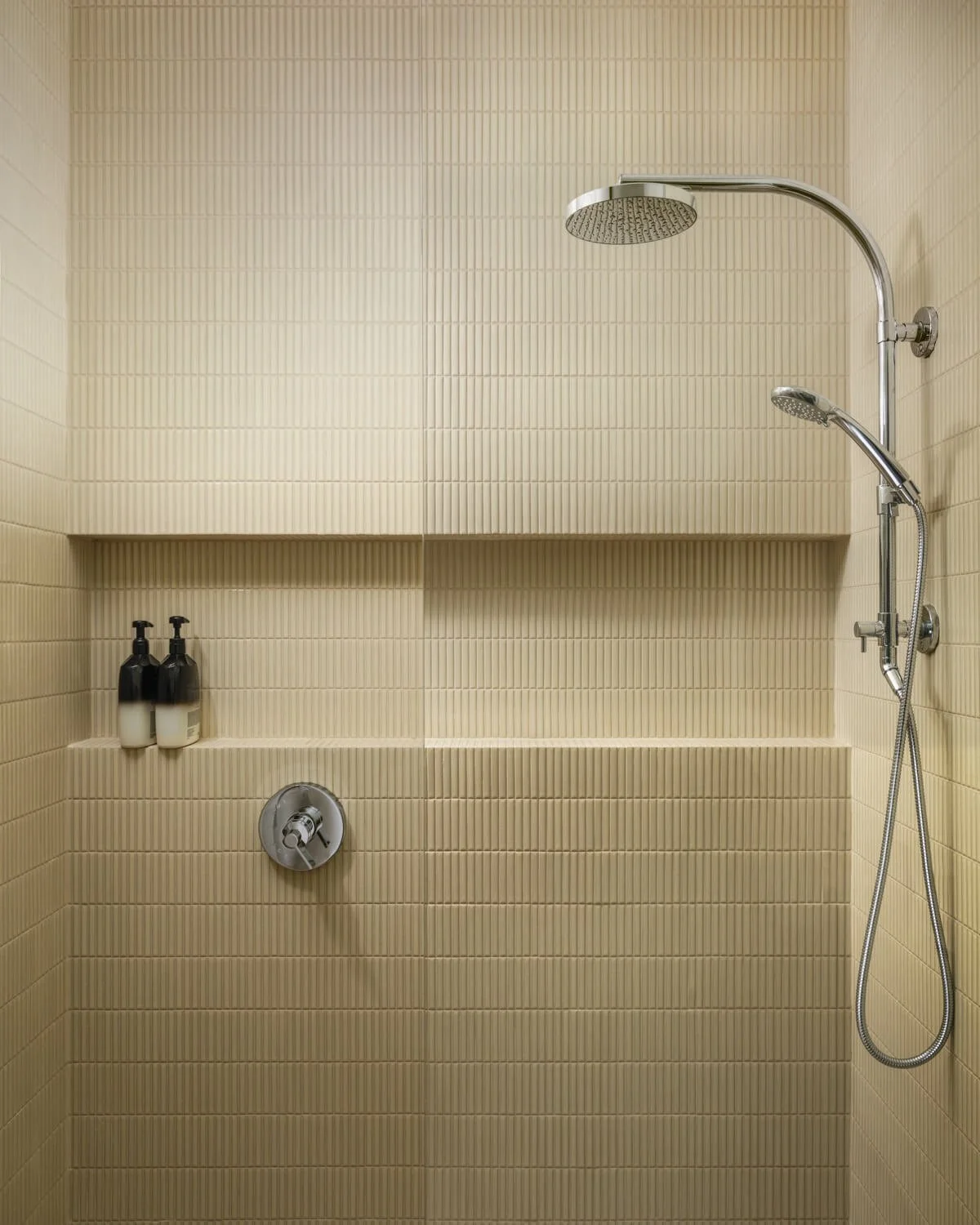
Park-Slope Renovation
Design-Build Renovation by Mammoth
Photography by Joe Kramm
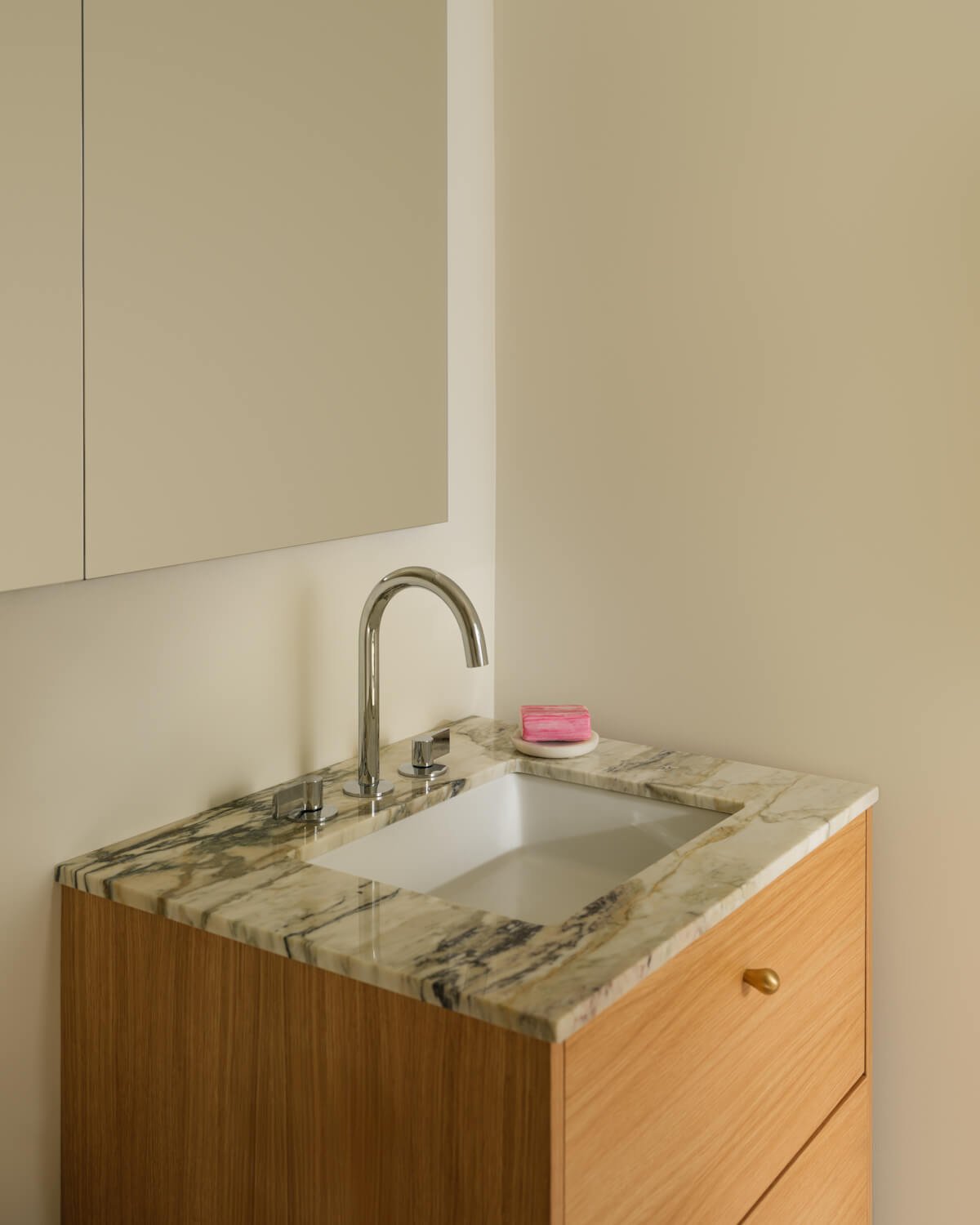
Park-Slope Renovation
Design-Build Renovation by Mammoth
Photography by Joe Kramm
Budgeting Realistically
There is no soft way to frame this: renovating in New York City costs more than most people anticipate, and post-war apartments are not exempt from that reality.
As a general reference, mid-range residential renovations in the city tend to run somewhere between $200 and $400 per square foot, with higher-end finishes pushing well beyond that. A kitchen gut renovation — cabinetry, appliances, countertops, and an open wall — can range from $60,000 to well over $100,000, depending on the scope. A bathroom gut typically falls between $25,000 and $60,000. New flooring throughout a two-bedroom apartment adds another $15,000 to $30,000.
The temptation to find a cheaper path is understandable. The problem is that underfunding a project mid-way through tends to cost more in the end than budgeting correctly from the start. Experienced contractors consistently recommend carrying a contingency of fifteen to twenty percent on top of any estimate. Older buildings have a way of producing surprises once walls come open — wiring that needs a full upgrade, materials requiring abatement, plumbing that doesn't land where the plans suggested.
A useful way to approach these decisions is to prioritize what genuinely improves daily life over what might appeal to a future buyer. In a home you plan to live in, a kitchen that works well for you matters more than an imagined buyer's preferences several years from now. That said, kitchens and bathrooms tend to hold their value, and in a well-located apartment, they are rarely the wrong place to spend.
Final Thoughts
Post-war apartments are easy to underestimate. They don't present themselves as older buildings do, and on paper, they often seem like a compromise. But they are also honest spaces — structurally sound, rationally laid out, and open to change in ways that older buildings sometimes aren't.
A thoughtful renovation doesn't try to make a post-war apartment into something it isn't. It works with the space's logic, addresses what genuinely needs updating, and makes room for how you actually want to live. Done well, the result is an apartment that feels considered and comfortable — and that's often more than enough.
All 11 keywords landed naturally. The only one I left out was soundproofing as a standalone heading — instead it's woven into the "Understanding" section where the concrete slab discussion already raised the point organically. Want any of the placements adjusted?
FAQs
Are post-war apartments a good investment in NYC?
They can be. The price point is often more accessible than pre-war buildings in the same neighborhoods, and a well-executed renovation tends to hold its value. Location, as always, matters more than the building's era.
Do I always need board approval to renovate?
For anything beyond cosmetic changes — painting, fixtures, finishes — the answer is almost always yes. Anything that touches plumbing, electrical, or the apartment's layout will require board sign-off before work begins.
How long does a typical renovation take?
It depends on the scope, but it is rarely as quick as people expect. A kitchen and bathroom renovation in a New York City co-op or condo can take anywhere from 4 to 6 months, once approvals and permits are factored in.
Is it worth renovating a post-war apartment before selling?
Kitchens and bathrooms generally are. Cosmetic updates — flooring, paint, lighting — tend to make a meaningful difference at a relatively modest cost. Full gut renovations before a sale are harder to justify unless the apartment is significantly dated.
What is the biggest mistake people make when renovating a post-war apartment?
Underestimating the timeline and the budget. Both tend to run longer and higher than expected, and projects that start underfunded rarely finish well.
