
Studio Apartment Renovation
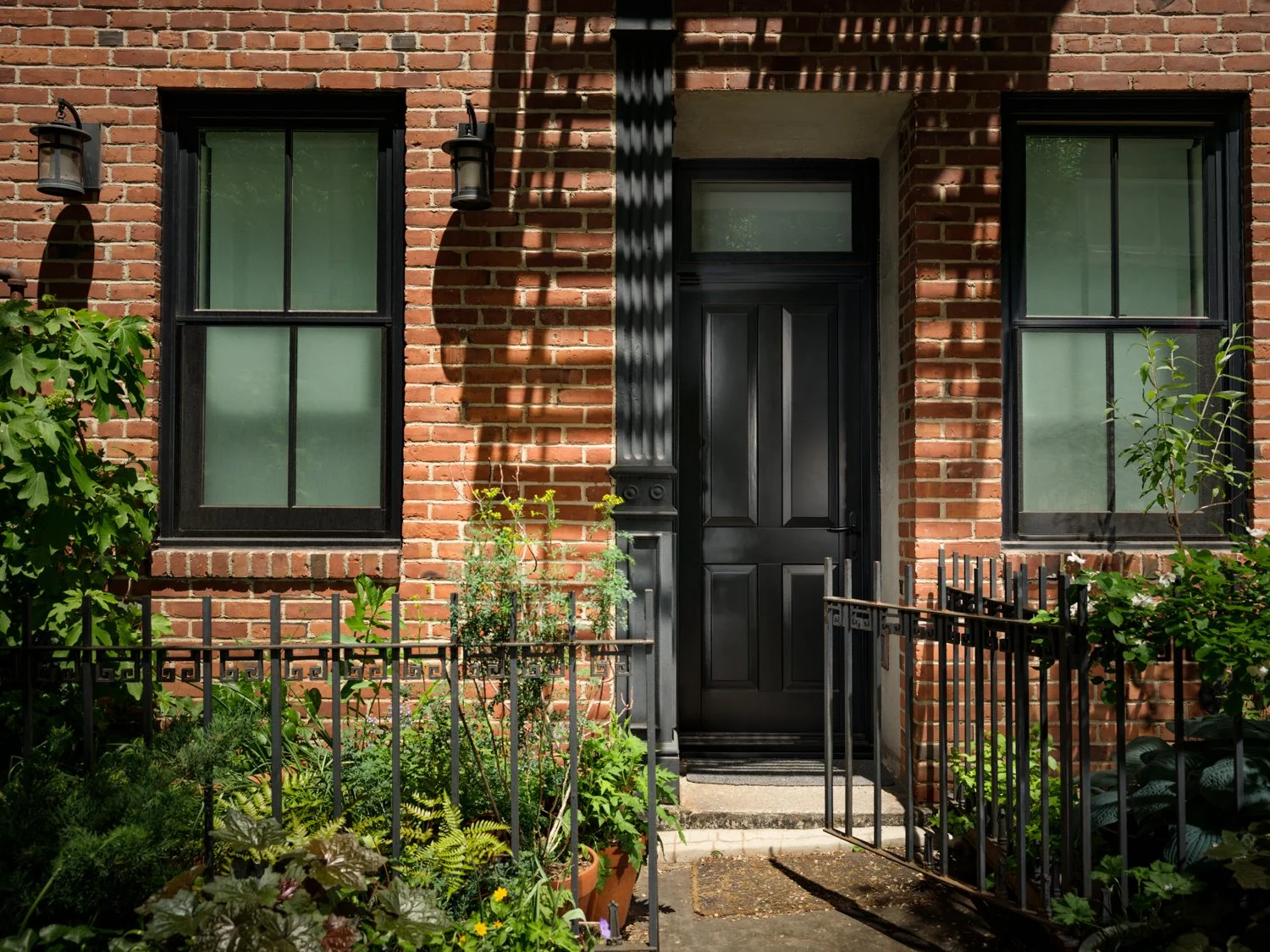
West Village Renovation
Design-Build Renovation by Mammoth
Photography by Joe Kramm
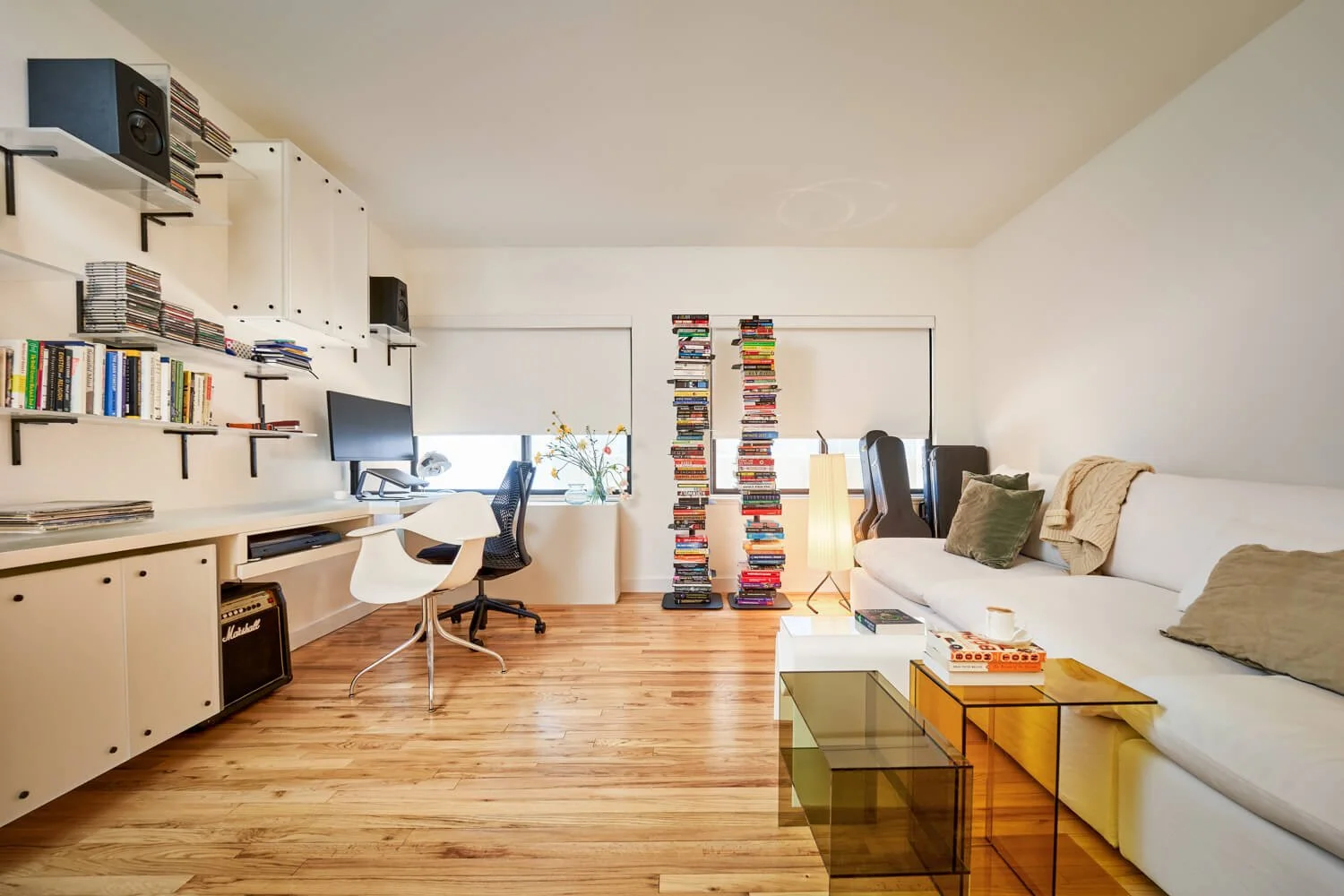
Living Room Renovation
Design-Build by Mammoth
Photography by Joe Kramm
When it comes to renovating a studio apartment, we find that it can present an even greater design challenge than remodeling a larger home. Every major decision—where the bed is placed, how the kitchen is designed, or how natural light enters the space—has consequences that affect the apartment as a whole.
In New York City, studios make up a significant share of the housing stock, and square footage is always at a premium. Getting the renovation right matters more than most people initially realize. A well-renovated studio doesn't feel like a compromise — it feels considered and livable, and in the best cases, genuinely surprising in what it manages to offer. That outcome doesn't happen by accident. It starts with clearly understanding the space and making decisions specific to it.
Understanding What You're Working With
Before making any design decisions, it helps to understand what a studio renovation actually involves — and what makes it different from renovating a larger apartment.
The defining characteristic of a studio is that a single room has to do everything. Sleeping, working, cooking, entertaining — all of it happens within the same four walls, often within sight of each other. That's not really a flaw to be corrected. It's the condition the design has to work with. The studios that end up feeling genuinely livable are the ones that accept that reality and find ways to make it work rather than trying to disguise it.
In New York City specifically, studios come in a wide range of configurations. Some are compact but well-proportioned, with good ceiling height and natural light. Others are long and narrow, with a single window at one end. Basement studio apartments present their own set of challenges — limited light, lower ceilings, and a relationship to the street that affects everything from privacy to noise. Each situation calls for a different approach, and understanding which situation you are in is the starting point for everything else.
The Layout Question
In a studio, layout is everything. It determines whether the space feels functional or chaotic, generous or cramped — and it sets the conditions for every other decision that follows.
The central challenge is creating zones within a space that has no walls to separate them. A bedroom area, a living area, a workspace — all of these need to coexist without the space feeling visually fragmented or physically awkward. There are several ways to achieve this, and the right approach depends on the apartment's specific dimensions and proportions.
Room dividers are one option worth considering. A bookcase, a slatted partition, or a panel of reeded glass can define the sleeping area without fully enclosing it — preserving the openness while creating enough visual separation to make each zone feel like a deliberate choice. Paneling on one wall can do something similar, anchoring a zone in a way that a piece of furniture alone rarely achieves.
The bed is the largest piece of furniture in any studio, and the one that shapes how everything else gets organized around it. A murphy bed is the most effective way to reclaim floor space during the day — folding away to turn a sleeping area into a living room without much effort. Where that isn't the right fit, a daybed with clean lines can work in both directions, functioning as seating during the day without reading as a bedroom. A bed frame that sits closer to the ground also helps — it keeps the visual weight of the sleeping area from taking over the room.
Vertical space tends to be the most overlooked resource in a studio. When floor area is limited, the walls start to matter more. Floating shelves that run toward the ceiling, wardrobes built to the full height of the room, cabinetry that draws the eye upward — these are the moves that make a room feel taller and more generous than it actually is.
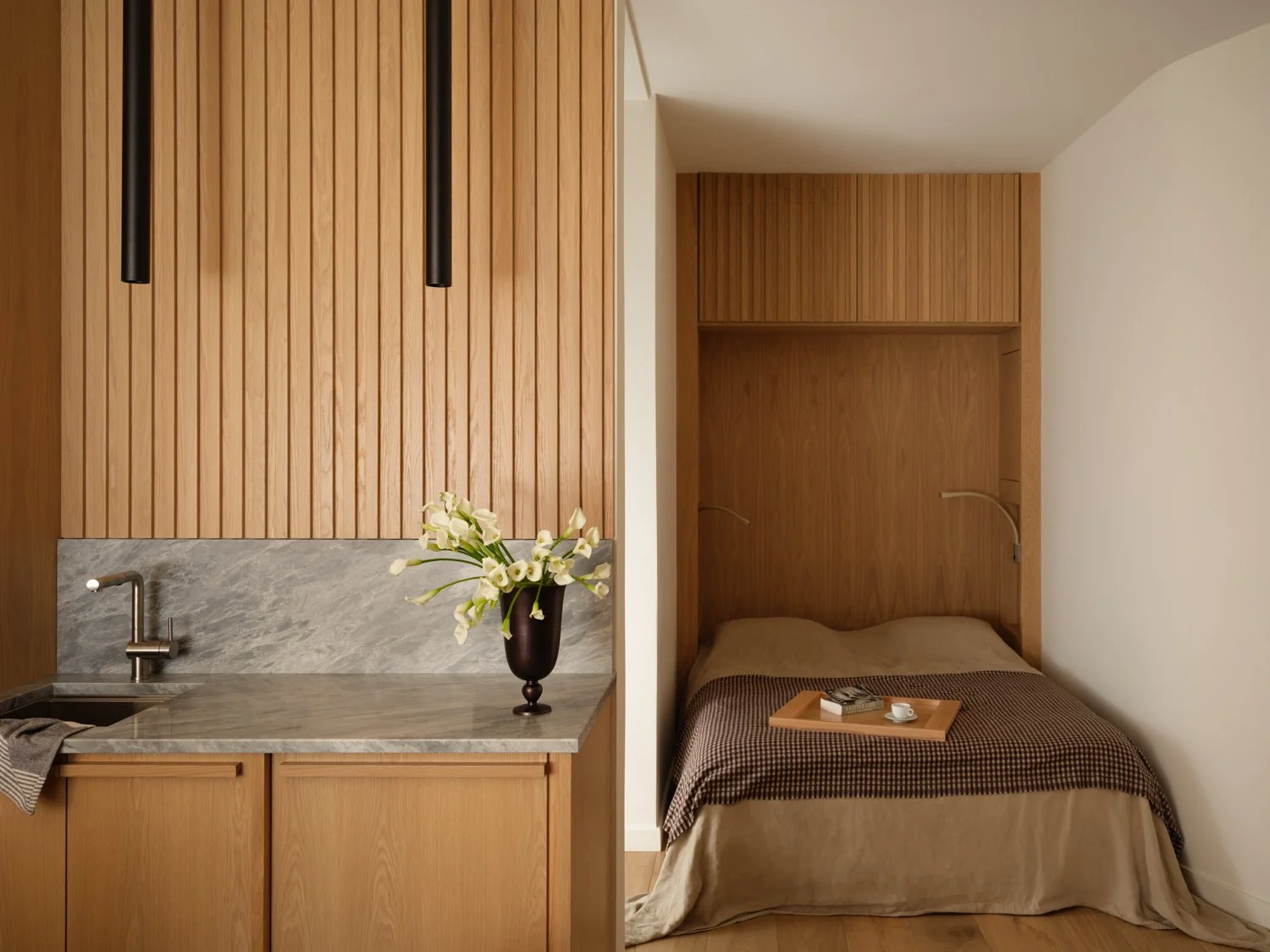
Murphy Bed Design and Studio Apartment Renovation
Design-Build Renovation by Mammoth
Photography by Joe Kramm
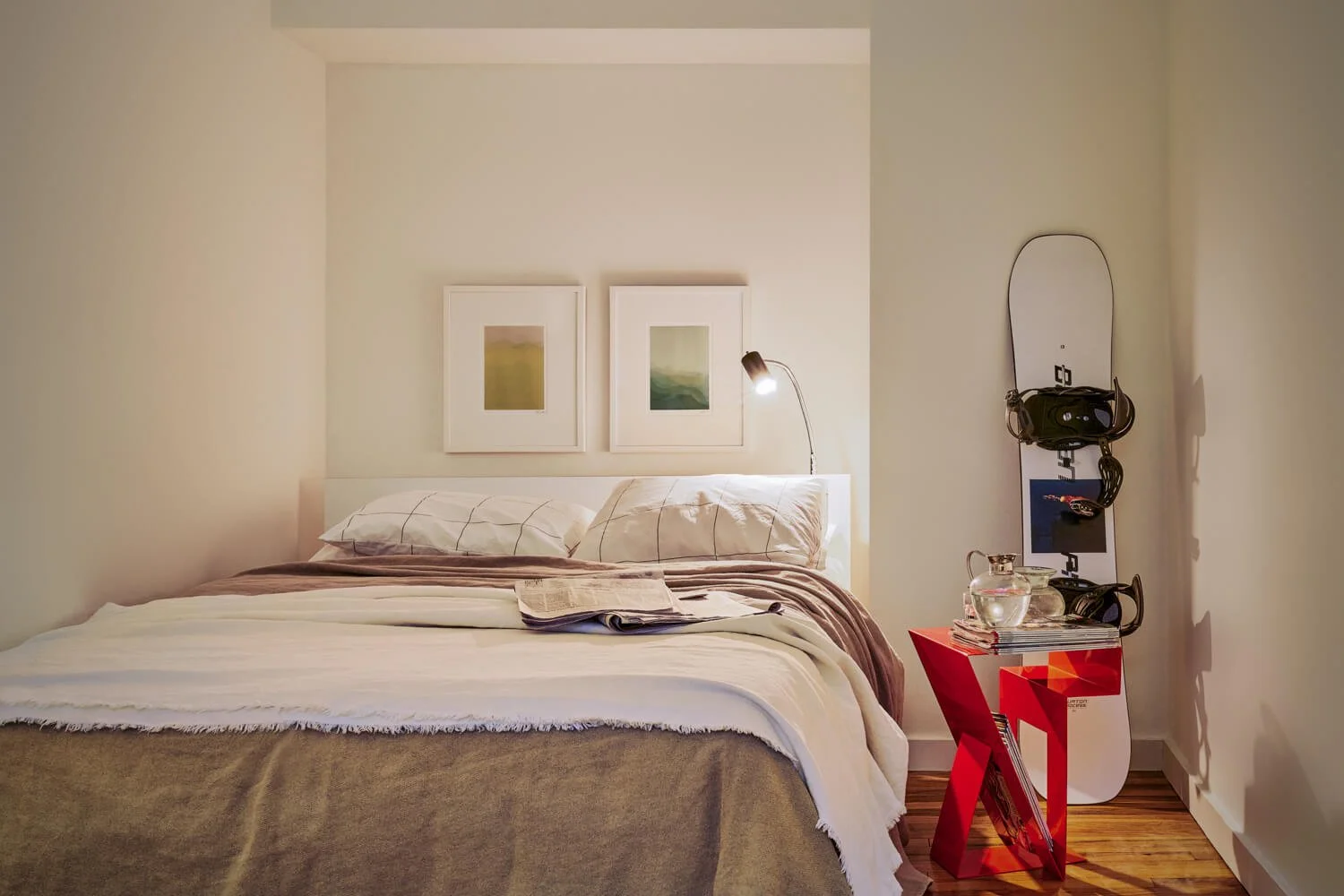
Studio Apartment Renovation
Design-Build Renovation by Mammoth
Photography by Joe Kramm
Light and the Perception of Space
Light does more work in a small space than almost anything else, because it affects how large a room feels, how the materials in it read, and how easy it is to actually spend time there.
In a New York City apartment, natural light isn't something to take for granted. Studios that face a courtyard or a narrow street, or that sit on a lower floor, often get very little of it. How the design responds to that matters more than people usually expect.
Keeping window treatments simple is one of the most straightforward things an owner can do. Roman shades — recessed into the ceiling or mounted close to the frame — are a clean solution that doesn't compete visually with the window itself, while still offering privacy when you need it. Mirrors placed opposite windows help amplify whatever light does come in. Light-toned finishes on walls and cabinetry do the same — keeping the space from feeling closed in even when the light isn't ideal.
Where natural light is genuinely limited — as it often is in a basement studio apartment — artificial light needs to do more. A layered lighting scheme matters considerably here. Overhead lighting alone flattens a room. Table lamps and wall sconces introduce pools of warmer light at different heights, giving the space depth and atmosphere that a single ceiling fixture cannot. Lighting that can be adjusted — dimmed, redirected, or swapped between sources depending on the time of day — makes a small space feel more adaptable.
Storage as Architecture
In a studio, storage can't really be an afterthought. It's a structural part of the design—and when it's handled well, it becomes invisible. It just becomes part of how the space works.
The starting point is using every available surface. Under-bed storage is one of the more effective options: a bed frame with integrated drawers or lift storage can hold linens, seasonal clothing, and anything else that would otherwise need its own place in a room that doesn't have one to spare. A kitchen island, when the layout allows, adds counter space and concealed storage at the same time — two problems solved in one element.
Open shelving is a choice that requires honesty. It works well when what's on the shelves is worth looking at — books, ceramics, a considered arrangement of objects. It works less well as a solution for general storage, where the visual noise of everyday items accumulates quickly. In a small space, that accumulation is immediately apparent. The combination that tends to work best is closed cabinetry for the practical and open shelving for the considered — each doing a different job.
Wardrobes in a studio need to work harder than in a larger apartment. Built-in wardrobes that run to the full height of the room consolidate clothing storage without occupying visual space like freestanding furniture does. Where a dedicated wardrobe wall is possible, it can also incorporate a desk area, a vanity, or additional shelving — collapsing several functional needs into a single architectural element.
Custom millwork, as in any renovation where space is limited, is often the difference between storage that integrates cleanly and storage that reads as furniture added to an already small room. Built-ins designed for the apartment's specific dimensions are simply more efficient than anything off the shelf.
The Details That Define the Space
In a studio, finish materials and design choices carry more weight than they would anywhere else. Everything is always visible. There's no separate room where a decision that didn't quite work can quietly disappear.
Flooring sets the tone for everything else. Using a single material throughout — no transitions, no change between zones — makes the space feel larger and more coherent. Wide-plank hardwood, run lengthwise along the longest axis of the room, is a classic choice for a reason. It brings warmth without adding visual noise.
A rug can define a zone within an open plan without any walls to help it. In a living area, the right rug — almost always larger than what people first reach for — anchors the seating and gives that corner of the room a sense of purpose. The temptation is always to go modest. It rarely looks right. Larger, even when it feels like too much, tends to be the better call.
Mid-century modern works well in studios. Clean lines, functional shapes, materials that are honest about what they are — that sensibility suits a small space in a way that more decorative styles don't. Furniture with legs, rather than pieces that sit flat on the floor, keeps the room from feeling weighed down.
A desk and chair deserve the same thought as anything else in the apartment — maybe more. In a studio, the line between working and living is already thin. A desk that reads as furniture rather than office equipment, paired with a chair that doesn't look out of place in a living room, keeps that part of the space from dominating the rest of it.
Wall sconces and table lamps earn their place twice over — they layer light at different heights and free up surface area that a floor lamp would otherwise claim. In a space where every surface is doing something, that matters.
Working Within a Building
A studio renovation in New York City follows the same regulatory path as any other apartment renovation. The difference is that everything is happening in a much smaller footprint, which makes the coordination more demanding, not less.
In a co-op or condo, board approval comes before any work starts. An alteration agreement sets the terms — what's permitted, when work can happen, and what the contractor and insurance requirements are. Plumbing and electrical work need Department of Buildings permits. None of that changes because the apartment is small. If anything, the sequencing of trades in a tight space requires more planning, not less, because there's simply less room for things to go out of order.
Working with an interior designer or architect who knows small-space renovations in New York specifically is worth it — not just for the design decisions, but for navigating the building process and making sure the work is done correctly from the start. In a studio, where every choice has consequences, having that experience in the room early tends to pay for itself.
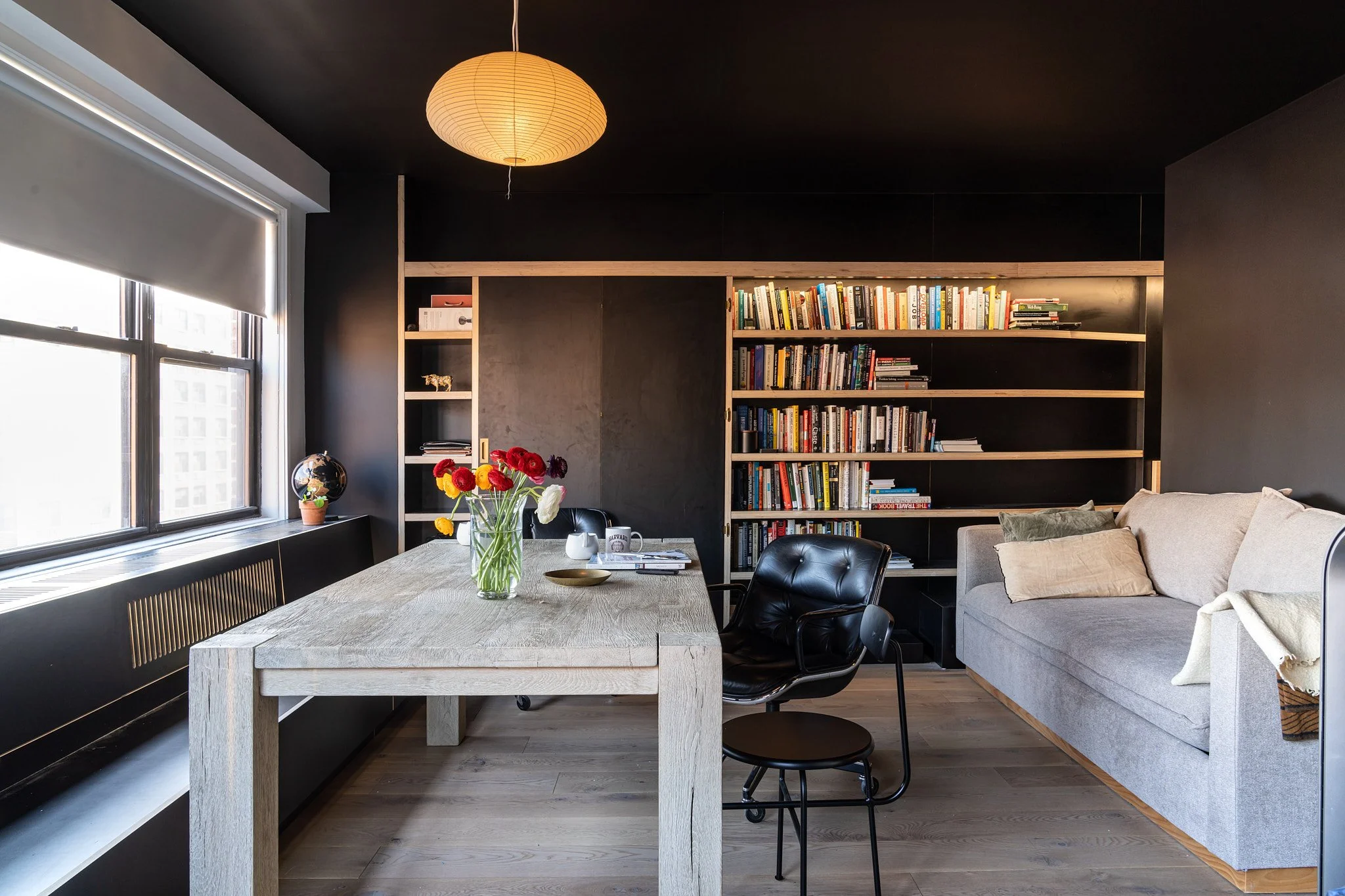
Studio Apartment Renovation
Design-Build Renovation by Mammoth
Photography by Joe Kramm
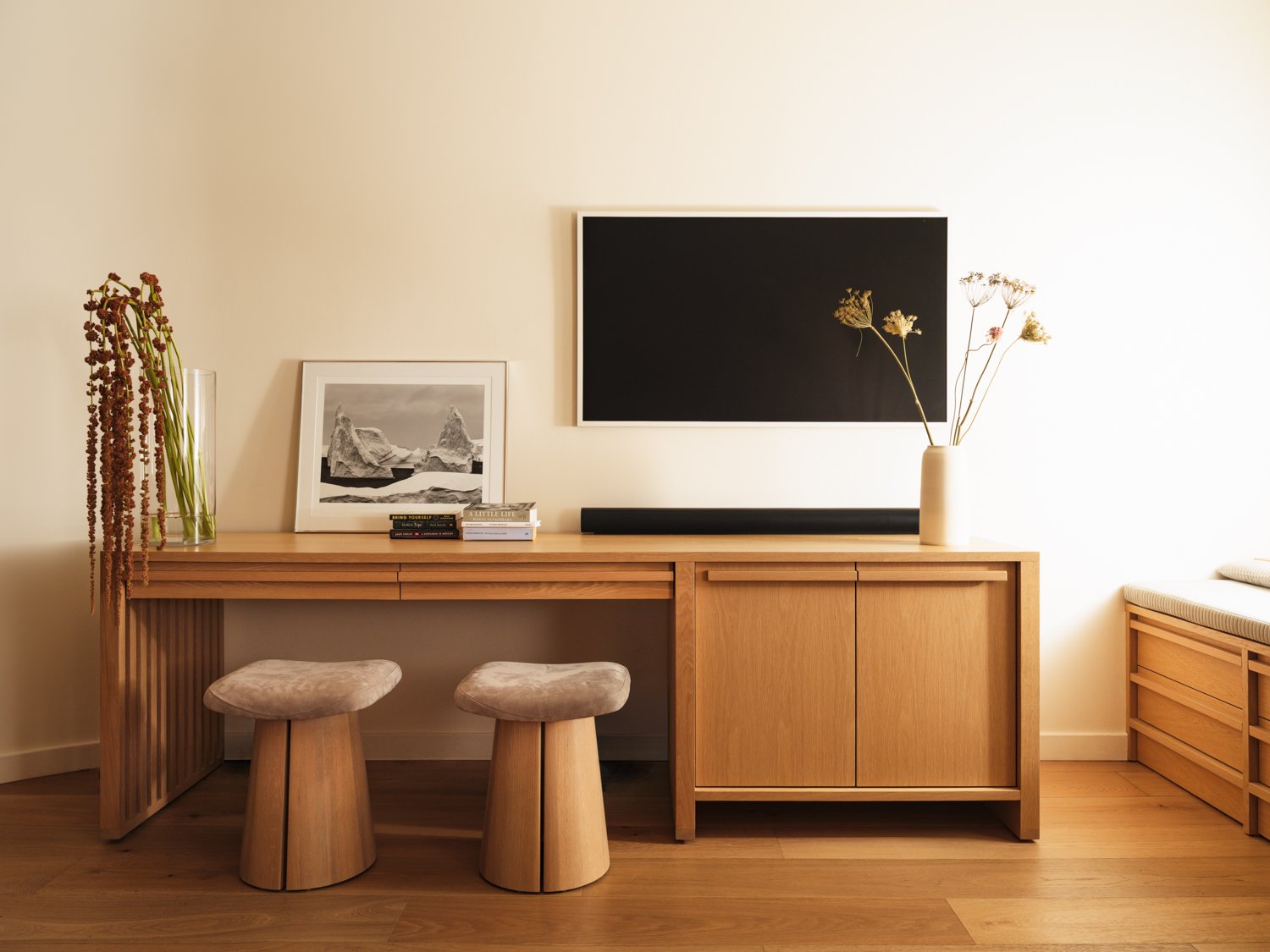
West Village Renovation
Design-Build by Mammoth
Photography by Joe Kramm
Final Thoughts
A well-renovated studio is one of the hardest things to pull off in New York City — and one of the more satisfying when it comes together. The constraints are real, but they're also clarifying. When there's no extra space to absorb a decision that didn't quite work, every decision has to be worth making. Done well, the result is a space that feels complete — nothing missing, nothing wasted, and a kind of ease that you wouldn't necessarily expect from somewhere so small.
FAQ
Is it worth renovating a studio apartment in NYC?
For owners, usually yes. Even a modest renovation tends to hold its value, and the effect on daily life is immediate. Kitchens, bathrooms, and storage are where it tends to matter most. For renters, smaller cosmetic changes are usually the more realistic path.
How do I make a studio feel larger?
Light, continuity, and vertical space. Simple window treatments, one flooring material throughout, storage that goes all the way up — those are the moves that make a room feel more generous than it actually is. Furniture with legs helps too. So does a rug that's bigger than your first instinct.
Is a murphy bed worth it?
For most studios, yes. It's the most effective way to get floor space back during the day. When it's built into a wall unit with storage around it, it stops feeling like a workaround and starts feeling like part of the apartment.
Do I need board approval to renovate a studio in a co-op?
Yes. Anything beyond paint and fixtures needs board approval and a signed alteration agreement before work begins. Plumbing, electrical, and layout changes also need DOB permits. The size of the apartment doesn't change any of that.
What's the biggest mistake people make in a studio renovation?
Trying to do too much. The instinct is to maximize every inch — more storage, more furniture, more function packed into every corner. The ones that work are the ones that edit. Less, chosen well, almost always beats more.
