
UNION SQUARE, MANHATTAN
Union Square/Flatiron, NYC
Office Design-Build

Gut Office Renovation, Furniture & Decor
Union Square
Commercial, CO-OP
4,000 sq. ft.
Scope:
Location:
Typology:
Size:
Architectural Heritage and Modern Integration
We were hired by Hopr, a creative production company for their NYC office renovation, in a mixed-use building near Union Square. The unit was in estate condition, and our scope included space planning, all material sourcing and selection, building management approvals, coordinating city agency approvals (DOB and LPC) and the build-out itself. Our goal was to come up with a scope of work that would align with the client’s own budgeting, while highlighting the unit’s historical character and adding elements that would make a modern team do their best work.
Preserving the Industrial Character of Union Square, Adding Modern Elements
To maintain the authentic atmosphere of the district, we execute restoration protocols that emphasize the raw beauty of the space. We highlighted the ceiling height, historic windows, and focused on creating natural light as the focal-point of the space. We also restored mouldings where we could, and selected finishes to highlight the beauty of the space’s existing conditions.
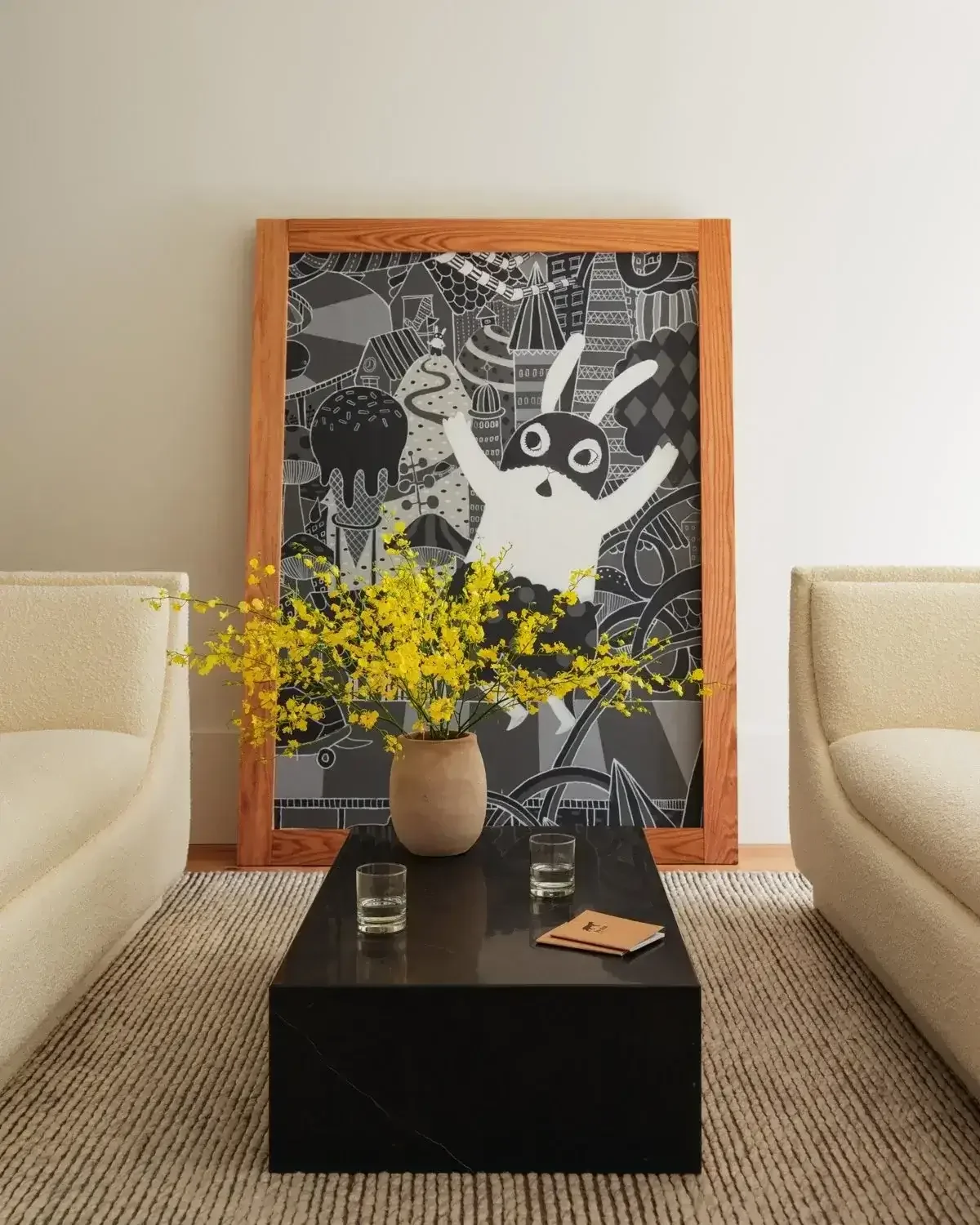
In partitioning the space, we prioritize the light-filled space and reserved it for communal gathering: it acts as a breakout space — with various options for lounge seating — and game room, with darts and pool table. We then located the private offices to the rear of the building. And connected the two with utility spaces: kitchenette and two baths in between. This strategy allowed us to use the core of the space for places that will have the highest per square foot budgets, giving us ample opportunity to create inviting space, while using the natural light — at the perimeter — as the most cost-effective design-element for spaces with limited per sq. ft budgets.
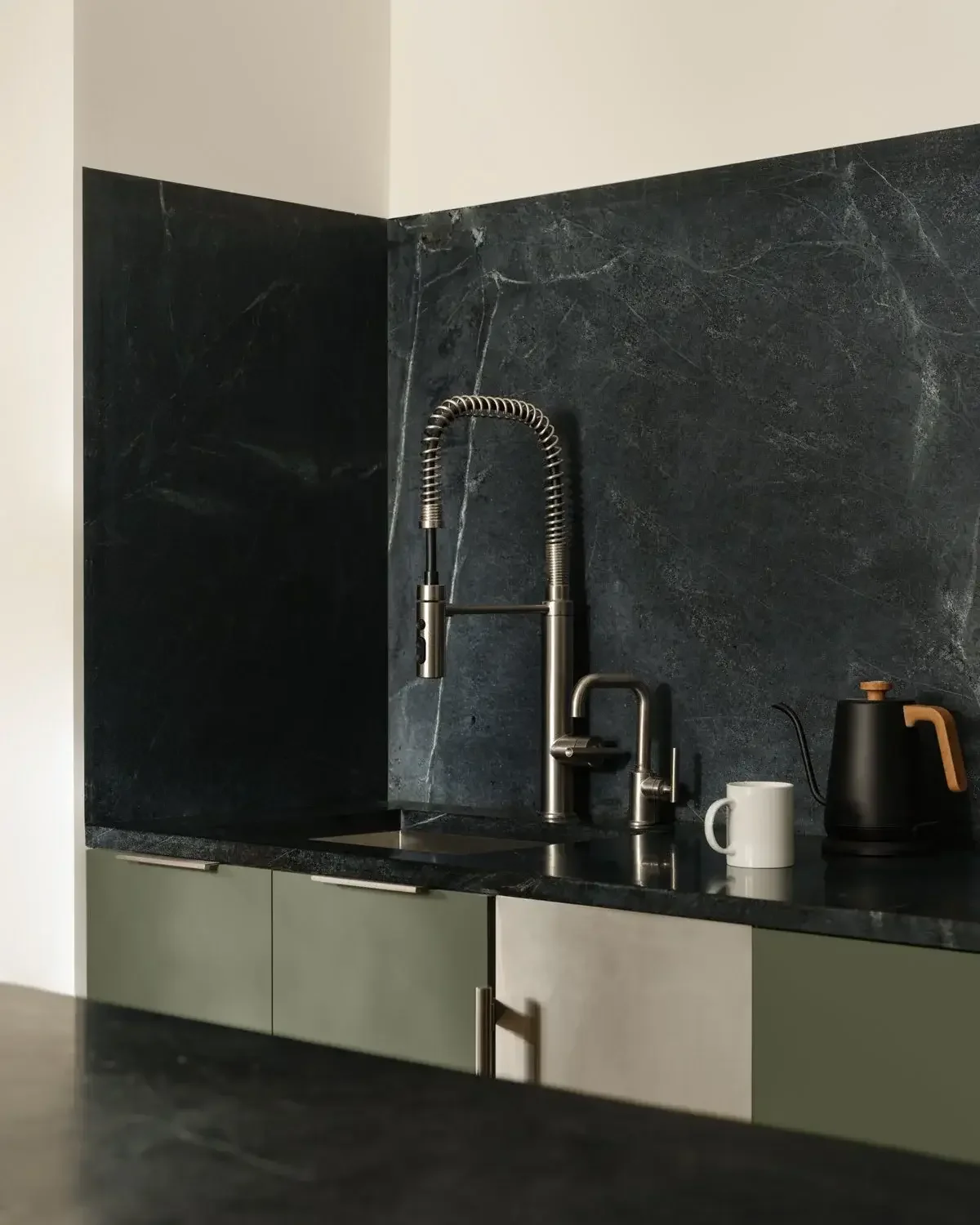
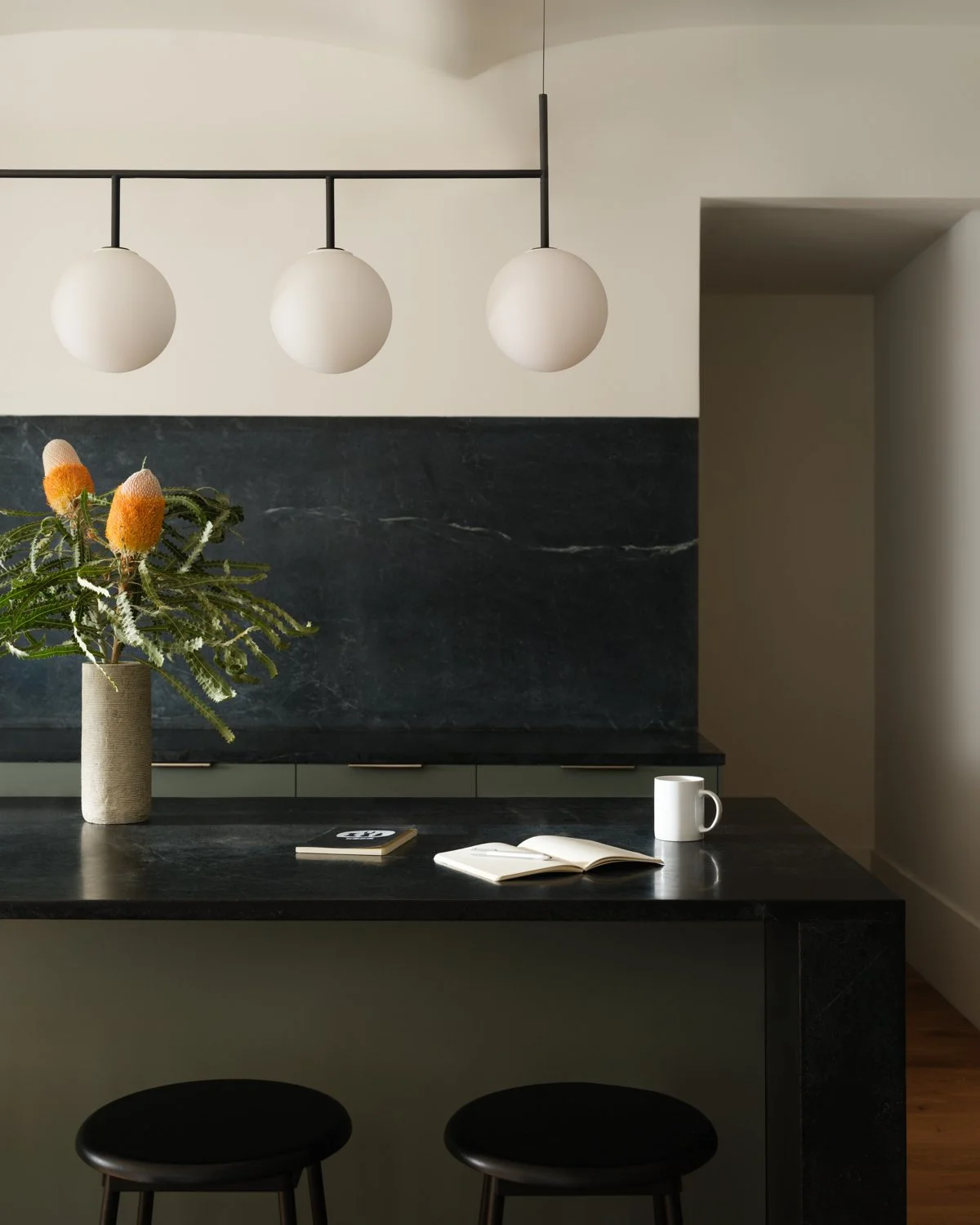
As the client had a strict budget, we avoided the introduction of custom millwork into the scope, and instead focused on designing the kitchenette to use readily-available cabinets and finishes. We used Ikea cabinets at the base only, avoiding placing them at or above one’s eye-level in a mint green finish. We added a black soapstone with a white vein at the countertop and backsplash along with a light fixture to take centerstage at the island.


Material Procurement
To elevate the space, we worked to deploy the client’s budget where it counted. We sourced wide-plan oak flooring throughout the entire space and selected taller flat base that matched the dimension, if not intricacies of the original baseboard that we uncovered. We focused on using higher-end materials in smaller spaces: we covered the walls and ceilings of the bathrooms in limewash to create warmth and intimacy in an otherwise unremarkably-scaled room. We chose to use moderatelyx-priced plumbing fixtures to ensure minimal needs for maintenance down the road, while keeping an eye toward the overall budget, and avoiding a need for value engineering.
Spatial Distribution and Acoustics
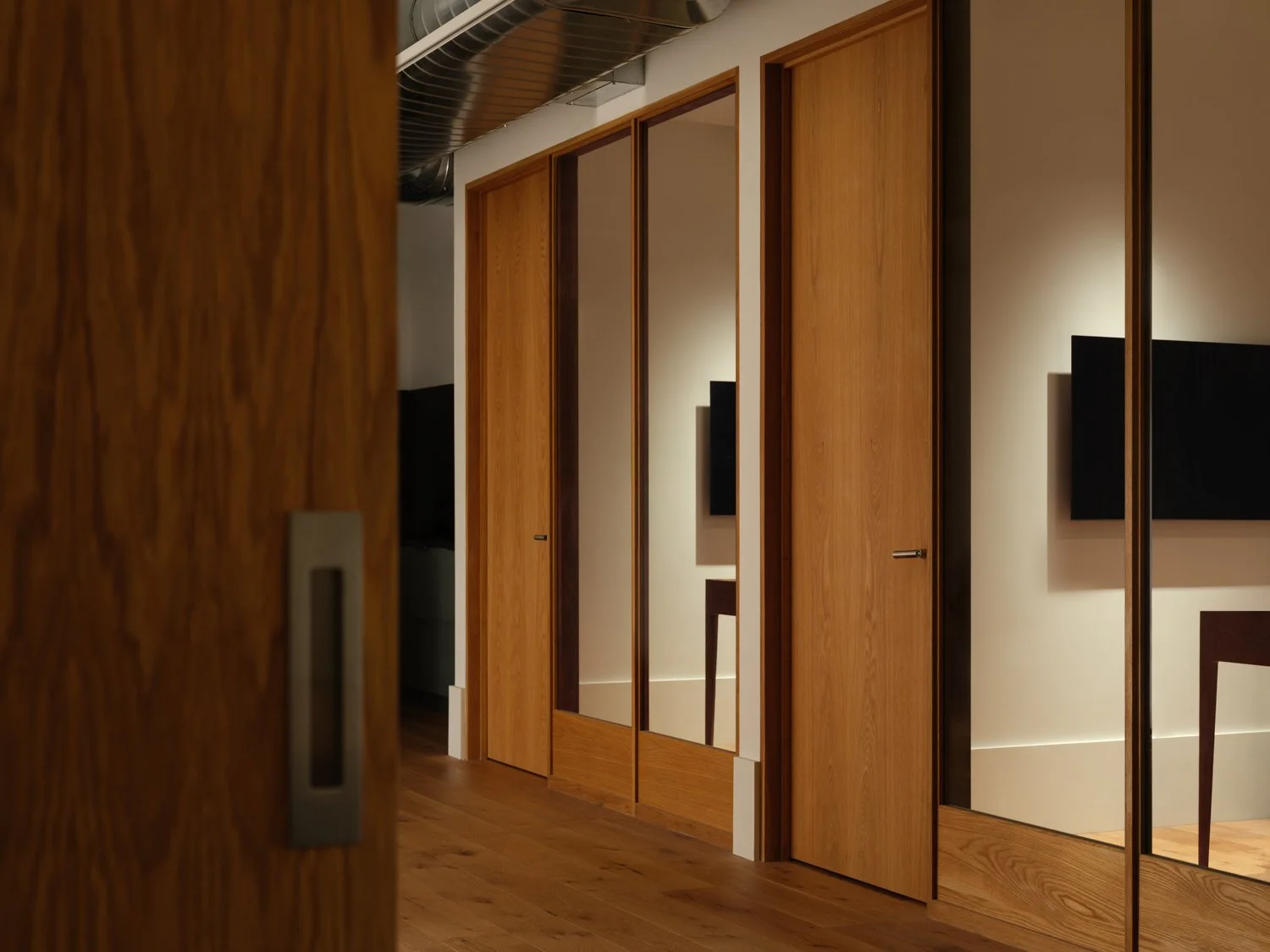
Recognizing that the open-plan a loft can present acoustic challenges, we implement strategic spatial distribution and used sound-absorbing materials to manage noise migration and echoing. We custom designed and built oak and glass partitions for each of the private offices and the conference room. This treatment was deliberate in creating a space that is both aesthetically pleasing and also works for acoustics. Insulation was placed in the walls between the offices for soundproofing. And the glass was fixed in oak frames to prevents sound from leaking out into the common areas as can happen if there are gaps between panes of glass. Additionally, we favored softer materials that absorb sound — like wood, plaster and soft finishes in the rooms — and mitigated the use of ones that will bounce sound (glass) to only where it would have the most impact. In this way, we were able to control noise while including the openness that glass provides.
Navigating Landmarks Preservation Commission and Building Codes
Given that many lofts in the Union Square vicinity are subject to Landmarks Preservation Commission (LPC) oversight, one must obtain LPC approval for any work in this district, per the NYC Building Code. For work limited to an interior renovation that isn’t visible from the street, and requires only a Certificate of No Effect. Most typically, these are granted within two weeks of the application submission, and one is then able to proceed for filing the Department of Buildings (DOB) for all of the relevant work. In addition to the General Work Permit, relevant permits include plumbing, electrical, sprinkler, and mechanical. A general work permit is required in advance of beginning any demolition in NYC.
Project Methodology and Operational Continuity
Our project management philosophy centers on the elimination of uncertainty through rigorous planning, collaboration between design and construction throughout the life of the project, and transparent communication with our clients. Because we recognize that time is a critical asset for any business, our core focus is tracking the project from inception to delivery. The overall timeline for this office build-out, including design, and permitting requirements, took approximately seven months, but — of course — varies based on the needs of each office remodeling project.
Strategic Partnership and Consultation
We invite you to view your office renovation not merely as a construction project, but as a strategic investment in your company’s future and cultural identity. By assuming total responsibility for the delivery of every aspect of our project, teams are better able to plan, allocate resources, and focus on what they do bes. Our projects, including New York City Office Renovations, are designer-led gut renovations in New York City. Our deep local expertise allows for beauty, predictability, and collaboration in all of our work.
Our previous work can be found on our portfolio page. And you can schedule a consultation with this form.