
Hire Top Residential Renovation Contractors to Transform Your Home

Pre-War Coop Apartment Renovation on Park Ave
Design and Build by Mammoth
TOC:
General Contractor vs. Design-Build Firm: Which Do You Need?
How to Vet a General Contractor in NYC
Check Their NYC Track Record Specifically
Verify Licensing and Insurance
Ask About Project Management Systems
Review the Payment Schedule Carefully
Do Site Visits to Past Projects
How do I find a good general contractor in NYC?
What's the difference between a general contractor and a design-build firm?
How do I know if a general contractor is licensed in NYC?
What insurance does a general contractor need for an NYC apartment renovation?
Do subcontractors need to be licensed in NYC?
What should a renovation contract payment schedule look like?
What are change orders and how should they be handled?
What questions should I ask when interviewing renovation experts?
How important is NYC-specific experience for a general contractor?
What is an alteration agreement and what does it mean for my contractor?
Should I do a site visit before hiring a contractor?
What's the benefit of hiring a design-build firm for a gut renovation?
What does good project management look like on a renovation?
Do I need a certificate of occupancy after my apartment renovation?
What's the difference between construction management and general contracting?
Finding a great general contractor in NYC is not like hiring one anywhere else. The city has its own permitting system, its own building board politics, its own union rules, and a level of logistical complexity — service elevator schedules, neighbor complaints, co-op board scrutiny — that can trip up even experienced contractors from other markets.The stakes are high. A bad hire can blow your budget, stretch a six-month project into two years, and leave you with work that doesn't pass inspection. A great one makes the whole process feel manageable. Here's what actually matters when vetting and hiring a general contractor for an apartment renovation in New York City.

Park Slope Apartment Renovation
Design and Build By Mammoth

Pre-War Coop Apartment Renovation on Park Ave
Design and Build by Mammoth
Know What Kind of Project You Have First
Before you start reaching out to contractors, be clear on the scope of your project — because different scopes call for different types of renovation experts.
• Cosmetic renovation — new finishes, paint, lighting, fixtures in existing locations. Low regulatory complexity; many contractors can handle this.
• Kitchen or bathroom renovation with layout changes — involves plumbing permits, possibly structural work; requires a contractor with DOB permit experience.
• Gut renovation — stripping an apartment to studs and rebuilding from scratch. The most complex residential scope; demands a contractor with deep NYC-specific experience, strong project management systems, and a reliable network of subcontractors.
• Apartment combinations — merging two units into one; involves structural changes and new egress planning. Getting the layout right is key - poorly combined units can feel incongruous and be especially hard to sell.
• Lofts and townhouses — large-footprint projects with unique structural and zoning considerations that require contractors who have worked specifically in these building types.
The scope also determines whether you need just a general contractor or a team that integrates interior design and construction under one roof. For larger remodeling projects — especially gut renovations — a design-build firm is often worth serious consideration.
General Contractor vs. Design-Build Firm: Which Do You Need?
This is the first real decision, and it shapes everything that follows.
A general contractor executes construction based on drawings and specifications someone else created. You'd hire a separate architect or interior designer for the design work, then bring the GC in to build it. You manage the relationship between them.
A design-build firm combines residential design and construction management under a single contract. One team — designers, project managers, and builders — takes your project from concept to completion. You have one point of accountability instead of two.
When a general contractor makes sense:
• You already have a completed set of architectural drawings
• Your project is primarily construction with minimal design complexity
• You're comfortable managing the handoff between your designer and builder
When a design-build firm makes sense:
• You're starting from scratch without drawings
• You're doing a full gut renovation where design and construction decisions are tightly intertwined
• You want a single point of contact and accountability throughout the project
• You've heard the horror stories about designers and GCs blaming each other when something goes wrong
At Mammoth, we work as a design-build firm precisely because the separation between design and construction is where most NYC renovations break down. When the same team designs and builds, there are no gaps to fall through. This helps us achieve a high level of quality for our projects - whether it’s a studio apartment renovation in the West Village or an office build-out in a mixed-use condo building Union Square.
Where to Find Renovation Experts in NYC
Most people start online — and that's a perfectly good place to begin. Searching for NYC renovation contractors, reading Google and Houzz reviews, and looking at firms whose work has been published in design publications can surface strong candidates quickly. Once you have a shortlist, referrals help you validate: ask friends, neighbors, or colleagues who've renovated recently whether they've heard of — or worked with — any of the firms you're considering.
Other useful sources:
• Your co-op or condo board may have a list of pre-approved contractors that building management has vetted. Starting here can smooth the alteration agreement process.
• Your architect or interior designer, if you've already hired one, will have contractor relationships and strong opinions about who performs well.
• Houzz, Architectural Digest, and design publications highlight firms whose work has been published — a reasonable signal of quality and design sensibility, especially for design-heavy projects.
• The DOB's online portal lets you look up any contractor's permit history, active violations, and whether their license is in good standing. Use it.

Pre-War Coop Apartment Renovation in Park Slope
Design and Build by Mammoth
How to Vet a General Contractor in NYC
Once you have a shortlist, the vetting process matters as much as finding the names.
Check Their NYC Track Record Specifically
Ask how many apartment renovations they've completed in New York City, and in what building types. Experience in lofts, townhouses, co-ops, and condos are distinct skill sets. A contractor who's done beautiful work in single-family homes in the suburbs or the Hamptons may struggle with the logistics of a Manhattan high-rise — building management relationships, freight elevator scheduling, and co-op board requirements are a world apart.
Verify Licensing and Insurance
Any legitimate general contractor in NYC should carry:
• A valid NYC Home Improvement Contractor (HIC) license
• General liability insurance (most buildings require $1M minimum and many require an additional $5M umbrella)
• Workers' compensation insurance covering all employees
Don't take their word for it. Ask for certificates of insurance naming you as an additional insured. Verify their license on the NYC Department of Consumer and Worker Protection website. If a contractor balks at providing these, walk away. An uninsured worker injured on your project is your financial exposure.
Also confirm that their key subcontractors — plumbers, electricians — are licensed in NYC. Plumbing and electrical work in New York City must be performed by licensed master plumbers and electricians respectively. This is non-negotiable for permit compliance.
Ask About Project Management Systems
Construction management is where many contractors in NYC fall short. Ask directly:
• Who is your day-to-day project manager on site?
• How often will you communicate with me, and through what channel?
• How do you handle change orders — is every change documented in writing before work proceeds?
• How do you manage subcontractors and ensure their work meets your standards?
• What does your payment schedule look like?
Red flags: a contractor who is vague about who manages the site, who handles change orders informally, or who can’t provide a clear payment schedule before work begins.
Review the Payment Schedule Carefully
A standard payment schedule for a NYC renovation is milestone-based — you pay when specific phases of work are completed, not on a fixed calendar. A typical structure might be:
• 10–30% deposit at contract signing
• Progress payments tied to work completed - demolition, rough electrical and plumbing complete, drywall, etc.
• 5–10% held until substantial completion
• 5–10% held until the punch list is fully resolved
Be cautious about contractors who ask for 40–50% upfront. Large front-loaded payments reduce your leverage if problems arise mid-project.
Do Site Visits to Past Projects
Ask for references from past clients — and actually call them. Better yet, ask those references if you can visit their completed project in person. Seeing finished work tells you far more than photos. Pay attention to the quality of transitions (where tile meets floor, where millwork meets ceiling), the straightness of lines, and how the space holds up close inspection.
When speaking to references, ask: Did the project come in close to the original budget? Were change orders frequent or unexpected? Did the contractor show up consistently? Would you hire them again?
Understanding the Alteration Agreement Process
Before any general contractor can start work in a co-op or condo, they need to be approved by the building and often must sign the alteration agreement. This is worth understanding before you commit to a contractor.
The alteration agreement sets the terms of construction: working hours, insurance requirements, rules for the service elevator and common areas, and liability for damage. Your building may have a preferred or pre-approved contractor list — if your chosen contractor isn't on it, they'll need to go through an approval process that adds time.
Make sure your contractor is familiar with this process and has navigated it in similar buildings. A contractor who's never dealt with a co-op board alteration agreement before will slow you down.

Pre-War Coop Apartment Renovation in Brooklyn Heights
Design and Build by Mammoth
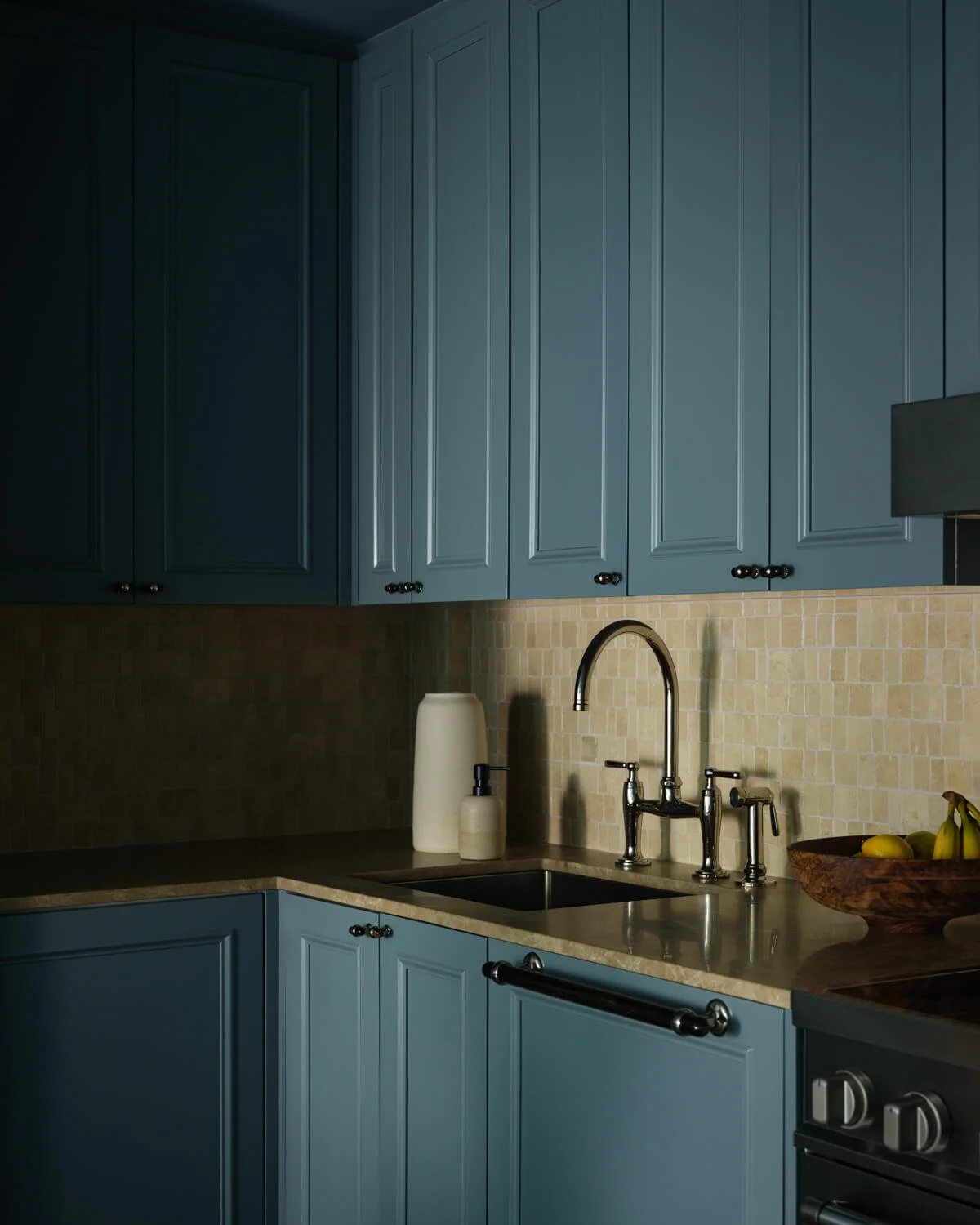
Pre-War Coop Apartment Renovation in Brooklyn Heights
Design and Build by Mammoth
The Right Questions to Ask Before You Sign
Before signing any contract with a renovation team, get clear answers to these:
1. Have you done this specific scope before? (gut renovation, apartment combination, loft conversion — whatever applies to your project)
2. Who specifically will be managing my project day-to-day?
3. How do you handle unexpected conditions — like discovering mold, asbestos, or outdated wiring during demolition?
4. What does your change order process look like? (It should always be written and signed before work proceeds)
5. What's your current workload? (A contractor who's overcommitted will understaff your job)
6. Will my project require a certificate of occupancy, and have you managed that process before?
7. Do you handle structural work in-house or through subcontractors, and who are those subcontractors?
What to Expect From a Great Renovation Team
The best renovation experts in NYC share a few qualities regardless of firm size:
Proactive communication. You hear about problems before they become emergencies. Site visits are scheduled and followed up with written summaries. Change orders arrive with context, not just a number.
Realistic budgeting. They tell you what things actually cost in New York City rather than underbidding to win the job and making it up in change orders later.
Deep subcontractor relationships. A strong GC or design-build firm has plumbers, electricians, and tile setters they've worked with for years. The quality of subcontractors is often what separates a good project from a great one.
Permit fluency. They know the DOB process cold, have relationships with expediters, and don't treat permits as someone else's problem.
Why Many NYC Homeowners Choose a Design-Build Firm
For a full gut renovation or a complex remodeling project, the design-build approach has become the preferred model for homeowners who want one accountable team from start to finish.
The practical advantage is significant: your designers know what's buildable, your builders know what was designed, and there's no gap between the two. Project management is centralized. The renovation team that draws your kitchen is the same team that builds it.
It also simplifies your life during construction. Instead of managing a separate interior designer, general contractor, and expediter, you have one point of contact who owns all of it.
At Mammoth, we've built our studio around this model because we believe it produces better work and a better client experience. Our team handles everything — design, permits, construction management, procurement, and site execution — for residential and commercial projects across Manhattan, Brooklyn, and beyond.
If you're planning an apartment renovation in New York City and want to talk through your project, we'd love to hear from you.
FAQs:
How do I find a good general contractor in NYC?
Most people start online — and that's a perfectly good place to begin. Searching for NYC renovation contractors, reading reviews on Google and Houzz, and looking at firms whose work has been published in design publications can surface strong candidates. Once you have a shortlist, referrals help you validate: ask neighbors in your building, friends who've renovated recently, or your co-op or condo board whether they've heard of — or worked with — any of the firms you're considering. Many buildings also maintain a list of pre-approved contractors that building management has vetted. However you find candidates, always verify any contractor's license and permit history through the NYC Department of Buildings and the Department of Consumer and Worker Protection before committing.
What's the difference between a general contractor and a design-build firm?
A general contractor manages construction based on drawings created by a separate architect or interior designer — you coordinate between the two. A design-build firm handles both design and construction under one contract, with a single team accountable for the whole project. For complex gut renovations or apartment combinations, the design-build model tends to work better in NYC because there's no gap between what's designed and what gets built, and you have one point of contact throughout.
How do I know if a general contractor is licensed in NYC?
You can verify a contractor's Home Improvement Contractor (HIC) license through the NYC Department of Consumer and Worker Protection website. For permit history and any open violations, check the NYC Department of Buildings online portal — it shows every permit a contractor has filed and whether any violations are attached. Always do both checks before signing a contract.
What insurance does a general contractor need for an NYC apartment renovation?
At minimum: general liability insurance (most co-op and condo buildings require $2 million per occurrence) and workers' compensation insurance covering all employees. Ask for certificates of insurance naming you as an additional insured — not just a verbal confirmation. Also verify that key subcontractors like plumbers and electricians carry their own insurance. An uninsured worker injured on your job site is your financial exposure, not just the contractor's.
Do subcontractors need to be licensed in NYC?
Yes, for plumbing and electrical work. NYC requires that all plumbing be performed by a licensed master plumber and all electrical work by a licensed electrician. These licenses are separate from the general contractor's license. Ask your GC or design-build firm who their subcontractors are and verify their licenses — it's a routine request and any reputable renovation team will have no issue providing that information.
What should a renovation contract payment schedule look like?
A standard payment schedule for an NYC renovation is milestone-based — you pay when specific phases of work are completed, not on a calendar. A reasonable structure is 10–20% at contract signing, progress payments tied to completed phases (demolition, rough mechanical/electrical/plumbing, drywall, etc.), and 5–10% held until the punch list is fully resolved. Be cautious about contractors asking for more than 30–35% upfront — large front-loaded payments reduce your leverage if problems arise mid-project
What are change orders and how should they be handled?
A change order is a written amendment to your contract that documents any change in scope, cost, or timeline. They happen on virtually every renovation — the key is that every change, whether you initiate it or the contractor discovers a condition on site that requires it, must be documented and agreed to in writing before the work proceeds. A contractor who handles changes verbally or adds them to a final bill without prior approval is a red flag. Ask about the change order process explicitly before you sign anything.
What questions should I ask when interviewing renovation experts?
The most important ones: Have you done this specific scope before — gut renovation, apartment combination, loft, townhouse? Who is my day-to-day project manager? How do you communicate with clients during construction? How do you handle unexpected conditions discovered during demolition? What does your change order process look like? What's your current workload? A contractor who is vague on project management or communication is showing you exactly how the project will run.
How important is NYC-specific experience for a general contractor?
Very. NYC has its own permitting system, co-op and condo board processes, alteration agreement requirements, union considerations, and building logistics — service elevator scheduling, noise restrictions, tight access — that contractors from other markets simply aren't prepared for. A contractor with a strong track record in the Hamptons or suburban New Jersey may struggle badly in a Manhattan high-rise. Always ask how many NYC apartment renovations they've completed, in what building types, and ask for references from those specific projects.
What is an alteration agreement and what does it mean for my contractor?
An alteration agreement is a contract between you, your building, and your general contractor that governs how construction will be conducted — permitted working hours, insurance requirements, rules for common area use, and liability for damage. Your contractor must comply with it throughout the project. Before hiring, confirm that your contractor has experience navigating alteration agreements in similar buildings. One who's unfamiliar with the process will slow down your board approval and risk violations that can get work stopped.
Should I do a site visit before hiring a contractor?
Yes, if at all possible. Ask to visit a completed project — not just see photos. Finished work reveals quality details that photos don't: the precision of tile work, how millwork meets the ceiling, how transitions between materials are handled. Also request references from past clients and actually call them. The most useful questions: Did the project come in close to the original budget? Were change orders frequent or unexpected? Did the team communicate proactively? Would you hire them again?
What's the benefit of hiring a design-build firm for a gut renovation?
For a full gut renovation or complex remodeling project, a design-build firm gives you one accountable renovation team from design through construction completion. There's no handoff between designer and contractor where things get lost or blamed on each other — the same team that draws your kitchen builds it. Project management is centralized, procurement is coordinated with the construction schedule, and you have a single point of contact throughout. For simpler projects with existing drawings, a good general contractor may be all you need. For gut renovations in co-ops and condos with board approval requirements, the design-build approach tends to produce fewer surprises.
What does good project management look like on a renovation?
A dedicated project manager who is on site regularly — not just available by phone — and who communicates proactively rather than reactively. You should hear about problems before they become emergencies. Change orders should arrive in writing with context and a cost estimate before work proceeds. Site visits from you should be welcomed and followed up with written summaries. If a contractor can't clearly tell you who your project manager will be and how often they'll be on site, that's worth understanding before you sign.
Do I need a certificate of occupancy after my apartment renovation?
Not for most standard renovations. A certificate of occupancy is typically required when a project changes the occupancy classification of a space — for example, apartment combinations that create a new dwelling unit, or conversions between residential and commercial use. Most gut renovations of existing apartments don't trigger a new CO requirement, but structural work and certain egress changes can. Your architect or design-build firm should tell you at the outset whether your project will require one, so there are no surprises at closeout.
What's the difference between construction management and general contracting?
The terms are often used interchangeably, but they can refer to different contract structures. A general contractor typically takes on the work under a lump-sum or fixed-fee contract and is responsible for the outcome. A construction manager is sometimes hired on a fee basis to oversee and coordinate trade contractors on behalf of the owner — the owner holds the subcontracts directly. For most residential apartment renovations in NYC, you'll be working with a general contractor or design-build firm rather than a pure construction management arrangement.
Mammoth is a woman-owned NYC design-build firm specializing in gut renovations, apartment combinations, lofts, and townhouses across Manhattan and Brooklyn. Thinking about renovating your NYC apartment? Get in touch with Mammoth — we're happy to talk through your project and what the process entails.

Pre-War Coop Apartment Renovation in Brooklyn Heights
Design and Build by Mammoth
